When it comes to fixing the world’s worst problems, it’s easy to pretend that we’re helpless.
We tell ourselves that global poverty is just too big, too distant, and too intractable an issue for us to solve. If the world could afford to solve it, or something like hunger, then surely somebody else would have done it already.
But, it turns out, that’s simply not true. According to a new report by a group of anti-poverty researchers that uses AI tools to achieve unusually granular data of the picture on the ground, the price tag for completely ending extreme poverty would be just $318 billion per year. Using targeted direct cash transfers, it would cost around 0.3 percent of global GDP to ensure that virtually everyone has enough to pay for the absolute basics — the food, shelter, and medicine they need to survive each day.
This story was first featured in the Future Perfect newsletter.
Sign up here to explore the big, complicated problems the world faces and the most efficient ways to solve them. Sent twice a week.
$318 billion might sound like a lot, but it really isn’t. Americans will spend over three times as much on their holiday shopping this year alone. Elon Musk could foot the entire bill for a year and still have over more than $300 billion to spare.
Or, getting creative here, “if everybody in the world [who drinks alcohol] took one day off of drinking a week, that would generate enough money to end extreme poverty,” said Paul Niehaus, a co-author of the report and co-founder of GiveDirectly, noting that the world spends seven times as much annually on alcohol. (Just in case you needed another reason to give Dry January a go this year.) Or, to put it another way, if the whole world split the bill, we could each help to eliminate the world’s worst poverty for less than what most Americans pay for their yearly Netflix subscription.
While this kind of large-scale cash transfer would be an “enormous logistical undertaking,” said Niehaus, it is neither “undoably hard” nor particularly expensive. And he should know — GiveDirectly is a pioneer in the mode of aid known as direct cash transfers, or no-strings-attached money sent to those who need it most.
And we are talking about the very worst of the worst poverty here. Niehaus and his co-authors used the $2.15 per day line — which the World Bank bumped to $3 earlier this year — to calculate what it would cost to all but eradicate extreme poverty, reducing it to less than 1 percent of the world’s population.
A cash transfer program that applied this data would be able to pull hundreds of millions of people — roughly 8 percent of the world’s population — out of life-threatening poverty, though many of these families would still be very poor.
Why this estimate is different
This isn’t the first time someone has tried to put a price tag on ending extreme poverty, but it might be the most statistically reliable one we have so far.
Most similar research assesses what’s called the poverty gap, or the cost of bringing every single poor person exactly to the poverty line. Under this system, a family earning $1 per day would receive exactly $1.15. If their neighbors earn $2, they’d receive 15 cents, and so on and so forth.
This would be the cheapest, most efficient way to end extreme poverty, and it would cost about $30 billion per year. But, there’s a catch. That kind of hyper-specific data about precisely what every household would need does not exist. It’s a thought experiment — not a realistic, replicable anti-poverty proposal.
“That’s not actually feasible; it’s not a shovel-ready plan,” said Joshua Blumenstock, one of the co-authors and an associate professor at the School of Information at the University of California, Berkeley, whereas “the number we’re coming up with is actually much closer to something you could work with.”
The new study crunches a bevy of data that national governments in poor countries already track to estimate how much each family should get. It might not be perfectly precise — sometimes the $1-per-day family will get $2 instead of exactly $1.15 — but it is perfectly doable to implement in practice with these new AI-influenced analytical tools plus the information that we have right now.
And while it might be more expensive than the cheapest estimations, it’s still an entirely affordable way to solve one of the worst problems facing the world.
What’s actually stopping us
“What’s really striking is that it’s not that much money,” said Blumenstock. “Extreme poverty exists not because it’s prohibitively expensive to address,” he said, “but because it is institutionally and politically difficult” to get people to prioritize it.
Now this, of course, is the hard part. There is no shortage of bad news lately of rich countries like the United States deprioritizing cheap, effective, affordable anti-poverty programs around the world. And the consequences have already proven devastating.
It might seem foolish to bet on rich countries stepping up to end global poverty at the very moment when they are stepping back. But, if there’s a glimmer of hope here, it’s that the world has come so far already. The number of those living on less than $3 per day has plunged from over 40 percent of the world in 1990 to just about 10 percent of people today, even as the global population has increased by over 2.5 billion.
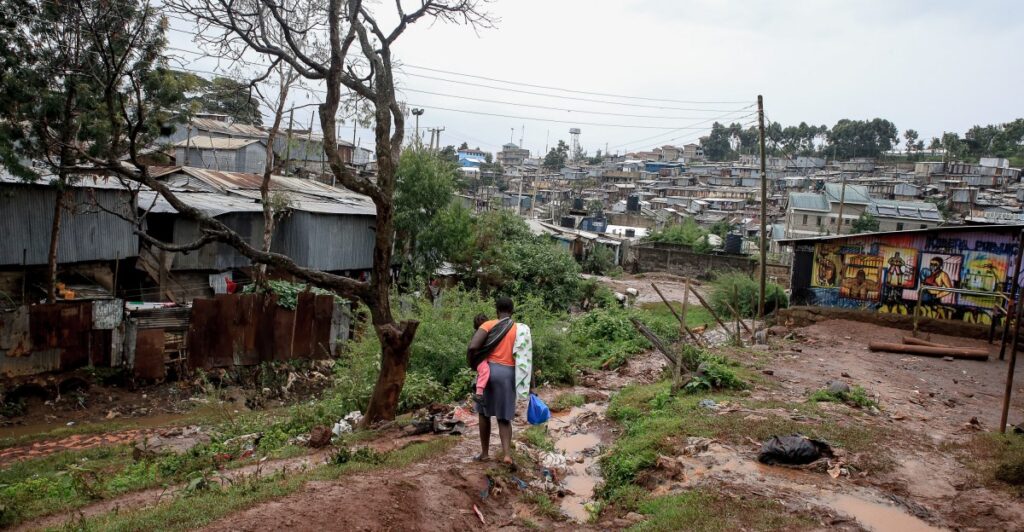
That is one of the world’s most impressive achievements, but much of that progress has been driven by economic growth, especially in East Asia, that won’t be easily replicable in this final stretch. Most of the remaining pockets of extreme poverty lie in sub-Saharan Africa, where economic growth has been sluggish or nonexistent for the past few decades. The population is also growing rapidly in many of these countries, meaning that if nothing changes, the number of extremely poor people will actually increase in the year to come.
Ending extreme poverty might sound like an impossible task. But, so was the idea of reducing extreme poverty 35 years ago, when it included nearly half the world’s population. Finishing the job will require someone — whether governments, a billionaire or two, or the rest of us — willing to pay the surprisingly, almost embarrassingly, small price tag.
The post The low, low cost of ending extreme poverty appeared first on Vox.