Preparations for war were almost complete. Scores of trained agents working for Israel were on the ground in Iran, armed with sophisticated new weapons. Israeli air force pilots were on standby for orders to attack Iran’s nuclear infrastructure, ballistic missile launchers and air defenses. Israel and the United States, its chief backer, had argued their way to rough agreement on how close Tehran was to achieving a nuclear weapon. Diplomatic ruses were underway to blind Iran to the coming assault.
But Israeli security officials knew that to do more than fleeting damage to Iran’s sprawling nuclear program, they also had to decimate the “brain trust,” a generation of Iranian engineers and physicists who U.S. and Israeli intelligence officials believed were working on the dark arts of turning fissile nuclear material into an atomic bomb.
At about 3:21 a.m. on June 13, in the opening minutes of Israel’s 12-day war with Iran, Israeli weapons began slamming into apartment blocks and homes in the Iranian capital. Operation Narnia, the campaign against Iran’s top nuclear scientists, was underway.
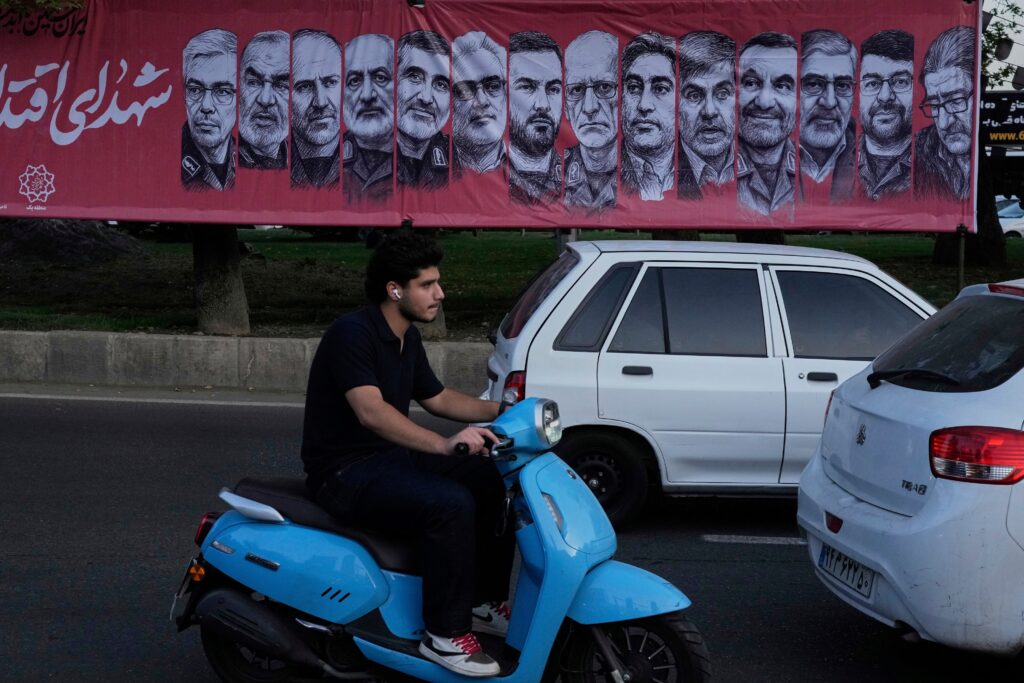
Mohammad Mehdi Tehranchi, a theoretical physicist and explosives expert under U.S. sanctions for his nuclear weapons work, was killed in his sixth-floor Tehran apartment in a building known as the Professors Complex. Fereydoun Abbasi, a nuclear physicist who once led Iran’s atomic energy organization and was under U.S. and U.N. sanctions, died in another strike in Tehran two hours later. In all, Israel said, it assassinated 11 senior Iranian nuclear scientists on June 13 and in the following days.
The massive, multipronged Israeli and U.S. attacks on Iran’s nuclear program convulsed the Middle East, sparked promises of Iranian revenge, and, for now, have tanked the possibility of a diplomatic agreement to curb Tehran’s nuclear work and place it under tight international controls.
The Washington Post, together with PBS “Frontline,” has uncovered new details about the attacks, the planning behind them and their impact in Iran. This report is based on interviews with multiple current and former Israeli, Iranian, Arab and U.S. officials, some of whom spoke to reporters for the first time and on the condition of anonymity to describe secret operations and assessments.
Iran’s nuclear work probably has been set back years, officials from Israel, the United States and the United Nations’ International Atomic Energy Agency said. But that is far from President Donald Trump’s claim that the program was “completely and totally obliterated.”
And Iran, which says its nuclear development is for civilian nuclear energy — not weapons, remains defiant.
Amir Tehranchi told Frontline that his brother Mohammad’s work would go on. “With the killing of these professors, they might be gone, but their knowledge isn’t lost to our country,” he said.
Israel had assassinated Iranian scientists before, but always with deniability. Agents on motorcycle had slapped magnet bombs to scientists’ cars in Tehran traffic. Abbasi narrowly survived such an attempt in 2010. Mohsen Fakhrizadeh, a prominent nuclear scientist, was killed by a remote-controlled machine gun in an ambush outside the Iranian capital in 2020.
But in June, Israel’s hand came out of the shadows. It had become emboldened as it openly decimated Iranian proxies in the Gaza Strip, Lebanon and Syria.
We finally had an “operational opportunity to do it,” said an Israeli air force general who helped plan the assault on Iran.
For Operation Narnia, Israeli intelligence analysts assembled a list of the 100 most important nuclear scientists in Iran, then whittled the target roster down to roughly a dozen. They built dossiers on each man’s work, their movements, their homes — drawing on decades of espionage.
The operation wasn’t flawless. The Post and open-source investigative outlet Bellingcat were able to independently verify 71 civilian casualties in five strikes where nuclear scientists were targeted, using satellite imagery, video geolocation, death notices, cemetery records and coverage of funerals in Iranian media.
The Post and Bellingcat confirmed that 10 civilians, including a 2-month-old infant, were killed in the strike on the Professors Complex in Tehran’s Saadat Abad neighborhood. Witness accounts, combined with videos and images of the blast and resulting structural damage, indicate that the strike was similar to the force of a roughly 500-pound bomb.
Israel targeted another scientist, Mohammad Reza Sedighi Saber, at his Tehran home during the opening wave of strikes. Sedighi Saber wasn’t there, but his 17-year-old son was killed.
On the conflict’s last day, June 24, the elder Saber was killed at his relative’s home about 200 miles from the capital, in Astaneh-ye Ashrafiyeh in Gilan province. A resident there, who spoke on the condition of anonymity for fear of government reprisals, told The Post that Saber had returned to his family home for his son’s mourning ceremony and was killed alongside other relatives. The Post verified 15 civilian deaths in this strike, including four minors. Two residences were leveled, leaving behind two craterswhere the homes once stood.
Israeli security officials said they did everything possible to limit civilian casualties. “One of the major considerations for the planning of Operation Narnia was to try to minimize as much as possible the collateral damage,” a senior Israeli military intelligence officer said.
Brig. Gen. Elad Edri, chief of staff of Israel’s Home Front Command headquarters, said Iran’s retaliatory strikes hit schools, hospitals and other civilian sites, killing 31 Israelis. A spokesperson for the Iranian government said in July that 1,062 people were killed in the Israeli strikes, including 276 civilians.
Special weapons and sleeper agents
Israel named the wider Iran campaign Rising Lion. Israeli warplanes and drones, along with agents inside Iran, destroyed more than half of Iran’s ballistic missile launchers and shredded its remaining air defenses. Strikes decapitated the leadership of Iran’s military and Islamic Revolutionary Guard Corps. Israeli warplanes bombed electric plants and ventilation systems that Iran needed to operate centrifuges purifying uranium at Natanz and Fordow, the country’s main enrichment sites. Massive strikes from U.S. B-2 Spirit stealth bombers and a barrage of Tomahawk cruise missiles followed.
Inside Iran, Israel’s Mossad spy service mobilized more than 100 Iranian agents, equipping some of them with a three-part “special weapon” for precision strikes on military assets, said a senior Israeli security official with direct involvement in the planning.
Iranian authorities recovered some of the launchers, but not the missiles or a secret third component, the senior Israeli security official said.
The teams of Iranian agents were trained in Israel and elsewhere. They were told only their mission, not the full scope of what Israel was preparing. “This operation is unprecedented in history,” the official said. “We mobilized our own assets and agents to go close to Tehran and launch the ground operation before the [Israeli] Air Force could enter Iranian airspace.”
Israel for decades had pondered a massive assault on Iran’s nuclear program and other targets. But the potential obstacles fell away one by one as Prime Minister Benjamin Netanyahu ordered the destruction of Israel’s enemies following Hamas’s Oct. 7, 2023, attack.
The Hamas assault killed roughly 1,200 people, precipitating Israel’s siege of the Gaza Strip, which decimated Hamas’s military arm and has left more than 70,000 Palestinians dead, according to Gaza health authorities. An even more fearsome Tehran proxy, Hezbollah, was gutted by relentless airstrikes across Lebanon and a spectacular Mossad operation that triggered explosives hidden in booby-trapped pagers used by the group. Longtime Hezbollah leader Hasan Nasrallah was killed in a September 2024 Israeli airstrike.
Other developments spurred Israel’s planning, officials said. The Syrian regime of President Bashar al-Assad, a longtime Iranian ally, collapsed in December 2024. Israel took advantage of the power vacuum, decimating what remained of Syria’s military capability with hundreds of bombs and missile strikes, then occupying a swath of strategic territory in the country’s southwest.
Meanwhile, sporadic hostilities continued. Iran fired missiles and drones at Israel in April 2024, after Israel struck an Iranian Embassy building in Damascus, the Syrian capital, and killed three top Iranian commanders, and again that October after Israel assassinated Hamas political leader Ismail Haniyeh in Tehran. Israel retaliated with airstrikes and shot down the vast majority of Iran’s incoming missiles and drones, blunting any future retaliatory threat from Tehran. In the second exchange, Israel destroyed sophisticated Russian S-300 air defense systems that could have posed a threat during Rising Lion.
The Israeli air force general said the decimation of Hezbollah and Assad’s fall were key. “Plans changed along the years, but they became very concrete after those two events,” he said.
Nuclear nuances
Israel and the United States, under both President Joe Biden and Trump, agreed that Iran was working toward a nuclear weapon. But their spy agencies sometimes diverged in their assessments of what Iranian scientists were doing and what it meant.
Beginning in 2023, the CIA gathered intelligence that researchers working for a unit in Iran’s Defense Ministry known as the SPND were exploring ways to more quickly build a nuclear weapon — if Ayatollah Ali Khamenei, Iran’s supreme leader, reversed his 2003 religious injunction, known as a fatwa, against atomic weapons.
The Iranians were researching a crude nuclear device, one that would take about six months to produce using its existing caches of enriched uranium, the CIA assessed. The primitive device could not be tested beforehand or delivered from afar by a ballistic missile, but it would be devastating all the same if built and used.
The Iranians also appeared to be researching fusion weapons, a more advanced and powerful type of nuclear bomb. U.S. and Israeli intelligence analysts agreed that a fusion bomb, while concerning, was beyond Iran’s reach.
Iran had started producing significantly more enriched uranium after Trump in 2018 pulled out of an international deal limiting its nuclear activities. Neither the CIA nor Mossad believed Iran had begun constructing a bomb. But by spring 2025, Israeli analysts weren’t certain that Khamenei would publicly announce a reversal of his fatwa or that they would be able to detect in time that Iran was assembling a weapon.
On June 12, the eve of Operation Rising Lion, the IAEA declared Tehran in violation of its nonproliferation obligations — the first such reproach in 20 years.
Diplomacy and disinformation
When Netanyahu visited Trump at the start of Trump’s second term — the first foreign leader to do so — he presented four visions of how the assault on Iran could unfold, said a person familiar with the matter, who spoke on the condition of anonymity to describe private diplomatic exchanges.
The Israeli prime minister first showed Trump what the operation would look like if Israel attacked alone. The second option was for Israel to take the lead, with minimal U.S. support. The third was full collaboration between the two allies. The last option was for the U.S. to take the lead.
Months of stealthy, intensive strategic planning commenced. Trump wanted to give nuclear diplomacy with Iran a chance, but he continued intelligence-sharing and operational planning with Israel, two people familiar with the matter said. “The thinking was, if talks fail, we are ready to go,” one person said.
Israel’s leaders thought that giving diplomacy a chance was important for global public opinion if they ultimately decided to strike Iran. But they also worried that Trump, in his eagerness for a deal, might agree to a bad one.
In mid-April, Trump gave Iran 60 days to agree to a nuclear deal. The deadline expired Thursday, June 12. He and Netanyahu maneuvered to keep the Iranians unprepared for what would happen next.
Trump told reporters on June 12 that an Israeli strike on Iran “could very well happen” but indicated he preferred a negotiated solution. Israeli officials leaked word that top Netanyahu adviser Ron Dermer and Mossad chief David Barnea would soon meet U.S. special envoy Steve Witkoff. A new round of U.S.-Iranian nuclear talks was scheduled for Sunday, June 15.
Israel had decided to strike, as the U.S. well knew. The planned diplomacy was a ruse, and officials from both countries encouraged media reports of a U.S.-Israeli rift.
“All the reports that were written about Bibi not being on the same page with Witkoff or Trump were not true,” the person familiar with the matter said, using Netanyahu’s nickname. “But it was good that this was the general perception, it helped to move on with the planning without many people noticing it.”
Even after the Israeli bombing and assassination campaign began, the Trump administration made a final diplomatic push. It secretly transmitted a proposal to Iran to resolve the standoff over its nuclear program. What Iran did not know is that this overture would be its final opportunity before Trump approved U.S. firepower joining Israel’s.
The terms of the deal, obtained by The Post and not previously reported, were steep and included Tehran ending support for proxies such as Hezbollah and Hamas, as well as “replacing” the Fordow Fuel Enrichment Plant and “any other functioning facility” with alternative facilities that do not allow enrichment. In return, the U.S. would lift “ALL sanctions placed on Iran,” the proposal, dated June 15, says.
Shortly after the U.S. transmitted the proposal to Iran, via Qatari diplomats, Tehran rejected it, and Trump authorized U.S. strikes, a senior diplomat involved in the process said.
‘Can’t take the discovery away’
U.S., Israeli and IAEA officials say the damage to Iran’s nuclear program, while not complete, is significant — setting the program back years and probably ending for now Iran’s ability to enrich uranium that could be used to fuel a nuclear weapon.
“Overall, the damage caused by airstrikes to numerous nuclear sites was extensive and, in many cases, catastrophic,” the Institute for Science and International Security said in a November assessment based in part on satellite imagery.
Israeli officials say the Iranian program has been “significantly delayed,” with the Natanz enrichment site destroyed, portions of the Isfahan nuclear research complex obliterated and the deeply buried enrichment site at Fordow severely damaged.
IAEA Director General Rafael Mariano Grossi told “Frontline” that damage is “very substantial.” Iran, he said, retains its stockpile of almost 900 pounds of uranium enriched to 60 percent purity, a step away from the 90 percent needed for a nuclear weapon. The stockpile, he said, “is where it was by and large,” at Isfahan, Fordow and Natanz. Whether Iran can access the material is unclear, and IAEA inspectors have been barred from accessing key facilities since the strikes.
“Obviously, without having physical access to a place, any evaluation is partial,” Grossi said.
The Post reported in September that, since the 12-day war ended, Iran has increased construction at a mysterious underground site just south of Natanz known as Pickaxe Mountain. Iran is also attempting to rebuild its ballistic missile inventory with help from China, Israeli officials and U.S.-based analysts told The Post.
Trump has threatened strikes if Iran enriches uranium at a high level again.
Ali Larijani, secretary of Iran’s Supreme National Security Council, was unmoved in an interview with “Frontline,” his first with foreign media since the June war. “Iran’s nuclear program can never be destroyed,” he said. “Because once you have discovered a technology, they can’t take the discovery away.”
Jarrett Ley, Sebastian Walker, Adam Desiderio, Trevor Ball, Carlos Gonzales, Eoghan Macguire and Sebastian Vandermeersch contributed to this report.
The post Killing the ‘brain trust’: How Israel targeted Iran’s nuclear scientists appeared first on Washington Post.