Ukrainian soldiers can’t always rush out to rescue their wounded comrades. Instead, they often have to wait for inclement weather or for someone to stir up a bit of chaos to cloak their evacuations, a senior military officer told Business Insider.
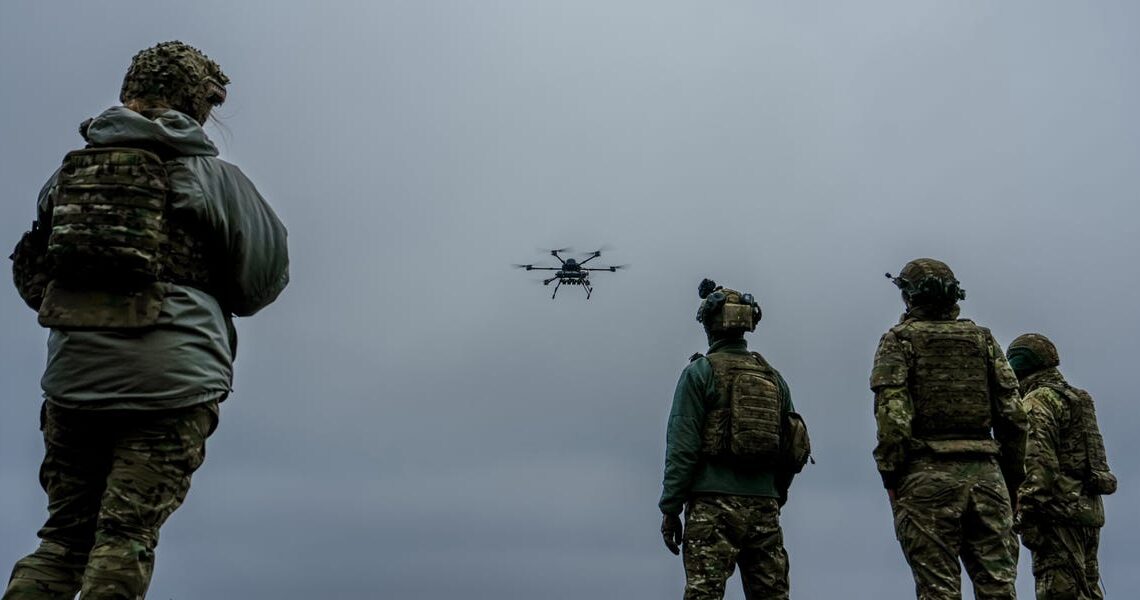
The significant drone presence means that the “battlefield is visible 100%,” making it all but impossible for Kyiv’s forces to pull off traditional casualty evacuations, Ukrainian Col. Valerii Vyshnivskyi said in an interview, reinforcing warnings about the effect that uncrewed systems have on front-line medical care.
Vyshnivskyi, Kyiv’s senior representative to the NATO-Ukraine Joint Analysis Training and Education Centre, an initiative which uses real-time lessons from the conflict to inform Western defense planning, said that soldiers sometimes have to wait for nighttime, fog, or rain — when visibility is difficult — to evacuate their wounded comrades.
He said that soldiers also manufacture poor visibility with smoke grenades, but this tactic risks drawing Russia’s attention.

Drones are surging on the battlefield, giving both Ukrainian and Russian forces persistent surveillance options and the ability to carry out precision strikes in a miles-wide kill zone that extends in either direction along the front line.
Movement in the kill zone has become extremely dangerous and has effectively erased the long-held hope of getting wounded troops critical life-saving trauma care within the “golden hour” — the first 60 minutes after a severe injury when medical treatment determines whether a soldier lives or dies.
Vyshnivskyi said that the situation has “changed dramatically” since the start of Russia’s full-scale invasion; golden hour has been replaced by a golden day, or some longer stretch of time.
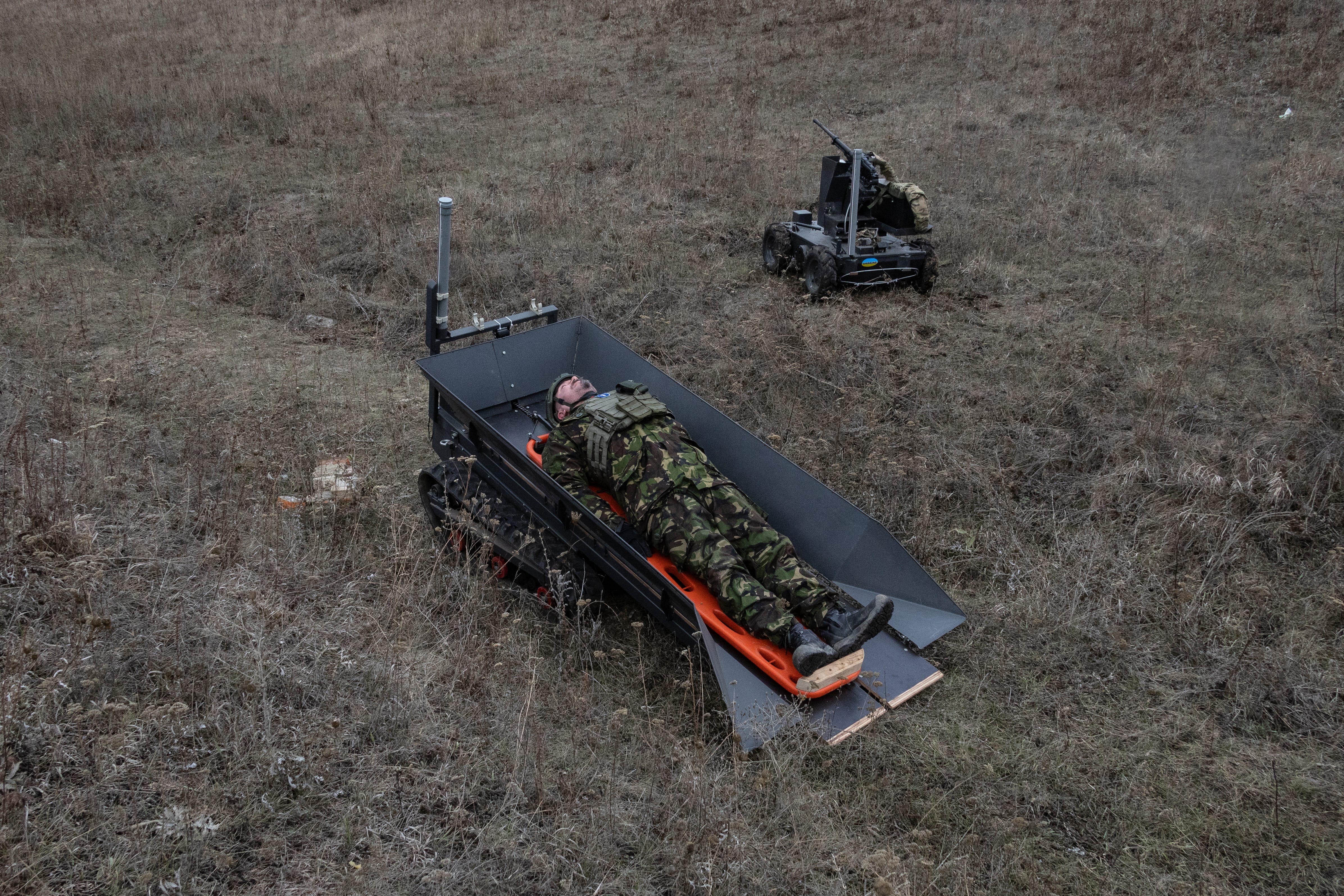
Although it can be difficult, there are ways to get wounded troops out of the kill zone. Ground robots, for instance, have become an increasingly popular choice for Ukraine because they lower the risk for medical crews. Vyshnivskyi said that Kyiv’s forces plan out routes for the small vehicles, sometimes working at night under the cover of darkness.
However, Russian drones will also track the robots. And Ukrainian troops have said that they experience technical issues at times, which could leave wounded soldiers exposed and vulnerable.
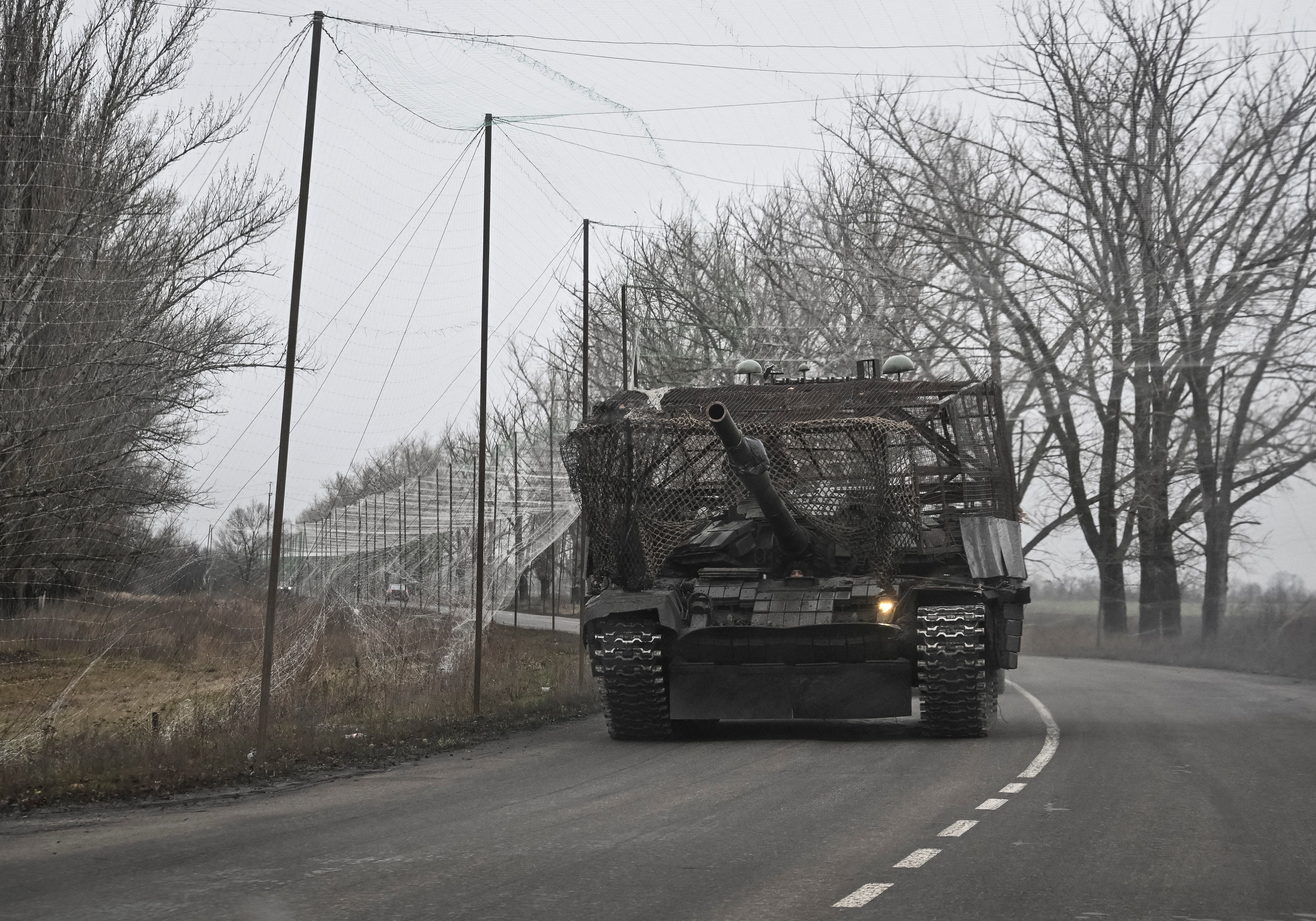
Further complicating the situation is that evacuation and logistics routes are increasingly under attack. Ukraine has tried to remedy the threat by covering key roadways with anti-drone netting, but soldiers have told Business Insider that Russia can still find small holes to stage attacks.
Even farther back from the front lines, there is still a risk. Combat medics and soldiers have told Business Insider that Russia attacks medical vehicles, while international governing bodies have accused it of striking healthcare facilities. Moscow has denied these allegations.
“We know how to resist enemy artillery,” Vyshnivskyi said. “We have counter-battery measures — we implement them and are quite successful in that. But drones are still a big challenge.”
His assessment reflects past warnings from combat medics and soldiers fighting in Ukraine, as well as Western officers training Kyiv’s forces, that drones have made immediate casualty evacuations nearly impossible, forcing a change in the approach to medical treatment.
American generals predicted years ago that high-intensity future warfare could upend the type of combat medical care that US forces enjoyed when they could achieve air superiority and send in helicopters to whisk injured troops away for treatment.
With small drones now threatening just about anything that moves near the front line and advanced surface-to-air missiles positioned to shoot down aircraft, those grim predictions have become a deadly reality in Ukraine.
Both sides in this war have taken heavy losses since the full-scale Russian invasion began in 2022, though neither has publicly disclosed any official figures. Ukraine is believed to have suffered some 400,000 casualties, while Western officials think Russia has surpassed a staggering 1.1 million dead and wounded.
Vyshnivskyi said that, in a war against Russia, NATO would face the same casualty evacuation challenges and likely see more soldiers killed and wounded than in the war in Ukraine.
NATO leaders, warning that the alliance could find itself at war with Russia, are taking into account the possibility of heavy losses and are pushing to find solutions to the problem of life-saving care in a battlespace infested with drones.
Earlier this month, NATO hosted an event in London for companies to showcase medical technology that could solve some of the issues Ukraine is facing on the battlefield, including how to conduct casualty evacuations under constant surveillance.
British Army Col. Niall Aye Maung, the medical branch head for NATO’s ACT and the medical advisor to the alliance headquarters in Brussels, told Business Insider that some of the solutions featured at the event have a dual purpose — for use in Ukraine in the immediate term and in the West during a potential future high-intensity conflict.
“NATO is certainly posturing itself to be able to manage that scenario because of the lessons learned” in Ukraine, he said.
Read the original article on Business Insider
The post Hunted by drones, Ukrainian forces hide behind darkness, bad weather, and smoke to rescue wounded troops, officer says appeared first on Business Insider.