In ancient times, audiences expressed wonderment by slapping themselves on their faces out of excitement. Then a guy named Murray proposed they move their faces out of the way and just hit their hands together. And thus, applause was born.
At the age of 16, Rob Reiner came up with this joke. He passed it along to his father, the pioneering director and comedian Carl Reiner, who passed it to Mel Brooks. Soon, the joke found its way into the duo’s seminal double act, “The 2,000 Year Old Man.” And thus, a comedy writer was born.
Over the next half century, Rob Reiner amassed a massively influential comedy legacy that showed up in a variety of mediums, forms and gags.
The Improvisation in “This Is Spinal Tap”
Few movies have had a greater effect on comedy history than “This is Spinal Tap.” It helped invent a genre that has become pervasive, popularizing the mockumentary, leading the way for everything from the TV series “The Office” to “Borat.” It would be another dozen years after “Spinal Tap” that one of its stars, Christopher Guest, would direct similarly satirical movies like “Waiting for Guffman” and “Best in Show.”
Improv was a critical part of many comedies, but “Spinal Tap” never even had a script. Reiner only used a four-page outline. Two decades before “Curb Your Enthusiasm” built an entire television series on the idea that more funny things will happen if you start with the idea of a plot without any dialogue, Reiner took a similar strategy.
Reiner not only directed the movie, but many of its most famous, often repeated bits are set up by his role as the director, nodding along as the daffy rocker played by Guest explains to him he wants to build a volume knob on his amplifier that goes to 11 because “it’s one louder.”
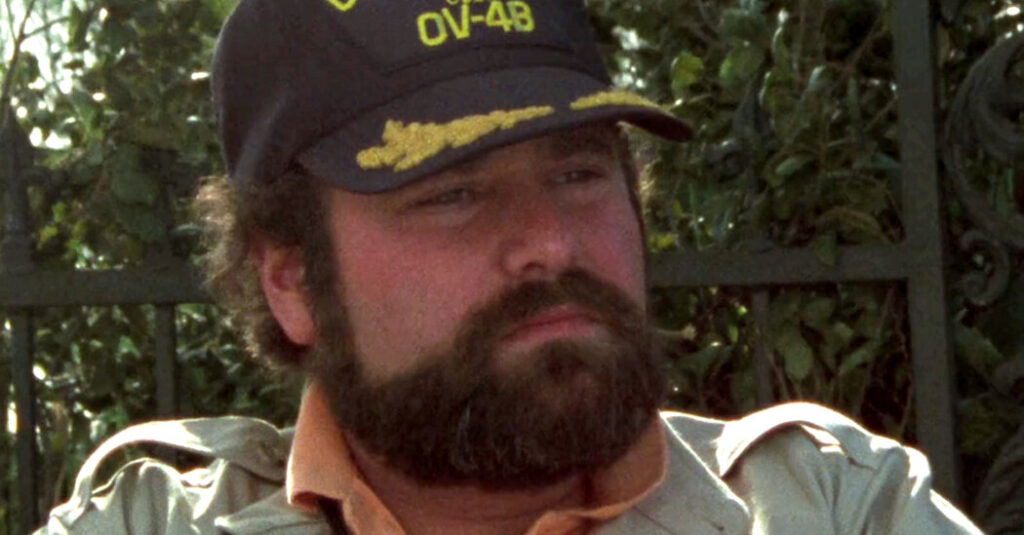
It’s Reiner who actually makes the first jokes of this movie, speaking directly to the camera, introducing himself as Marty DiBergi, a director of commercials. In a minor key bit of physical comedy, Reiner goes to cross his arms then changes his mind at the last second, letting his arms awkwardly fall, trying and failing to play this off as intentional. In this goofy gesture, Reiner tips us off that something ridiculous is on the way and also, his character is uncomfortable in his own skin.
The Gross-Outs of “Stand By Me”
Reiner directed some of the biggest laughs in the history of movies. The orgasm scene in “When Harry Met Sally…” The band members getting lost on their way to the stage in “This Is Spinal Tap.” But the loudest I ever heard a theater respond to one of his movies was during the notorious pie-eating contest scene from “Stand By Me.” This masterpiece of gross-out humor began as a story told by kids around the camp fire and ends with a hilarious, childish mess.
The Grand Guignol Horror of “Misery”
With apologies to Sandra Bernhard in “The King of Comedy,” there is no more terrifying fan in the history of movies than Kathy Bates in “Misery.” When she tells her favorite author, played by James Caan, that she’s his “No. 1 fan,” it comes off like a threat. And yet Reiner’s compassion extends to even this sociopath — and his gift for teasing out great performances crosses genres.
There’s something sad about this lonely, deluded woman. But also funny in a flamboyantly camp way. Reiner often frames her in extreme close-ups, a Gloria Swanson in her own mind. She blows kisses with gusto. And her cornpone insults — “lying old dirty birdie,” “Mr. Man” — lighten the blows of her violence. She’s a monster that makes you giggle.
The Champion of Albert Brooks and Jerry Seinfeld
Reiner’s greatest streak of movies displayed a knack for well-made Hollywood entertainments, with vulnerability and emotional warmth and happy endings. But make no mistake: Reiner was drawn to experimentation. You see this in his very strong 2023 documentary “Defending My Life,” about Albert Brooks, his onetime high school classmate. Early in the movie, Reiner tells Brooks that he was always intimidated by him, by the unusual, form-breaking comedy he would pull off.
A great appreciator of comedy, Reiner also was an early advocate of “Seinfeld” back when it was struggling in the ratings and network executives thought it needed more plot. At the height of his clout in Hollywood, Reiner told the NBC executive Brandon Tartikoff to give it a chance. On Instagram this week, Jerry Seinfeld credited Reiner with saving him from cancellation. “He saw something no one else could,” he wrote.
The Borscht Belt Sensibility of “The Princess Bride”
Reiner had certain actors he worked with multiple times, such as Cary Elwes and Guest. But nobody was a more perfect fit in sensibility than Billy Crystal, who first appeared as a mime in “This Is Spinal Tap” before getting the role of his lifetime in “When Harry Met Sally…” Like Reiner, Crystal exudes a warmth bordering on schmaltz, along with a taste for old-style Jewish showbiz. And both are on display in a dynamite five-minute scene in “The Princess Bride” that almost steals the whole movie.
Crystal plays an extremely old medieval apothecary named Miracle Max who treats the “mostly dead.” Before shooting this scene, Reiner told Crystal to forget the lines and riff. Alongside his wife, played by Carol Kane, Crystal turns this fairy-tale character into an old, Jewish macher, rambling on about MLT sandwiches (mutton, lettuce and tomato) before saying goodbye in one of the many memorable lines from the movie: “Have fun storming the castle.”
The Exasperation of “The Wolf of Wall Street”
Reiner became known to the American public as a rebellious son-in-law from his performance on the blockbuster sitcom “All in the Family.” But he settled easily into the role of father. Even in “This Is Spinal Tap,” a bearded Reiner had a paternal air about him. He came off like the uneasy adult in the room, acting concerned, absurdly patient, a little stiff.
In his funniest late-career acting role, Reiner played the exasperated father of Leonardo DiCaprio’s Jordan Belfort in “The Wolf of Wall Street.” It’s a savvy bit of casting by Martin Scorsese that even has echoes of “Spinal Tap.” Replace debaucherous heavy metal rockers with decadent finance bros and Reiner looks to be in a similar role, as the straight man in the middle of idiotic chaos.
All his scenes have the feel of freewheeling improv with Reiner losing his temper when challenging his son to explain spending $26,000 on a dinner. DiCaprio defends himself by saying that there were so many side dishes and Reiner, who had been extending the kind of good will that only a parent can, erupts: “$26,000 worth of sides? What are these sides? They cure cancer?”
Videos: Embassy Pictures (“This Is Spinal Tap”); Columbia Pictures (“When Harry Met Sally…,” “Stand By Me” and “Misery”); HBO (“Albert Brooks: Defending My Life”); 20th Century Fox (“The Princess Bride”); Paramount Pictures (“The Wolf of Wall Street”)
Jason Zinoman is a critic at large for the Culture section of The Times and writes a column about comedy.
The post How Rob Reiner Created His Comedy Legacy appeared first on New York Times.