The CEO role is being remade in real time. A collision of geopolitical instability, economic volatility, investor pressure, and rapid technological advancement has permanently altered what it takes to lead a Fortune 500 company.
The velocity of change alone, says Constantine Alexandrakis, CEO of Russell Reynolds Associates, is unlike anything he has seen in his nearly twenty years at the executive recruitment firm. “Our clients are moving at a frenetic pace,” he says. “Every company is driving transformation to either meet the moment or take advantage of it.” The issues aren’t new—trade, geopolitics, technology—but the intensity and overlap are. “The convergence of all these forces has made transformation ubiquitous and urgent,” Alexandrakis says.
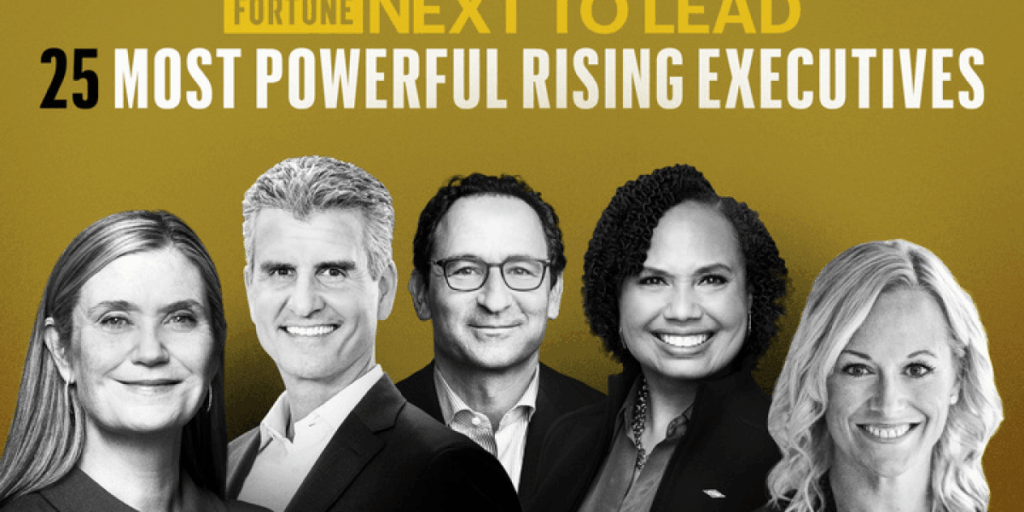
This shifting reality is reflected in the second Fortune Next to Lead list, published this morning, which spotlights 25 influential executives inside the Fortune 500 whose track records and ascent signal they’re credible, near-term contenders for a CEO seat, regardless of whether they’re actually seeking it. Some are operating just one level below the top job; others are reshaping entire divisions or industries. Collectively, they embody what CEO readiness now requires.
That readiness looks markedly different from what it once did. A decade ago, companies sought deep industry experience, strong financial performance, and the ability to lead change. Those capabilities remain indispensable—boards still expect leaders to generate growth and deliver strong financial results—but there is now an added expectation that CEO candidates can drive transformation.
“A CEO may not be a technologist,” Alexandrakis says, “but they must understand the levers to pull to use technology to drive change.”
Boards want CEOs who can “speak the language,” even as they recognize that technological revolutions rarely unfold at the pace of their hype cycles. Still, Alexandrakis notes that CEOs are now spending far more time in sustained discussions with their chief technologists and, crucially, with their full leadership teams about technology’s role across the business. AI, in particular, is pushing CEOs into a leadership model defined by judgment, adaptability, and orchestration.
Equally important, the next generation of CEOs will not succeed as lone architects of transformation. Alexandrakis describes a recent CEO transition at a large company reinventing its value proposition. Instead of directing the effort from the top, the CEO prioritized empowering each member of his leadership team to own a critical piece of it. Those leaders, not the CEO, became the public faces of the initiative. “They created a change ecosystem rather than a change-agent model,” he says.
Despite the moment’s complexity, Alexandrakis rejects the idea of a return to command-and-control leadership. CEOs are engaging more deeply on issues, especially technology, to signal urgency and model the commitment required from their teams. This shift is also redefining which roles become pathways to the corner office. While CFOs, COOs, and division presidents still dominate, AI is subtly elevating leaders such as CMOs and chief people officers who can harness it to reshape productivity, customer experience, or workforce strategy. Kraft Heinz’s chief growth officer, who made this year’s list, exemplifies this shift.
Cross-disciplinary experience is also rising in value. Boards want leaders who know their industry inside out but who have absorbed and applied innovation models from adjacent sectors.
This evolving blend of skills signals a new reality for leaders rising through the ranks. The future Fortune 500 CEOs are technologically conversant, adaptive, and results-oriented. They orchestrate teams, ecosystems, and cultures rather than dictating from above. And they understand that being CEO-ready no longer means waiting for the corner office. Increasingly, it means performing at that altitude long before the title follows.
Ruth Umoh [email protected]
The post What the 25 most powerful rising executives reveal about tomorrow’s CEO playbook appeared first on Fortune.