President Donald Trump on Tuesday added 20 countries to a list whose citizens face a full or partial travel ban on entering the United States, swelling the total to 39 as his administration seeks to further restrict legal immigration after an Afghan immigrant was charged in the shooting of two National Guard troops last month.
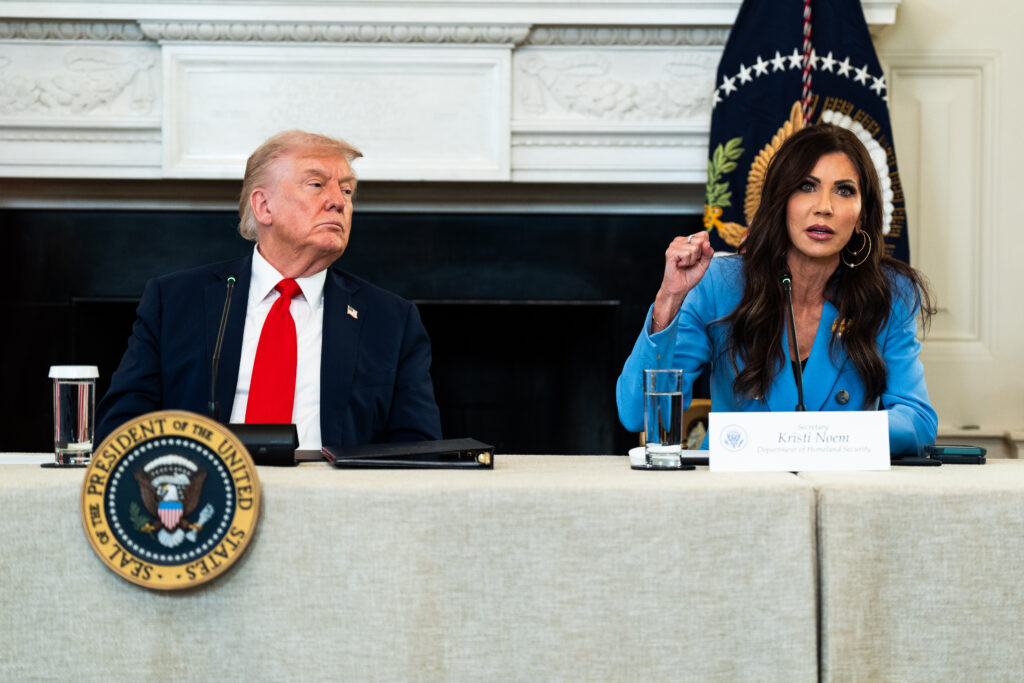
The White House made the announcement several weeks after Homeland Security Secretary Kristi L. Noem said she had recommended that the president expand the list. The additional countries facing a full ban are Burkina Faso, Mali, Niger, South Sudan and Syria. They join 12 others that were placed on the list in June, as well as Laos and Sierra Leone, whose citizens previously faced a partial ban and now face a complete ban on entry, the White House said.
The additional countries facing a partial ban are Angola, Antigua and Barbuda, Benin, Ivory Coast, Dominica, Gabon, Gambia, Malawi, Mauritania, Nigeria, Senegal, Tanzania, Tonga, Zambia and Zimbabwe.
The White House said the move targeted countries that have “demonstrated, persistent, and severe deficiencies in screening, vetting, and information-sharing.”
Trump has moved quickly to institute sweeping policy changes to block or slow legal immigration channels since Rahmanullah Lakanwal was arrested and charged with shooting two National Guard troops patrolling outside a Metro station near the White House. Lakanwal had been resettled in the U.S. in 2021 after helping CIA-led counterterrorism operations in Afghanistan.
Spec. Sarah Beckstrom, a 20-year-old who joined the Guard two years ago after graduating from high school in Webster County, West Virginia, died on Thanksgiving in a hospital bed with her parents by her side. Her colleague and friend, Staff Sgt. Andrew Wolfe, remains hospitalized in serious condition.
Lakanwal has been charged with murder, assault and firearms offenses.
Since the shooting, the administration has paused all asylum cases processed by U.S. Citizenship and Immigration Services, suspended processing of citizenship and green card applications for citizens of the initial 19 countries subject to the travel ban, and suspended all immigration-related requests from Afghan nationals.
The president has sought to use politically fraught moments to expand his crackdown on immigration. The initial travel ban in June was announced days after authorities said an immigrant from Egypt, who arrived on a visa, used a makeshift flamethrower and molotov cocktails to attack demonstrators marching in Boulder, Colorado, for the release of Israeli hostages in Gaza.
Egypt is not on the list of countries whose citizens will be restricted or barred from entering the U.S.
The administration has cited national security concerns. Officials said in June, when the initial travel ban list was released, that the travel ban was necessary to compel foreign governments to cooperate with the administration’s agenda and enforce U.S. immigration laws.
Countries included in the initial ban were deemed to have insufficient security vetting procedures for issuing passports or other travel documents and had high rates of citizens who overstayed their visas in the U.S., authorities said. Those travel restrictions included exceptions for lawful permanent residents, existing visa holders, certain visa categories, and individuals whose entry serves U.S. national interests.
Those exemptions have helped insulate the administration from lawsuits that it faced during Trump’s first term, when two versions of a travel ban were declared unconstitutional.
Trump has said that countries on the travel ban list could be removed if they make “material improvements” to their own screening procedures. But no country has been taken off the list. On Tuesday, the White House said Trump had lifted the ban on nonimmigrant visas for Turkmenistan because that nation has worked “productively with the United States and demonstrated significant progress.”
However, the administration has maintained the suspension of entry for Turkmen nationals as immigrants.
The post Trump expands travel ban to 39 countries after shooting of Guard members appeared first on Washington Post.