Like any elder millennial who loves movies, I can recite most of Rob Reiner’s by heart. I’ll have what she’s having. I’m your number-one fan. “The Princess Bride” was the stuff of sleepovers, a tattered VHS tape hanging on for dear life as five to seven excitable girls rewound and rewound the scene where Buttercup realizes that when Westley says “As you wish,” what he really means is, “I love you.”
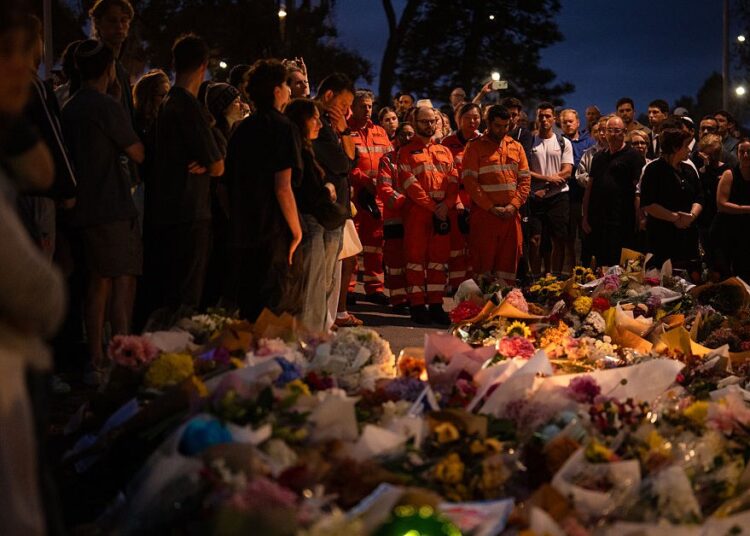
Many of Reiner’s works were love stories in one way or another, whether they represented the gauzy fairy tale kind or the stick-it-out years of marriage. A few nights ago, my husband and I realized that though we had been quoting “Spinal Tap” for years (“These go to 11”), neither of us had actually seen the whole movie. So we put it on, and I thought about how that was a love story, too — the strange intimacy of a decades-long professional partnership — and then as we shut off the TV, my phone buzzed with the alert that Reiner and his wife, Michele Singer Reiner, had been found dead in their home. Their son Nick, 32, was arrested and booked on suspicion of murder.
Eyewitnesses had reportedly seen the family arguing at Conan O’Brien’s Christmas party the night before, where Rob and Michele had apparently brought Nick because they didn’t want to leave him alone. He was a drug addict. He had struggled for years. By the time he was 22, he once told a podcast host, he had already been in rehab 17 times.
The day after their deaths, I realized there was one Reiner movie I had never seen: 2015’s “Being Charlie.”
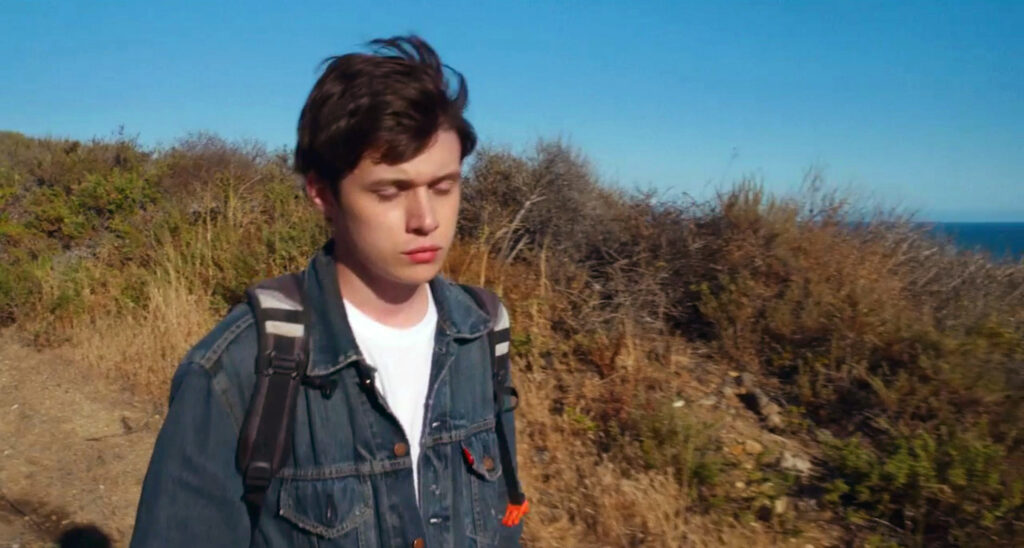
It didn’t get a big release. The most recognizable star was “The Princess Bride’s” Cary Elwes — talented but long past peak fame. The titular character of Charlie was played by Nick Robinson, a face you would recognize now (“Maid,” “Love, Simon”), but who at the time was known mostly as a child actor with sitcom credits.
Nick Reiner co-wrote the screenplay. Rob Reiner directed it. It was about the tormented relationship between a young addict and his famous father.
The movie opens with Charlie, the son, walking out of a desert rehab facility only to steal the first drugs he comes across — an old woman’s prescription oxycodone — within hours. By the time he hitchhikes home to Los Angeles, his parents have already booked him in another program; there’s a counselor from the new place waiting in the living room. His mother is a soft touch, but his father, David, is a Hollywood celebrity now running for governor, and the implication is that David would like his son’s problem to be tidied up before the polls open.
Both Rob and Nick made sure to say that the movie was fiction. In a joint interview, Nick explained that while all addicts do “unsavory” things, he hadn’t wanted his particular infractions to be captured on screen. But he acknowledged that the story is based on his life and experiences, and many of the contours are the same: relapses, reboots, relapses again. A son who has endless resources but cannot get well. Parents who have endless resources and cannot help their child. “We’ve tried everything. We don’t know what else to do,” Michele reportedly said to a friend a few years ago, a reminder that no amount of money can trump addiction; no fame can outrun it.
“Being Charlie” is not a very good movie, which makes it all the more of a heartbreaking one. You cannot imagine Rob would have signed on to direct this film if the screenplay were written by anyone other than his son: The characters are flat and one-dimensional, the observations trite. Nearly every review at the time noted that Charlie, the protagonist we were supposed to root for, came across as snotty and cruel.
But Rob’s son did write it, and Rob did sign on, and you can imagine the relief he might have felt launching the project — several months of collaborative creativity during which he was guaranteed to know exactly where Nick was and that his son was safe. His own cinematic version of a rehab program, when all others had failed.
On Monday, many people were posting quotes from the joint interview I cited above, and after I saw enough quotes, I went and watched the whole thing, and then I read every other interview they did together. They are heartbreaking in retrospect. Everything is heartbreaking, in retrospect. Every interview is Rob Reiner trying to lift up his son. Every interview is Rob calling Nick “brilliant” and “talented,” insisting that working on the movie was the most fulfilling creative experience he ever had, that he would work with son again “in a heartbeat.”
A critic from the Chicago Sun-Times, in one of the gentler reviews, speculated that “Being Charlie” would be “better remembered as the vehicle to healing for the family than a movie that made an impact.”
This is a tricky column for me to write because we still don’t know for sure what happened in that house Sunday. Or in that family, or in that relationship. Court proceedings are just beginning to unspool.
But I watched these interviews, and I watched that movie from the perspective of a parent. A parent of a much younger child, to be sure, but a parent nonetheless. My daughter is just getting to the age where she asks for privacy, sometimes, where her world is getting bigger than my husband and me. I have no idea what Rob and Michele went through, but I can fathom what it would feel like to be watching your baby, biting your tongue, biding your time, knowing their mistakes will be theirs to make and yours to helplessly observe, and then to fix if at all you can. Every parent knows this feeling.
In the last scene of “Being Charlie,” David discovers Charlie in the kitchen of the family beach house, where he had fled the night before. He asks if he can sit, and Charlie indifferently says, “It’s your house.” David tries to make conversation, and it doesn’t go well. Finally, he starts apologizing. For trusting the psychologists who said that Charlie needed tough love more than total acceptance. For pushing Charlie into rehab after rehab. David tells Charlie he loves him. He tells him: “I’d rather have you alive and hating me than dead on the street. What do you want me to do? Tell me what to do.”
“I don’t hate you. I don’t,” Charlie tells his father a few minutes later, and David is moved to tears by this faint praise, reaching for his son with the desperation of a drowning man.
Through this whole scene you can’t stop looking at David. Who has watched his son fall apart countless times. Who has been unable to put him back together. Who would do anything he could, anything at all, including taking the blame, including making apologies that aren’t his to make, including knowing that his son might be fine tomorrow, or he might be back on the streets, or he might be dead. Or he might be something else. Some horrible, horrible fate that neither of them can begin to imagine.
“What do you want me to do?” he begs his beautiful, broken, afflicted, struggling son. “Tell me what to do.”
As you wish. Jesus Christ, what this family went through. As you wish, as you wish.
The post The unbearable sadness of the movie Rob Reiner made with his son appeared first on Washington Post.