SYDNEY — Alexander Kleytman was just a boy when he fled the Holocaust and then endured a harrowing train journey to Siberia, where years of starvation left him permanently hunched. He suffered decades of antisemitism in the Soviet Union but never stopped being “a proud Jew,” his daughter, Sabina, recalled Tuesday.
It was that pride that took him every year to the Hanukkah celebration at Bondi Beach in Sydney, where he had brought his family to live in 1992.
And it was that pride — that identity — that made him, his wife and scores of other Jewish Australians the target of Sunday’s deadly antisemitic attack, in which the 87-year-old was killed while shielding his wife, Larisa, from the hail of bullets.
“Dad died doing what he loved the most,” Sabina said in a tearful interview. “Protecting my mother — he probably saved her life — and standing up and being a proud Jew: lighting the light, bringing the light to this world.”
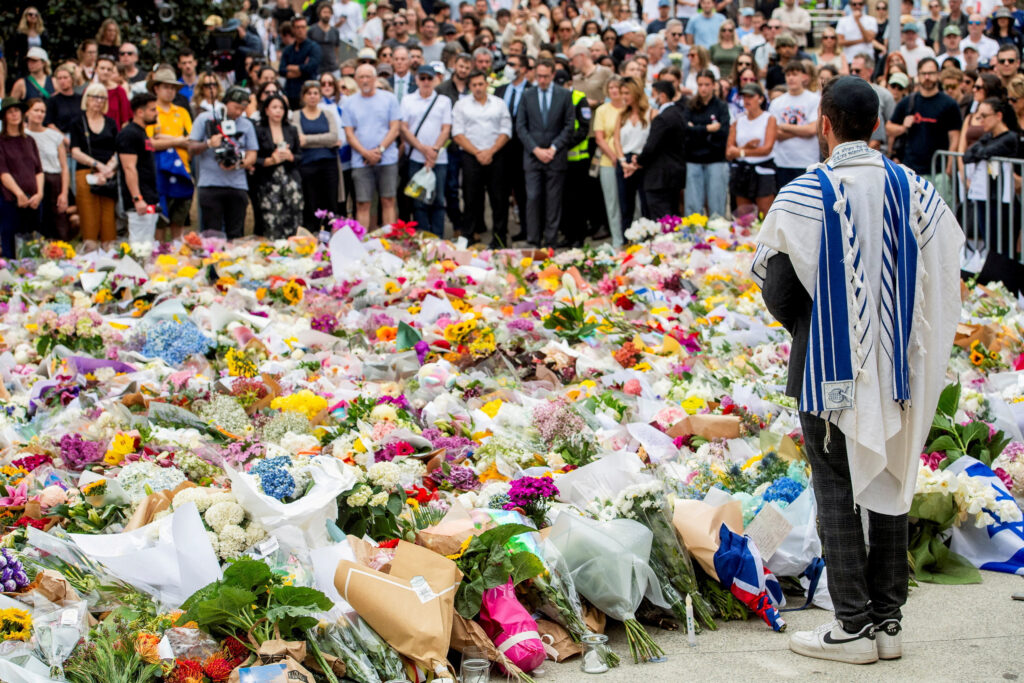
Fifteen peoplewere killed Sunday when two gunmen, apparently motivated by Islamic Stateideology, opened fire on the festive gathering. Among the dead were a 10-year-old girl who had been happily eating cake moments earlier, an assistant rabbi known for his positivity, and a 62-year-old man who threw bricks at one of the gunmen in a desperate attempt to defend his community.
But perhaps no death reflects the shock of the attack here in Australia more than that of Kleytman, who survived the Holocaust and a childhood of hardship only to die in the country he considered a safe haven.
“He lived a remarkable life,” his daughter said, “and he could have had another 10 years in him if it wasn’t for this horrendous atrocity.”
Australia has a long Jewish history dating back to the arrival of the First Fleet in 1788, said Andrew Markus, emeritus professor at Monash University in Melbourne and an expert on Jewish migration. But the biggest wave of Jewish immigrants came after World War II.
“There were a lot of people who had the sense that Europe was the charnel house of the world after what had happened to them, so to get as far away as possible was one of the attractions of Australia,” he said.
As in the Oct. 7, 2023, attack in Israel, which claimed some Holocaust survivors, there is a “tragic irony” in Kleytman’s death in a land that he and so many other Jews saw as their refuge, Markus said.
In Australia, Kleytman became a collector of stories from Jews from the former Soviet Union, writing two books about them even as he resisted his family’s pleas to pen his own memoir.
Still, snatches of that remarkable life filtered down in reluctantly told tales. He was born in 1938 in what is now Ukraine. When World War II broke out, his parents, younger brother and he fled to Siberia on a long and arduous journey with other evacuees.
“They were on a train, there were bombs coming down, so many people died,” Sabina said.
Along the way, her father fell sick and had to be hospitalized. He was separated from his family and feared he would never see them again. But he managed to reunite with them and make it to Siberia, where they shared a tiny room.
They had “very little food, almost no warmth,” Sabina said. Years of malnourishment and cramped conditions left her father partially deformed, she said.
After the war, he was eventually able to move back to what is now Ukraine — then part of the Soviet Union — where he met Larisa, the daughter of Holocaust survivors. They had Sabina and her brother and built a life there, although they could not openly celebrate being Jewish, she said.
In 1992, after the fall of the Soviet Union, Kleytman took his family to Australia. There, the civil engineer built a successful career for himself, contributing to major projects including Sydney’s Olympic stadium. He helped build his newfound home.
He reluctantly retired a decade ago, at 76, and immediately turned his mind toward writing books.
“He didn’t want to write a book about himself,” Sabina said with a laugh. “We did ask many times. He didn’t want to do it. He wanted to write books about the lives of Jews in the Soviet Union and the terrible things which we went through.”
It was in Australia that Kleytman could finally fully celebrate his Jewish pride, she said. But in the two years since the Oct. 7 attack in Israel, Kleytman began to worry that Australia was becoming less safe for Jews.
On Sunday, he nonetheless went to the Hanukkah event on Bondi Beach with his wife.
When the gunmen — a father and son identified as Sajid Akram, 50, and Naveed Akram, 24 — opened fire on the festival, Kleytman covered his wife.
Sabina, who was supposed to go with her parents but couldn’t attend, received a call from her cousin, telling her to call her mother because there was news of something bad happening in Bondi.
“I called my mom, and she said, ‘Your dad is no more. Your dad’s just been killed,’” Sabina recalled.
“I couldn’t stop screaming because this is not what you expect,” she said. “You go to a joyful family cultural event with hundreds of people, a peaceful family event where we sing, have some doughnuts and dance. Everybody brings their kids.”
“After that, it’s been a nightmare that I cannot wake up from still,” she said, sobbing.
Part of the pain for the victims’ families is the ongoing struggle to receive their loved ones’ bodies, which, according to Jewish custom, need to be buried as soon as possible. That tradition has run up against a complex crime scene investigation.
In the meantime, Sabina said, she is trying to take solace in the “outpouring of love” her family has received and the memories of a joyous and kind man: a youth chess champion who taught her to read at age 3 and spent countless hours playing table tennis with her and her brother in their Ukraine apartment; a grandfather of 11 who taught his family to be proud of their Judaism and was looking forward to lighting the first Hanukkah candle with them — only to never get the chance.
“He never stopped being a proud Jew,” she said. “Never. Not in Ukraine, and he had absolutely no plans to stop here in Australia. And apparently he paid with his life for it.”
The post He survived the Holocaust and exile only to die a hero in Bondi attack appeared first on Washington Post.