Nearly seven years after ISIS lost the last piece of its territory following a years-long battle, two high-profile terror attacks inspired by the group within the space of a weekend have demonstrated its resilience.
On Saturday, two United States Army soldiers and an American civilian interpreter were killed in an attack near Palmyra, Syria, that U.S. officials and the Syrian government have blamed on an ISIS-linked infiltrator.
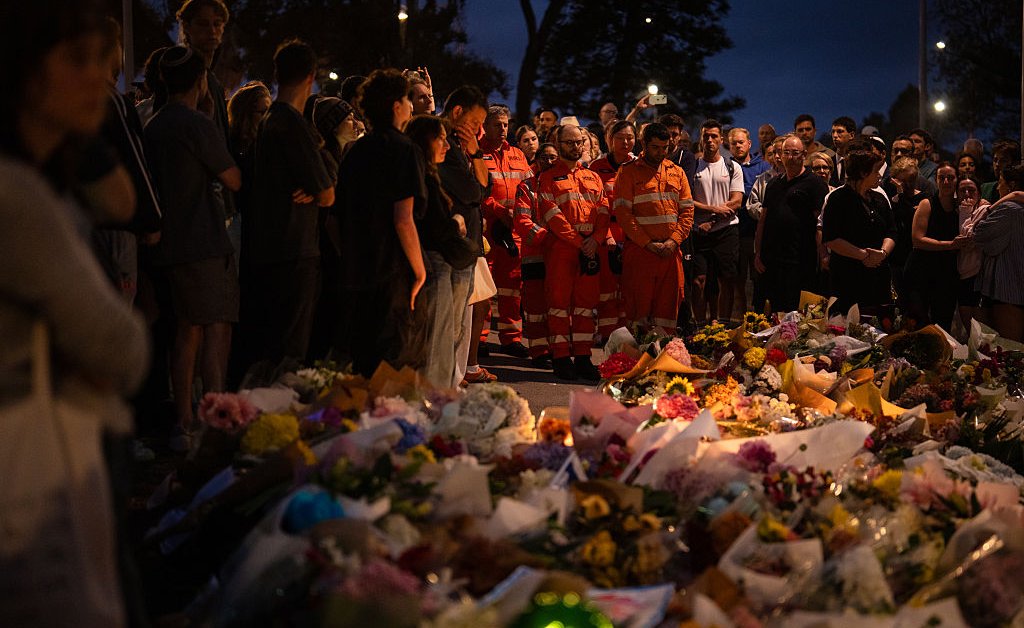
The next day, two men killed at least 15 people and injured dozens more in an attack on a Hanukkah event at Bondi Beach, which Australian Prime Minister Anthony Albanese later said appeared to have been inspired by ISIS.
Read More: A Shooting That Strikes at the Heart of Australia
“It would appear that there is evidence that this was inspired by a terrorist organization, by ISIS,” Albanese said at a Tuesday press conference. “Some of the evidence which is being procured, including the presence of Islamic State flags in the vehicle that has been seized, are a part of that.”
Never been defeated
Experts say the attacks show that ISIS remains a serious threat across the globe.
“The group’s never been defeated. That’s to say nothing about its ideology, which continues to resonate clearly with individuals around the globe,” Colin Clarke, the executive director of the Soufan Center, told TIME.
Clarke says that while he does not worry about ISIS on a day-to-day basis, the terrorist organization’s power is fragmented but influential.
The terrorist group once harbored a significant territorial stronghold in Iraq and Syria before it was defeated by a U.S.-led coalition in March 2019. Some 2,500 ISIS fighters are estimated to remain active in Syria and Iraq, however.
The U.S. provided most of the airpower in that coalition, supporting a group of Kurdish-led fighters on the ground. But Clarke says that today the U.S. and other global powers have refocused their priorities amid other mounting crises.
“After 20 years of the global war on terrorism, there was a certain amount of fatigue that set in,” said Clarke. “We’ve shifted resources to other things like the rise of China, Russia’s war in Ukraine, the Israeli war against Hamas and Gaza. But terrorism will continue to remain a threat for the foreseeable future. It’s a tactic, so it’s not something that can be defeated.”
Austin Doctor, director of strategic initiatives at the National Counterterrorism Innovation, Technology, and Education Center (NCITE), agrees. “The public record is clear that ISIS remaining active. The related threat is not going away any time soon,” he tells TIME.
“The Islamic State threat is present in its traditional base of operations in the Middle East, expanding across a growing portfolio of entrenched terrorist insurgencies in various regions of Africa, and perpetuated further by enabled and inspired attackers living in Western nations,” he adds.
ISIS groups can still provide support
Sunday’s shooting at Bondi Beach targeted participants at a Hanukkah event in an antisemitic attack, officials said, that killed fifteen people between the ages of 10 and 87. At least 40 other individuals were wounded.
The suspects traveled to the Philippines in November, one month before the attack, according to Mal Lanyon, the Police Commissioner for New South Wales. The Philippines Bureau of Immigration said the two alleged shooters listed the southern city of Davao as their final destination.
Southeast Asia has long been a “hotbed of Jihadist military,” says Clarke. “There’s a number of groups that have popped up over the years, including Abu Sayyaf, but others as well. That ISIS branch has been significantly weakened, but it’s never been fully defeated, and so it still has the ability to provide logistical support, training, and provide inspiration to individuals that live in the West and harbor grievances that dovetail with ISIS ideology.”
The Abu Sayyaff Group, ISIS’s branch in East Asia, is listed as “the most violent of the Islamic separatist groups operating in the southern Philippines,” according to a website from the office of the Director of National Intelligence. The group has long attempted to establish an independent Islamic state in the region.
Clarke pointed to other recent ISIS-related attacks, including a New Year’s Day attack in New Orleans that authorities say killed 14 people and injured dozens of others. The suspect in the case was found with an ISIS flag in his vehicle after ramming a pickup truck into a crowd of people on Bourbon Street.
“I’m very concerned that between now and the end of the year, we could see a potential plot here in the United States,” he said. “And I’m furthermore concerned because we’ve scaled back our counterterrorism capabilities quite a bit.”
The post After ISIS Is Linked to High-Profile Attacks in Australia and Syria, Is the Group Making a Comeback? appeared first on TIME.