Scrolling past TikToks about oneself. Iceland’s most luxurious lodge. The difference — if indeed there is one? — between a joint and a blunt.
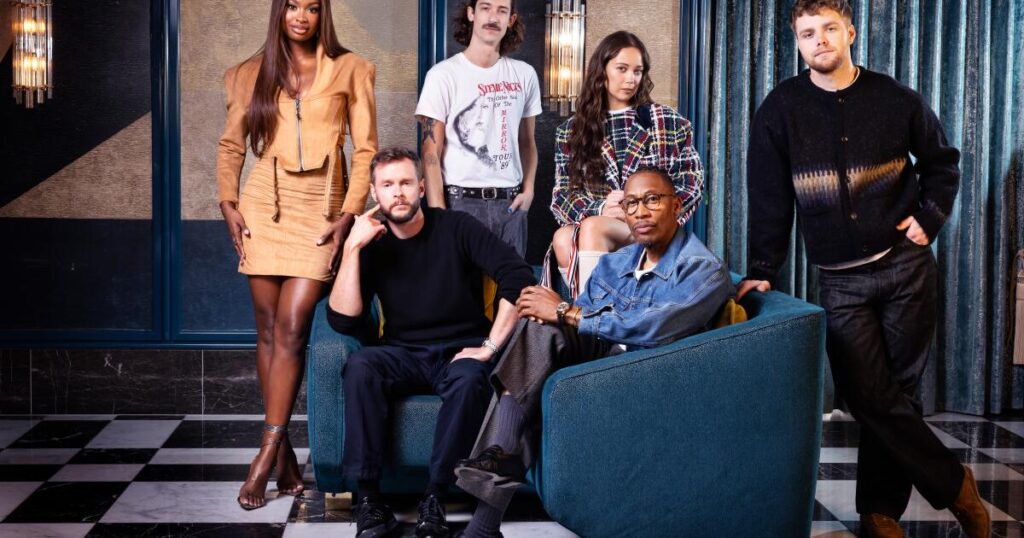
These were some of the topics of conversation when The Times gathered six musicians to discuss the work that led them to nominations for February’s 68th Grammy Awards.
Our panelists:
• Cirkut, 39, whose seven nods include producer of the year for his work with Lady Gaga, Rosé and the Weeknd, among others; album of the year for Gaga’s “Mayhem,” and record and song of the year for both Gaga’s “Abracadabra” and “Apt.” by Rose and Bruno Mars
• Coco Jones, 27, whose “Why Not More?” is nominated for R&B album
• Carter Lang, 35, who’s up for album of the year for his role as a producer and songwriter on Justin Bieber’s “Swag”
• Laufey, 26, whose “A Matter of Time” is nominated for traditional pop vocal album
• Raphael Saadiq, 59, who has a nod for song written for visual media with “I Lied to You” from the movie “Sinners,” which is also up for the original song prize at the Golden Globes
• Alex Warren, 25, who’s nominated for best new artist
A few of these folks already had connections as they walked into the Sun Rose in West Hollywood on a December afternoon: Cirkut produced a cut on Jones’ album, while Saadiq’s nephew Dylan Wiggins was one of Lang’s creative partners on “Swag” and its sequel, “Swag II.”
“But I think everyone else, we all know people who know each other,” Cirkut says, seated with the rest of the panel inside the hotel’s cozy music venue. “It’s like a degree of separation.”
“In the high school of music,” Laufey adds as she takes off her heels after a photo shoot, which leads Jones to call to her rep: “May I get those sandals, please, out of that black box?”
Where do heels rank among the worst things about pop stardom?
Laufey: Sometimes I forget just how much they suck. I think sitting in glam for two hours every time I need to appear — that’s the worst part.
Coco Jones: The guys are like, “What glam?”
Laufey: On tour, the amount of time spent just getting ready is crazy. I get into really dark holes just being on the internet for too long.
Jones: That is so real. What would y’all say is the worst part of this job?
Raphael Saadiq: Awards season.
Laufey: It’s like a humiliation ritual.
Cirkut: Do we all have some sort of impostor syndrome?
Jones: I’ve got a touch. It sucks, though — I worked my a— off. It’s not a lottery I won.
Laufey: I think it’s a good thing. Impostor syndrome means you’re still holding onto the person you were before. If you don’t have it, you’ve completely morphed into this new person.
Alex Warren: I love that.
Jones: Did anyone know that the thing that put them on the map — that that would be what did it?
Saadiq: I’m older than you guys — my first record was in 1988. I’ve been making records ever since, and I’ve been watching people win and watching people lose. I just decided to feel like the real reward is when I’m in the studio and I listen to a song. It’s an embarrassing amount of times that I listen to a song I worked on.
Jones: That’s fire.
Saadiq: So the answer is no — you never know.
Warren: My wife is the barometer for my records. All the songs I’ve written about her, she’s like, “That’s nice.” But when I played her my song “Ordinary,” she was like, “Holy s—, play that again.” For a 45-minute car ride, she listened to the song over and over again.
Carter Lang: That was before or after it came out?
Warren: Before. Then I had to fight for it.
Jones: What do you mean?
Warren: I love my label, but they had a different idea of what was the next single. They were really fighting for a separate record that I didn’t write. So I just threw “Ordinary” up on TikTok. It didn’t do well for two weeks — it fully flopped.
Jones: Shut up.
Warren: I posted 30 times to it before it even did anything. And right when TikTok was about to get banned, it started doing well. Then it got banned — I thought, Well, there goes my chance.
Jones: You posted it before your label agreed that it was the next single?
Cirkut: You leaked the record.
Laufey: What a beautiful show of persistence, though.
Lang: The power is back in artists’ hands. I’ve learned a lot this past year working with Justin and how he’s like, “I’m gonna defy everything and just put this out how I want to put it out, and my fans will lift it up.” It’s very fearless. I think that’s the climate.
Laufey: I remember meeting with labels when I started, and everyone was like, “Who do you want to be?” I always struggled to answer that question — my music is such an odd blend of jazz and classical and pop. And I felt like I’d failed the job interview of meetings with labels when I couldn’t answer because I wanted to be entirely my own person. Now, artists who do things that are different are celebrated. My last album was the thing that put me on the map, and the song that went viral was the most pure bossa nova song that I’d released.
What’s the takeaway?
Laufey: There’s an audience and a niche for everything. Trying to get everyone right now — I don’t think that’s the name of the game anymore.
Warren: The algorithm is so tailored.
Laufey: It’s not one big audience — it’s many.
How does that manifest in the way you make records?
Saadiq: You have to know what you like. Lucky for me, I never had an A&R my whole career. There were pretty good A&Rs back in the day. Now, I feel like they just hire kids who wear cool sneakers: “You must know what’s happening in the streets.” All these A&Rs, they got cool sneakers, but they don’t really know anything.
Let’s talk about AI. The fact that I can pick up my phone and ask an app to create a new song for me based on a prompt — does that scare you?
Laufey: I asked it to make a Laufey song, and it was so s— that I’m not worried. Audiences want more than just the music. They want an album with a story. They want the artist behind it that they can relate to — that they can point to and say, “She understands me.” They want to copy your outfit. They don’t want to copy AI’s outfit.
Cirkut: I was working on a song the other day, and I’ll admit it: I opened up the app. I was trying to figure out a bridge, and I was just like, Generate something for me. And it was really cool. But I felt guilty. It didn’t feel right to me. It’s a weird moral thing.
Lang: It feels like it’s treating music like it’s some type of task.
Warren: People listen to music for imperfection, and AI is creating a s— perfect product, if that makes sense.
I haven’t heard an AI voice that feels emotionally convincing.
Lang: It’s just the beginning, though.
You can see it coming?
Saadiq: Oh, yeah.
Laufey: But it won’t stand onstage in front of people and sing.
Lang: Or will it? It’s not gonna be the same. It doesn’t feel pain and pleasure. It’s not afraid to die. It doesn’t know what it’s like to be born.
Warren: There’s this “Modern Family” episode where Cam and Mitch fall in love with a refrigerator because it’s talking to them. That’s AI music to me. Sure, you like the sonics of it — you’ll listen to it a bunch and it’ll be in your Spotify Wrapped. But you’re not gonna think about how that song changed you.
Some of you have made a lot of songs. You ever come across a piece of music that you’d forgotten you made?
Cirkut: That’s rare. Sometimes I’ll be pleasantly surprised to hear a song I produced back in 2012 — like, Wow, this is actually still pretty good. Some old songs I kind of cringe at.
Everybody have their cringe items?
Jones: Please — I did Disney Channel first.
Laufey: I can hate on it, but if anybody else hates on it, I get really upset. It’s like an old photo of me — I’m the only one that’s allowed to judge it.
Jones: Great analogies over there, babe.
Laufey: I deleted TikTok three weeks ago, so I’ve been doing a lot of soul-searching [laughs].
Jones: I have a question for the producers in the room. Do you feel like working with an artist has changed from even 10 years ago with all the different platforms now? Has that affected your process?
Lang: I’m doing the same childlike nature, just discovering with them. If we’re not discovering, and it’s not a playful environment, it’s very boring to me. Bring up a funky instrument or some weird software and just do your thing.
Cirkut: Half the time I don’t even know what I’m doing. We’re starting with a blank canvas.
Is that true even with an artist like Lady Gaga, who has such an established identity?
Cirkut: Going into it, I had ideas of: OK, I want to draw influences from some of her earlier music so we can feel that nostalgia of the Gaga songs that we love. But what does that sound like in 2025? It’s fun to just play around in the sandbox and experiment and stumble upon something.
The “Mayhem” crew was pretty tight. Same for the teams that wrote and produced Laufey’s album and Alex’s album and the Bieber album.
Lang: When you form a kind of band around you and believe in a collective consciousness, everything just starts to happen in the way it’s supposed to. Even the artist levels themselves out to being not above or below anybody in the process.
Laufey: It scares me having more than two or three people in the room.
Warren: I have a book where I write down what’s going on in my life, song titles that would apply to that, the sonic references I love, then a recording on my phone of lyrics I have. I go in and I’m like, “This is how I’m feeling — how do we feel about this?” It’s very intimate.
Saadiq: You make me sound so unorganized. I don’t write anything down. I do record things in my phone, but then I forget it’s in there.
Warren: What do you do when you get writer’s block?
Saadiq: I don’t get writer’s block. I think writer’s block is something people tell themselves they’ve got.
Warren: You don’t get stuck on a verse or something?
Saadiq: Oh, that’s just me not liking homework.
Jones: I come from a family of athletes, so even though I’m supposed to lead with my emotions, I know how to turn them off to do the job. Also, being a child star and doing auditions — you couldn’t have fear. “Girl, go in there or you will not get the job!”
Laufey: I have a classical music background, and you don’t quit halfway through practicing because you don’t get a passage. You push yourself through, even if it sucks and you’re crying in the end.
Jones: Definitely crying-in-the-car vibe.
Laufey: I cry so much in the car.
Jones: “Thank you — great session!” Then you’re alone: “I hated that.”
Laufey: I see songwriting as both an art and a discipline. So many people talk about how you wait for inspiration to come upon you: You wake up on a sunny day, you open the window and you’re like, “Oh, my God, I got it!” I think it was Cole Porter who said, “Inspiration is a phone call.”
Warren: I wish I had cool quotes like that.
Laufey: He wrote musicals, so inspiration for him was when somebody called and said, “I need you to write this musical.”
Jones: Period.
What’s a small detail in your work that you’re really proud of even if most listeners wouldn’t even notice it?
Warren: The arpeggiation in “Ordinary” — I’ll shut up about this song eventually — everyone thinks it’s a harp, but it’s a rubber bridge guitar.
Saadiq: From the house in Echo Park?
Lang: Old Style.
Warren: The guy, he takes old guitars and he puts a rubber bridge on. It’s like 200 bucks.
Saadiq: Same guitar is what I played on “I Lied to You.” Every instrument you buy, you hope you’ll get to do some type of production that it fits. That guitar, it’s the one.
Lang: On “Swag,” most of the songs started with the same two instruments: a drum machine and a little synth patch I had on my computer. I look back to the way those songs were fleshed out, and they don’t sound like they’re all the same. But there was some inspiration in those boxes.
Laufey: I had this challenge for the album where I wanted to write with a musical code. So I wrote a melody based off the letters of a person’s name.
Warren: Jesus.
You Da Vinci Coded it.
Laufey: Shostakoviched it. He embedded his own name in a melody that he used again and again and again.
Jones: One of my proudest moments was when my album was delayed because everything wasn’t getting cleared in time. It made me so upset at the time — I had a date in my head. But when I knew that date wasn’t gonna work, I stopped lying to myself, and I was like, “The album’s not finished.” I knew there was something missing, and then I found that missing piece.
Cirkut: This is a very producer-nerdy thing, but I’ll say the kick drum on “Abracadabra.” I must have tried like 100 different kicks. It’s just a drum, but that’s the heart and soul of a dance record. The song had already gone to mix and I swapped it out and was like, That’s it.
Laufey: It had me on my feet at the Mayhem tour.
Name something you loved this year not connected to anyone here.
Warren: I’ve been listening to Sienna Spiro’s project on repeat for the last three weeks.
Saadiq: There’s this guy named Junie Morrison, and he has a live record from 1975 that I found on streaming. I never heard him play live before, and I’m in the car playing it over and over.
Jones: Destin Conrad. Whatever he’s doing, I really see him in it.
Cirkut: I absolutely loved the documentary about the creation of “We Are the World.”
Laufey: I’ve been getting back into Joni Mitchell, listening to the “Both Sides Now” album. The orchestrations are just so beautiful — fresh but really classic. They were done by Vince Mendoza, and then I kind of went down a Vince Mendoza rabbit hole.
Lang: I’m thinking about a record that I just came back to by this artist Darondo, who made a few amazing albums. My old band in Chicago used to play one of his songs, “Didn’t I,” and I started playing that song for myself again.
Saadiq: Darondo’s from my hometown. He lived right next door to my friend.
Lang: He changed my whole s— up. Something about that song just makes me smile. I shared it with a group of my friends today in a group chat — just like, “Happy Friday, y’all.”
Laufey: Can I be in this group chat?
The post 2026 Grammy nominees on why power is still in the hands of real artists. Sorry, AI appeared first on Los Angeles Times.