There were beers in Honolulu and coffees in Vienna; lengthy drives across the southwestern United States and repeat visits to Los Angeles on a countrywide journey. Eventually, the airports to gain access to faraway cities like Sharjah, in the United Arab Emirates, and São Paulo, Brazil, started blurring together.
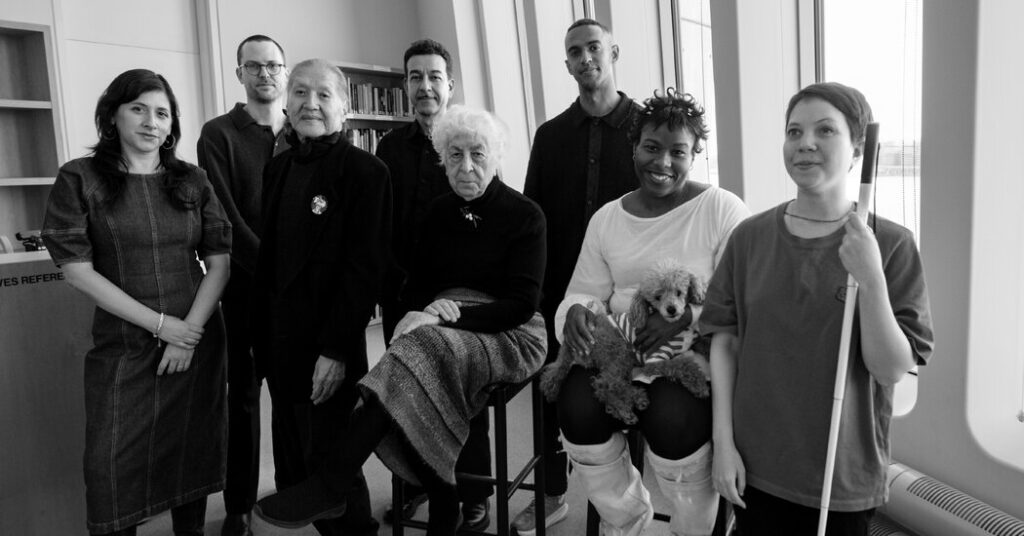
After a year of constant traveling and more than 300 studio visits, the curators Marcela Guerrero and Drew Sawyer have assembled 56 individual artists and groups for the 2026 Whitney Biennial, a survey of American contemporary art scheduled to open on March 8. The exhibition — the 82nd biennial — will include a geographically diverse set of artists such as Gabriela Ruiz, born in Los Angeles; Kamrooz Aram, from Iran; Jasmin Sian, born in the Philippines; and Sung Tieu, originally from Vietnam. (You can find the full list of artists on the museum’s website.)
“There will be new discoveries, even for art-world insiders,” Sawyer said, noting that many of the artists have not frequently been shown in New York.
Perhaps the most recognizable name on the list is Julio Torres, the actor and comedian who previously wrote for “Saturday Night Live” and recently had a show called “Color Theories” at Performance Space New York. He is collaborating with the artist Martine Gutierrez on a new performance work.
The majority of artists are millennials; about 60 percent were born after 1980. Most have primary residences in New York or California, and nearly a third self-identify as queer
“What Marcela and Drew have put together doesn’t try to simplify the strangeness of our times,” said Scott Rothkopf, the museum’s director. “It allows visitors to encounter the world as artists are sensing it, structurally unstable and emotionally charged yet also full of possibility.”
Guerrero said that the exhibition will help audiences see how artists are living and working today. “Expanding the notion of what American art is — or even what America is — was fun,” she said, “and not typically part of what we do.”
The curator explained that the biennial would explore themes including infrastructure and kinship to understand how artists connect with the world and sometimes reject it, questioning the role that the United States has in global affairs. She said that artists felt like they were living in “weird times,” observing the shifting nature of American politics and the scale of recent environmental disasters like the Los Angeles wildfires.
Although the Whitney Biennial typically focuses on artists born and based in the United States, some of the most interesting additions to this year’s exhibition come from artists whose lives have only been touched by American influence.
The photographer Mao Ishikawa, 72, was born in Okinawa, Japan, when it was occupied by American troops, and she later documented the lives of Black soldiers stationed there in the 1970s, while also working as a bartender and photographing her female colleagues.
Aziz Hazara, 33, an artist from Afghanistan, created a continuing project called “Coming Home” about the presence of the American military in his country, shipping several tons of garbage from a former air base outside of Kabul to the United States. Because of the Trump administration’s recent ban on travel to the United States by citizens of Afghanistan, it’s unlikely that Hazara will attend the exhibition when it opens.
For decades, the Whitney Biennial has functioned as a cultural barometer, raising the profile of participating artists and sometimes provoking controversies that speak to larger tensions in American society. The last edition included the message “Free Palestine” in the blinking letters of a neon sculpture by an artist, surprising curators who nevertheless decided to keep the work on view. Earlier versions have spurred national conversations about racial sensitivity and the ethics of museum philanthropy.
In his catalog essay for the biennial, Sawyer noted that curators organizing the 2026 biennial encountered “a terrain of hesitation and wariness toward the institution” by artists concerned with the Whitney Museum’s suspension in June of its Independent Study Program after students tried to stage performance art in support of the Palestinian cause. Administrators said the event would have violated the institution’s community standards.
During an interview, Sawyer said that curators navigated these conversations with participating artists. And there are a few artists included in the Whitney Biennial with personal connections to Palestine, including Basel Abbas and Ruanne Abou-Rahme, who collaborated on a multichannel video called “Until we became fire and fire us,” which reflects on Palestinian erasure. Curators have also selected a series of 10 digital artworks by Samia Halaby, the 88-year-old abstractionist who had a major exhibition canceled at Indiana University in 2024 at a time when several institutions were canceling Palestinian artists.
“The show, my dealer tells me, is an important one,” Halaby said in a phone interview. “The pieces are all from the late 1980s when I purchased my famous, little, sexy Amiga computer and started programming like a fiend who was lost in the world of numbers.”
Sawyer observed that the New York art scene had overlooked Halaby, even as she maintained a TriBeCa art studio and expanded her reputation overseas.
“We are giving platforms to artists that we felt were making major contributions to the field,” Sawyer said.
Another artist included in the show is Kimowan Metchewais, from the Cree and Cold Lake First Nations, who died more than a decade ago, at 47 years old. His photography was highly influential among Native American artists, and a recent publication by the nonprofit Aperture Foundation raised his profile among curators. That book of photographs led Sawyer and Guerrero to the National Museum of the American Indian’s storage room in Washington, where they were able to source a collection of Polaroids including self-portraits, landscapes and fragile paintings for the Whitney Biennial.
The oldest artist included is the 92-year-old painter Carmen de Monteflores, who, curators said, was one of the most surprising discoveries in their research. She is the mother of the conceptual artist Andrea Fraser, 60, who is also included in the exhibition.
Guerrero said she received an email from Fraser saying, “‘My mother is an artist. Here are two PDFs about her.’” She was surprised to find a trove of psychedelic artworks made in the 1960s of nude men and women. Over the last few years, Fraser, known for institutional critiques, which she performs as different personas, had started connecting her own practice with the rejection her mother had experienced as a young artist.
“My preoccupation with value probably goes back to my experiences in my mother’s studio,” Fraser said during an interview. “When I became a conceptual artist, I saw my mother making all these objects that nobody wanted, and she had to store for decades.”
By the 1970s, after facing rejections from museums and galleries, her mother abandoned her art practice. “That informed Andrea’s relationship with the art world,” Guerrero said.
But Fraser’s confidence in her mother’s painting grew, and she plans on exhibiting her own quintet of wax toddler sculptures to evoke her earliest memories inside her mother’s art studio.
These images of kinship in the 2026 Whitney Biennial sometimes collide with the harsh realities of living in the “weird times” that curators are using as shorthand for political and economic disruption. The museum awarded another Biennial artist, the sculptor Kelly Akashi, $150,000 in fabrication costs to create a monument to victims of the Los Angeles wildfires. Akashi, 42, is recreating her chimney — the only part of her home in the Altadena neighborhood left after the fires — with glass bricks and mortar. Her artwork will be part of the museum’s Hyundai Terrace Commission.
“When I remember that time, I remember all my neighbors’ chimneys standing as markers to our homes and lives,” Akashi said. “It’s a really big honor to do this project because the museum is giving me and my whole community a platform to be seen.”
Zachary Small is a Times reporter writing about the art world’s relationship to money, politics and technology.
The post Whitney Biennial Names 56 Artists to Unwind These ‘Weird Times’ appeared first on New York Times.