Recently, there was a period of six months in which Renate Reinsve had five films come out.
By the end of all the press, “I couldn’t hear my own thoughts anymore,” she said in a recent video interview.
So, when she got a break, Reinsve flew to Iceland and camped alone in the wilderness. It felt like home for the Norwegian actress, who grew up about 45 minutes west of Oslo in Solbergelva, where she would walk through the forest on the way to school.
“I really find I go back to a good state of peace and just feel like myself,” she said.
That is important to Reinsve, whose breakout performance in “The Worst Person in the World,” the 2021 film directed by her countryman Joachim Trier, earned her best actress at the Cannes Film Festival and altered the trajectory of her career.
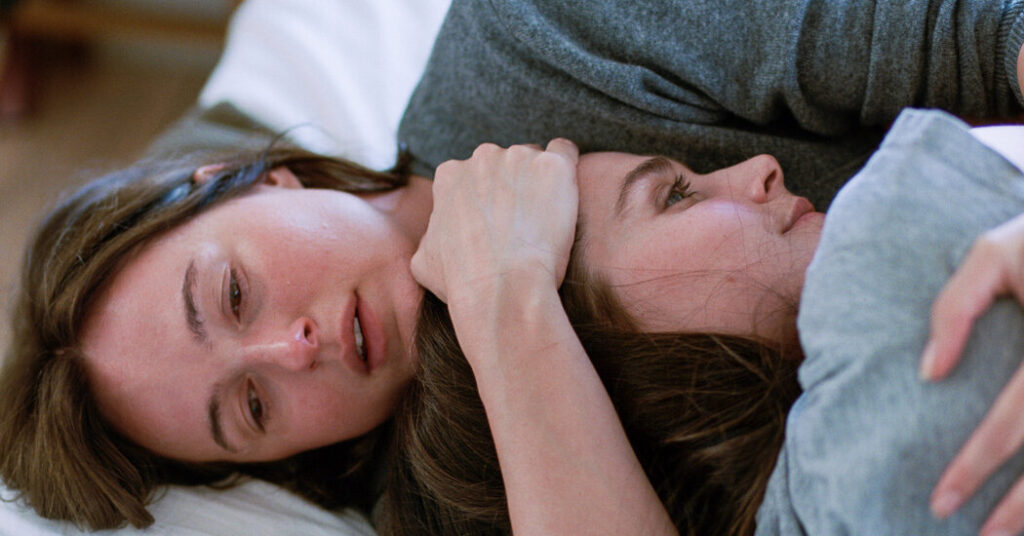
This year, Reinsve reunited with Trier in “Sentimental Value,” a drama in which Reinsve plays a stage and television actress who is invited to act in a film directed by her estranged father, played by Stellan Skarsgard. After she turns it down, a Hollywood actress, played by Elle Fanning, is cast instead. Like many of Trier’s films, the film explores intimate themes of love and family.
After five weeks between Los Angeles and New York, Reinsve, 38, spoke to The Times before flying home to Oslo. The following conversation has been edited and condensed.
It’s been a big year for you. How does it feel to go home for the end of it?
I’m not going to talk about myself one bit for four weeks. I’m going to ask everyone else questions. And just go to the forest, maybe snowboard, do my normal stuff, just be at my house and hang out with friends. It’s my first time being totally off in a while. So I’m going to really enjoy that.
A lot has changed for you in only a few years since “The Worst Person in the World.” What’s different in how you approach a role today compared to then?
I think there are some undercurrents of this kind of lifestyle that will change you a bit, but I’m not exactly sure what. I always try to go back to my roots and try to see the people that I’ve known for a long time to stay in contact with who I am.
That movie was so big for me because it was the first time I acted in that way, being very open. Not that the character was necessarily me, but it was a very honest attempt to try to imagine myself in those circumstances. So it was more like opening up to what would come up on set. Both me and Joachim really love going into something that is kind of melancholy, or shame and love and loneliness and all these big themes — but with levity, with a lot of playfulness to it.
When that film came out, so many people felt that they recognized that character, and that also felt incredible to have been so honest with some things that I don’t necessarily accept with myself, or think is hard to be in contact with. It just felt so much less lonely to have people actually loving that character and feeling seen. The movies that I’ve loved watching my whole life are the ones when the movie is trying to be very honest and authentic and curious about some themes, but it doesn’t necessarily tell you what to feel.
How do Norwegian productions differ from American ones?
I feel that there is a difference, but I’ve only been in this for five years, so I might be wrong. But it feels a little bit like in Europe, the director’s vision is the most sacred thing and everything revolves around that. But in America there are also different forces, and the power dynamic is spread across more people and how the movies are financed is so different.
In Norway, it’s not necessarily a positive thing that you become a star. But in the U.S. it is a positive thing because it can fund the movie. And I really love to work with a director that has a very strong vision and then that I will find a way to complement that vision by building my work around what the movie wants or needs.
What is it about Trier’s process that makes you want to work with him again and again?
Joachim’s production spends a lot of time and focus on actors. For his movies, the kind of emotion that comes in the situation will dictate the movie, and the editing also. He’ll build a story around if something really great happens one day. And that is scary, because you don’t have control. It kind of just has to happen by itself. But then the emotional events, when they occur, can be even richer and more nuanced and detailed.
It feels more safe to decide on what you’re going to do and how beforehand — like you can never go wrong. But for me, I could never get to a place where my performance is so nuanced if I don’t have any control. So what comes out is so nuanced and I don’t know intellectually what just happened.
You’ve talked about having a rebellious streak since you were a child.
You can’t be an actor and do exactly what you’re told. The risk of doing something and being a little bit rebellious I think is a very important factor into making it alive when you act. So even though I act in big scenes with grief or loneliness, I’m always having fun, exploring within the frame of loneliness or shame because I’m so deeply interested in human psychology and how we function together and social structures. It never empties. I’m always so interested in it.
Where does that come from?
I’ve thought like that since I was really little. I used to try and play out the grown-ups’ world. I made cities in my room. I remember sitting in a stroller and someone talked to me in a baby voice and I was like, “Why would you talk to me like that?” I loved writing stories and getting all the neighbor kids to perform it in the garden. I remember one was based off Alice in Wonderland.
Last thing — you’ve talked about your interest in quantum physics. Tell me more.
I sometimes go into these rabbit holes of things I’m interested in. I started last year and it’s a relief reading about something that is so. … In physics, everything has rules and order and you can predict so many things. But in quantum physics, you have randomness and there’s something so liberating to me about that. I just love that the really mundane world we live in, in a way, the physics of everything, inside that is so chaotic. I kind of love the notion of that.
Stefano Montali is a news assistant at The Times who contributes reporting across various sections.
The post Renate Reinsve Talks Levity, Joachim Trier and Quantum Physics appeared first on New York Times.