In the late 1800s, when the word “capitalism” began to be used to describe an economic system, it wasn’t meant as a compliment. One of the earliest uses was by the French socialist Louis Blanc, who called it “the appropriation of capital by some to the exclusion of others.” Since that time, the pendulum has oscillated wildly as to whether capitalism is the best or the worst way to order an economy. By some measures both qualitative — the election of the socialist Zohran Mamdani as mayor of New York — and quantitative — a recent Gallup poll showing that socialism is increasingly popular, particularly among the young — right now, capitalists should be worried.
There are theories as to why this is, most of which have to do with people feeling caught in the pincer movement created by the rise in costs like housing and food and the stagnation in incomes. In an email from 2020 that began making the social media rounds after Mamdani’s victory, Peter Thiel, the techno-libertarian founder of PayPal, wrote: “When one has too much student debt or if housing is too unaffordable … one will have negative capital for a long time. And if one has no stake in the capitalist system, then one may well turn against it.” “The kids aren’t alright” is the headline of a recent piece in Oxford Economics, which argues that today’s economy could have a “long term scarring impact” on younger generations.
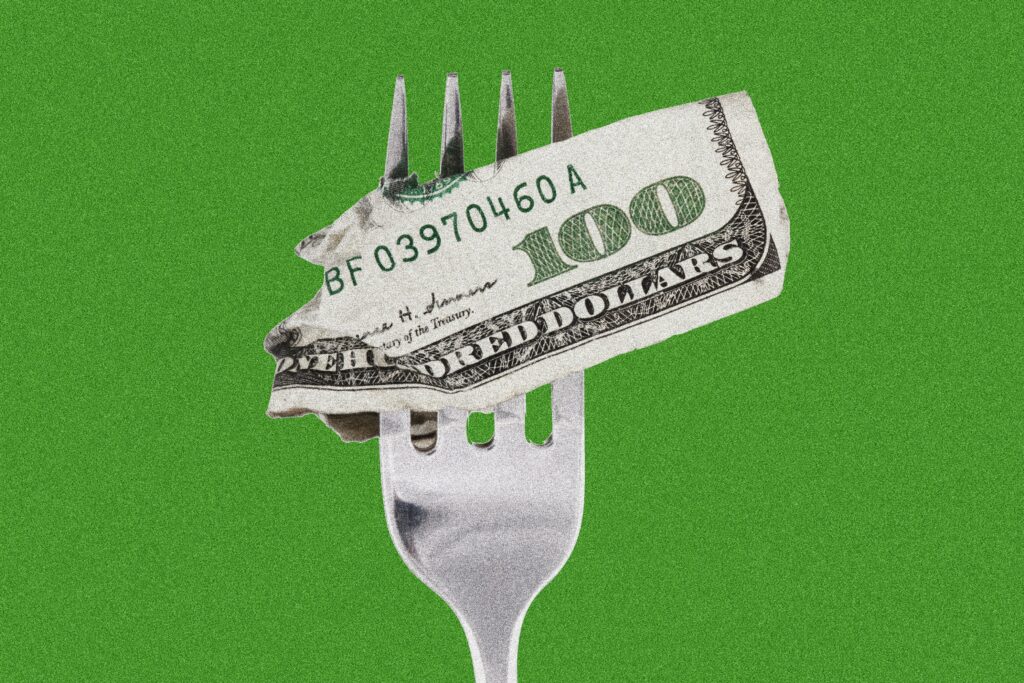
The disenchantment might also be because of the way capitalism seems to be functioning in some of our most visible and important industries. In the beautiful theoretical version of capitalism, people pursue profits and Adam Smith’s “invisible hand” works its magic. Or as Smith, who is sometimes regarded as the founding father of capitalism wrote in his famous opus “Wealth of Nations,” “It is not from the benevolence of the butcher, the brewer, or the baker, that we expect our dinner, but from their regard to their own interest.” In that version, we get fed. But today’s capitalism can look more like a nasty claw taking dinner off the table than it does a hand bringing bounty.
The twist is that this isn’t necessarily capitalism’s fault.
The most painfully visible example of an industry where capitalism seems to be malfunctioning is health care. The headline numbers say it all. The U.S.’s spending on health care is by far the highest among wealthy countries, but life expectancy in the U.S. is below the average of other rich peers, and the U.S. ranks last overall among 10 high income countries on health system performance, according to the Commonwealth Fund.
It’s easy to point a finger at the profit motive gone wrong. “The function of a rational health care system is to guarantee quality health care to all, not huge payouts for stockholders and executives,” said Sen. Bernie Sanders (I-Vermont) in early 2025 in response to a study about the rich profits made by top U.S. health care companies.
For sure, there is plenty of corporate greed in health care. But that’s too simple an explanation for why health care doesn’t deliver the outcomes we want. Even if that beautiful theoretical version of capitalism in which greed translates into societal good could work, the necessary mechanisms aren’t there. “In health care, none of the seven requirements of a competitive free market are remotely satisfied, nor can they be,” says Alan Sager, a professor at the Boston University School of Public Health, who lists those seven essential elements, like a lack of artificial restrictions on supply, demand and price, in his book, “The Easiest.”
Our health care industry is actually a riddle of private market profit incentives mixed with government money wrapped in an enigma of confusion. For instance: The government decides on reimbursement levels for Medicare and Medicaid, so it effectively decides which hospitals will thrive, and which will fail. Lack of transparency and hospitals cutting deals with insurers mean that the cost for the same MRI in the same region could vary by a factor of as much as 10 — but there isn’t any way for consumers to comparison shop. If you have insurance, you might not even care. Roughly a third of spending goes to administrative costs, in part to satisfy government regulations, Sager says. And so on. “Reliance on failed markets to make most of the big decisions in US healthcare—combined with government incompetence—results in anarchy,” Sager says. “That’s clinical, financial, caregiving and legal anarchy.”
It’s hard to find Smith’s butcher and baker in the American health care system.
Big Tech — in some ways the hero of the American economy due to the wealth and innovation coming out of Silicon Valley — might also be an antihero. Social media has made Mark Zuckerberg into a centi-billionaire while there are complaints that it has damaged kids and fractured society. Platforms started out as good for consumers and businesses. But there are complaints about the declining quality of huge platforms for consumers, from Google search to Amazon’s store rankings, where what you see is often based on who paid the most. The author and technology activist Cory Doctorow has an explanation for it, which he calls “enshittification.” The key idea is that as these platforms have become increasingly powerful, they have become “chokepoints” that squeeze more value than they deserve out of both buyers and sellers. Doctorow’s view has clearly resonated. Both the American Dialect Society and the Macquarie Dictionary have called enshittification the word of the year.
Part of the problem, argue some observers, is the sheer size and scale of today’s tech platforms. Tim Wu, who was former president Joe Biden’s adviser on technology and competition, and whose new book is called “Age of Extraction,” argues that their monopoly-ish status has allowed them to sacrifice innovation for short term profits. “The real threat is that monopoly power becomes self-perpetuating — insulating itself from competition and warping capitalism into something else entirely,” he writes.
Just as no one has been able to fix health care, no one has stood in Big Tech’s way either. “A signal feature of the last decade has been a political failure to in any way— even the most modest— to restrict the extractive models of the Big Tech platforms,” Wu says today. Cases that have been brought, like the Federal Trade Commission’s case against Meta, have failed. Proponents like Sen. Amy Klobuchar (D-Minnesota) argue that’s because “our laws are not keeping pace with advances in technology.”
In Smith’s terms, it’s as if there were only one combined butcher/baker where everyone had to shop, and it could charge farmers whatever it wanted for the ingredients and consumers whatever it wanted for their food.
Then there’s private equity — an industry that might be the purest manifestation of what makes people uneasy. It’s been called capitalism on steroids, and in its early years, maybe it was that. But now, the investors can win even when everyone else loses. That gives critics plenty of ammunition. “It is a wealth extraction business model period full stop,” said Dennis Kelleher, the CEO of Better Markets, a nonpartisan organization that advocates for financial reform.
“The reliable and robust returns private equity provides for investors are dependent upon — not divorced from — the value that private equity-backed companies create for consumers, families, and workers,” said Will Dunham, the CEO of the American Investment Council, which lobbies on behalf of private equity. “Private equity-backed companies consistently show stronger revenue growth, job creation, capital expenditure, and higher wages than their non-PE backed competitors. And private equity’s commitment to supporting businesses over the long haul is one of the reasons why public pensions rely on it to bolster retirement benefits for teachers, firefighters, and other public servants.”
One problem is that low interest rates enabled financial engineering such as the euphemistically named dividend recapitalizations, in which the private equity owner adds fresh debt to the company — thereby “recapitalizing” it — but strips the money out of the company to pay investors a dividend. In a new paper, Abhishek Bhardwaj, an economist at Tulane University, and colleagues found that a dividend recapitalization “dramatically increases the chances of financial distress” and “reduce employee wages,” among other not good things.
Another problem is that the legal system effectively insulates private equity firms from responsibility. “The original sin of private equity, the basic reason it has so many bad consequences, is that the PE firm typically has operational control, but it’s legally very hard to find them responsible,” says Brendan Ballou, a former special counsel at the Department of Justice and the author of “Plunder: Private Equity’s Plan to Pillage America.” He points out that even when a company owned by a private equity firm does something terrible, and both the company and the PE firm get sued, the case against the PE firm is often dismissed — because the courts say that the company is owned by funds managed by the PE firm, not the PE firm itself. “There’s this perception that PE is an extreme form of capitalism, a heat seeking missile for profits, but I try to put pressure on that analogy,” Ballou says. “Instead, it’s a perversion of capitalism created by our legal system.”
It’s as if Smith’s butcher and baker could poison you, but escape any punishment by arguing they weren’t responsible— oh, and still get rich.
A free market absolutist might try to argue that in all these industries, the invisible hand would work its magic if the government just got out of the way. Smith himself didn’t believe that. The “invisible hand” was a metaphor he used sparingly, not a justification for unregulated capitalism. He believed that one key element in turning self interest into a social good was … competition. He also believed that government regulation was necessary, particularly in certain areas. “People have a misperception of Smith,” says Luigi Zingales, who is an economist at the University of Chicago and my co-host on the podcast “Capitalisn’t.” “He was a big believer in the benefit of competition, and was very aware that in some situations we need regulation. He was also very concerned about the concentration of power.”
Even beyond Smith, there’s a deep historical rationale for the role of the government in shaping markets. In his new book “Capitalism: A Global History,” Sven Beckert, who directs Harvard’s Study on Capitalism, argues that “the free market … was nothing more than a figment from the very inception … it was the state that made the market.”
What we see in these industries isn’t so much capitalism run amok as it is a larger failure of the state to set the right rules. The problem is different in every industry, and each one might require different rules. We might need less of the profit motive in health care, at least in the actual provisioning of care. We might need more of Smith’s capitalism — more competition — in Big Tech. We might need better laws for private equity. The answer isn’t to throw out capitalism. It’s to make markets function so that to the extent possible, the profit motive can also serve the greater good.
It’s not at all clear that our government is capable of changing any of this, especially given the amount of money pouring into the coffers of elected officials from businesses trying to write the rules so they can make more money. Which might prove to be a short-term win, because if it leads to more and more cynicism about capitalism, it could eventually rebound to hurt those who most want capitalism to survive. So those who want capitalism to keep winning should actually take Smith to heart, and make sure that the modern equivalents of the butcher and the baker are helping the rest of us eat too.
The post A reckoning over capitalism appeared first on Washington Post.