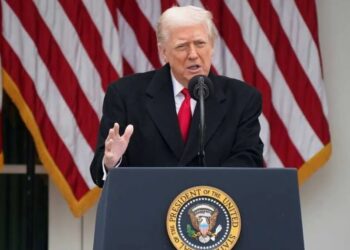
Three Americans were killed over the weekend in central Syria in what President Trump called an “ISIS attack against the U.S.” Their deaths were the first American casualties on Syrian soil since the fall of the dictator Bashar al-Assad in December 2024.
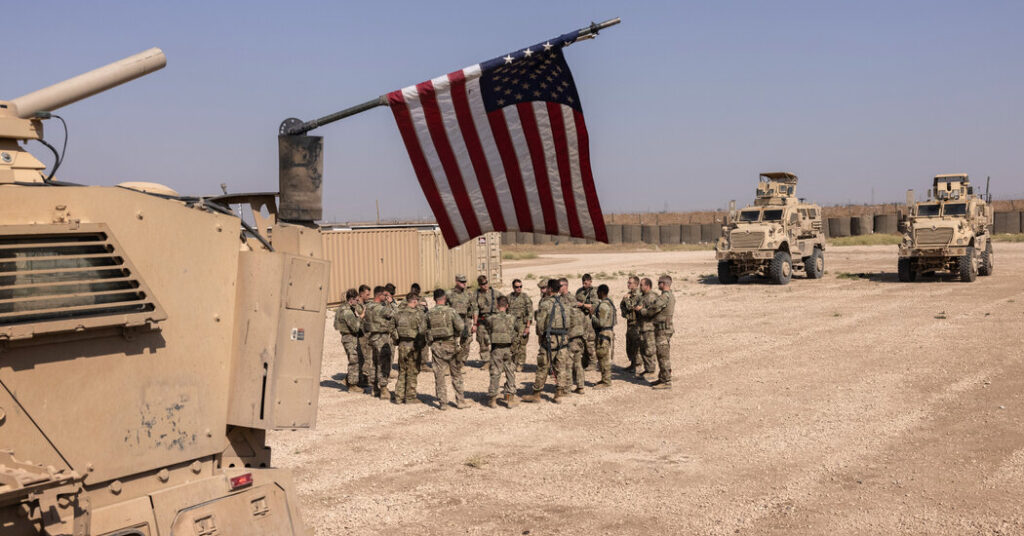
The attack is a reminder that there are still U.S. troops in Syria — around 1,000 today, according to a Pentagon official — fighting Islamic State, and of the deadly threat that the extremist group still poses.
The United States started drawing down hundreds of troops from northeastern Syria this year, and Mr. Trump has expressed interest in pulling more out.
Why are U.S. troops in Syria?
The first open-ended deployment of U.S. troops to Syria was in late 2015 under President Barack Obama. They were sent to support rebel groups in the country fighting Islamic extremists, including the Islamic State during Syria’s civil war.
While the number of U.S. troops in Syria has fluctuated from several hundred to thousands in the past decade, as of December 2024 — when Assad was ousted — there were around 2,000 in the country, according to the Pentagon.
Since then, ISIS has shown renewed vigor in Syria, attracting fighters and increasing attacks, according to the United Nations and U.S. officials. In addition, thousands of its hardened fighters are held in prisons in the northeast of the country, guarded by U.S.-backed Syrian Kurdish forces. Two senior U.S. officials said in April that the American troops, which included conventional soldiers as well as Special Forces, were providing counterterrorism assistance to Kurdish fighters and helping to operate detention camps.
The U.S. military started pulling troops from Syria in April as part of efforts to reduce troop levels in Syria to about 1,400. While Mr. Trump has expressed deep skepticism about keeping any American forces there, U.S. military officials have recommended retaining at least 500 U.S. troops in Syria.
What’s the political situation in Syria?
The Assad regime was ousted by a rebel coalition led by Ahmed al-Sharaa, a former rebel commander. Mr. al-Sharaa acted as the de facto leader of the country until Jan. 29, when the country’s rebel coalition appointed him as president.
Last week, Syrians celebrated the first anniversary of the fall of Mr. Assad and the end of his family’s authoritarian rule. But the country still grapples with deep economic challenges and sectarian violence.
According to Pentagon officials, the United States still considers ISIS a threat, despite Syria’s leadership transition.
What is ISIS and where are they now?
The Islamic State is a Sunni Muslim insurgent group that traces its origins to Al Qaeda in Iraq, an extremist group that pushed that country to the brink of civil war two decades ago before being defeated by local militias and U.S. soldiers.
Survivors of that group rebranded themselves as the Islamic State and declared a caliphate in 2014, seizing swaths of Syria as well when the civil war there left that country volatile and instable.
For years, Syrian forces have battled ISIS to reclaim land and have detained thousands of ISIS fighters and tens of thousands of their relatives. As of 2023, an estimated 9,000 ISIS fighters were in Syrian detention facilities, according to the U.S. Department of State.
The new Syrian government has taken a strong public stand against ISIS. In November, the country pledged to join a U.S.-led coalition to fight the group.
Three ISIS leaders died in Syria in 2022 and 2023, but the group maintained a significant underground operation and conducted terrorist attacks throughout Iraq and Syria, according to the State Department report. It still operates nearly 20 branches and affiliates around the world, the report said.
Jin Yu Young is a reporter and researcher for The Times, based in Seoul, covering South Korea and international breaking news.
The post What We Know About the American Troops in Syria appeared first on New York Times.