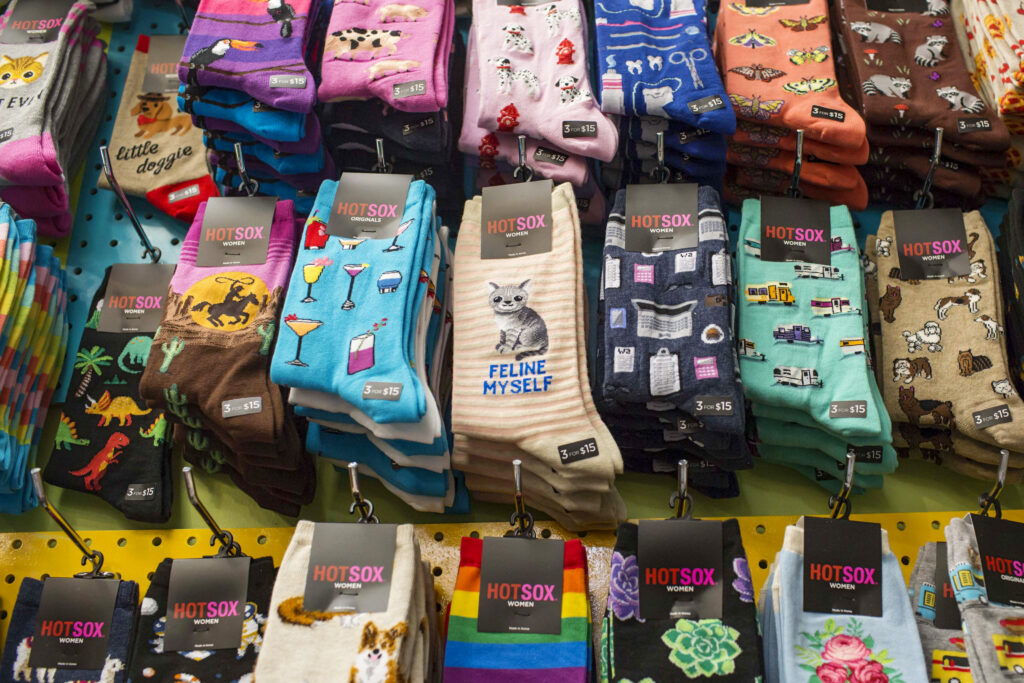
Shirley Spillane’s holiday shopping list is decidedly no-frills this year: cutting boards, coffee and socks.
The Los Angeles-based school counselor used to spend big for Christmas. But this year, with stubbornly high prices, rent and utilities, as well as a 6-month-old baby, she’s paring back. Spillane is buying a car duster for her husband and jam for her aunt — all within her $200 budget, made up almost entirely of gifts she can pick up grocery shopping at Sam’s Club.
“This season looks different than usual,” the 26-year-old said. “With the economy the way it is and a new baby, we’re keeping it small.”
Across the country, Americans are putting a practical spin on holiday shopping. Another year of stubborn inflation and new tariffs that have lifted the prices of appliances, shoes and toys, has led many families to think twice about what they’re buying, and why. Early holiday spending data shows people are scooping up more necessities like appliances, clothing and furniture than they did last year.
On Cyber Monday alone, online sales of refrigerators and freezers rose 1,700 percent from average levels in October, according to data from Adobe Analytics. Other run-of-the-mill products in high demand included vacuum cleaners (up 1,300 percent), small kitchen appliances (up 1,250 percent), cookware (up 950 percent), power tools (up 900 percent), and jackets (up 850 percent).
“These are items that are, in many instances, absolutely essential,” said Vivek Pandya, director of Adobe Digital Insights. “Consumers are cognizant of the broad environment and they’re being very strategic about purchases, whether it’s for themselves or gift-giving.”
While inflation has risen modestly this year, five years of price increases have led to deepening dissatisfaction with how much things cost. That sentiment helped cement political wins last month for Democrats in Virginia, New York and New Jersey and spurred President Trump to kick off an “affordability tour” touting what his administration has done for the economy. “Our prices are coming down tremendously from the highest prices in the history of our country,” he said at a Pennsylvania casino last week.
But in interviews with nearly a dozen shoppers around the country, The Washington Post found that almost all of them said they had become more strategic about their holiday shopping this year. They were looking for discounts and comparing prices. Many were buying fewer gifts, and for fewer people.
Some parents, like Meghan Orr in Austin, said they’d begun wrapping everyday items like diapers and baby shampoo to fill the space under their Christmas trees. “At this point we’re just being silly, but it’s fun to unwrap things.”
When it came to their own wish lists, several said they wanted to do away with gifting conventions and ask family for help paying the bills — though very few thought the approach would work.
Alecia Bencze, director of career services for a law school in Akron, Ohio, has had a good year financially. Still, she’s spending about half of the $1,000 she usually does on Christmas gifts, and is sticking to items she knows will come in handy: golf balls for her father, a barbecue set for her brother, and shoes for her sister-in-law. Her own wish list includes a skillet and measuring cups.
“I’m not feeling the pinch as much as other people are, but this is the least I’ve ever spent on Christmas,” Bencze, 35, said. “I just went through and got one thing from each person’s list.”
Early holiday shopping data shows a discernible shift in spending patterns, with lower- and middle-income Americans pulling back, and the wealthy trading down from luxury stores to lower-priced retailers. Although Black Friday sales were unexpectedly strong, those gains were largely concentrated at discounters, dollar stores, off-price department stores and online marketplaces such as Amazon and eBay, according to Consumer Edge, which tracks transactions from more than 100 million credit and debit cards. The firm’s data showed that purchases between Black Friday and Cyber Monday tumbled 10 percent at high-end department stores, while luxury clothing brands saw a 5 percent decline from the same period last year, as even the most well-off looked for deals.
At Twiggy, a small business that sells tote bags and other gifts in Oahu, Hawaii, more customers are veering toward everyday items like kitchen towels, reusable snack bags and sticky notes this holiday season, owner Jessica Leong-Thomas said.
“It started during the government shutdown, when people became hesitant to buy frivolously,” she said. “Since then I’ve seen a real shift. People come in and say, ‘I want to buy something that will be useful.’” (Leong-Thomas understands the impulse: “Personally, what I want for Christmas is for someone to buy me toilet paper and dish soap,” she said.)
When they do shop, data shows Americans are increasingly turning to off-price retailers such as TJ Maxx, and warehouse discounters such as Costco and Sam’s Club, for discounts on basic items, according to Mary Brett Whitfield, senior vice president for shopper insights at the data analytics firm Kantar. Overall, she said, Americans appear to be spending more than they did last year, but on fewer items.
“You look at what’s happening with prices, tariffs and other inflationary pressures, and it definitely seems like people have a more practical mindset,” she said. “I see it with my own adult children: One of them asked for socks.”
In all, holiday sales are expected to grow about 4 percent this year, slightly less than last year’s 4.3 percent increase and a notable slowdown from 13 percent growth in 2021, according to the National Retail Federation.
When JoEllen Barnes’s refrigerator broke down in mid-November, she and her family made do until they could scoop up a discounted replacement on Black Friday. With food and utility costs up this year, the mother of two says it’s been tougher to cover everyday costs. Instead of splurging on a Nintendo Switch for her sons like she did last year, she’s been scouring neighborhood Facebook groups for lightly used toys.
“I usually ask my husband for jewelry but that doesn’t feel appropriate now, given the extra cost of things,” said Barnes, a 43-year-old educator in Charlotte. Instead of their usual wish lists, they’re sticking to the utilitarian this year. She got him a discounted iPad on Black Friday; he’s already bought her gift too, though she doesn’t know what it is.
“Part of me is like, ‘Please don’t let it be an appliance or pots,’” Barnes said. “Although, well, it would be nice to get new pots.”
The post More Americans are buying boring, practical gifts this holiday season appeared first on Washington Post.