A senior Hamas official on Sunday confirmed the death of a top commander in Gaza, a day after the Israeli military carried out a missile strike on a car in which he was riding.
The killing of Raed Saad on Saturday was the most high-profile assassination of a senior Hamas figure since Israel and the militant group agreed to a cease-fire about two months ago.
Mr. Saad’s death was confirmed by Khalil al-Hayya, one of Hamas’s top leaders in exile, who spoke in a televised address on the 38th anniversary of the group’s establishment. He described the killing as one of a series of cease-fire violations by Israel that he said were “threatening how long the agreement might last.”
Israel has accused Hamas, in turn, of repeatedly violating the cease-fire.
The Israeli authorities said Mr. Saad was a senior commander in the Qassam Brigades, Hamas’s armed wing, responsible for producing weapons and building up its forces. They described him as one of the architects of the Hamas-led Oct. 7, 2023, attack on southern Israel that set off the two-year war in Gaza.
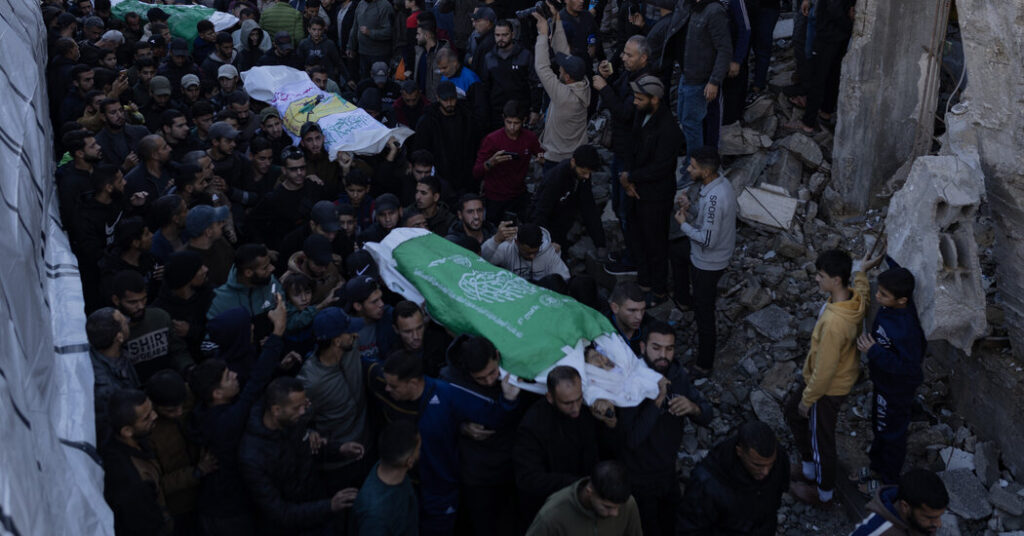
In a statement released on Saturday, Hamas accused the Israeli military of striking “a civilian car.” Four people were killed in the attack, Mohammad Abu Salmiya, the director of Al Shifa Hospital in Gaza City, said. Mr. Saad and the other three people with him in the car were buried on Sunday. A spokesman for Hamas, Hazem Qasim, described the other three as “comrades” of Mr. Saad.
In a separate statement on Sunday, Hamas described the October 2023 attack as “a firmly rooted milestone in our people’s path of struggle and independence.”
It added that the Palestinian people alone would decide who governs them, in an apparent warning to the Trump administration and others leading an international effort to make Hamas relinquish its weapons and give up control over Gaza.
Isabel Kershner, a senior correspondent for The Times in Jerusalem, has been reporting on Israeli and Palestinian affairs since 1990.
The post Hamas Confirms Top Commander’s Death in Israeli Strike in Gaza appeared first on New York Times.