A months-long congressional investigation accuses the chief of the D.C. police department of incentivizing her subordinates to downplay crimes to maintain an illusion of a safer city, according to a report summarizing the findings obtained by The Washington Post.
Based on interviews with all seven current D.C. police district commanders plus one who’s on leave, the Republican-led House Oversight Committee said Pamela A. Smith “propagated an ecosystem of fear, retaliation, and toxicity” — another salvo in the power struggle between federal and local authorities over public safety in the nation’s capital.
The report arrives days after a leaked draft from a Justice Department investigation into the police department found Smith created a “coercive culture of fear” that may have encouraged the manipulation of crime statistics. It bookends a week that began with Smith issuing an abrupt announcement that she’d be stepping down at the end of the year to spend more time with family.
Smith, who was named chief in 2023, did not respond to a phone call or text message seeking comment Saturday. During a news conference where she discussed her resignation, she said she would never support the manipulation of crime data. Neither report accuses the chief of unlawful behavior. A spokesperson for the police department declined to comment.
D.C. Mayor Muriel E. Bowser (D) did not directly address questions about the report’s conclusions but said in a statement to The Post: “The men and women of the Metropolitan Police Department run towards danger every day to reduce homicides, carjackings, armed robberies, sexual assaults, and more. The precipitous decline in crime in our city is attributable to their hard work and dedication and Chief Smith’s leadership. I thank Chief Smith for her commitment to the safety of DC residents and for holding the Metropolitan Police Department to an exacting standard, and I expect no less from our next Chief of Police.”
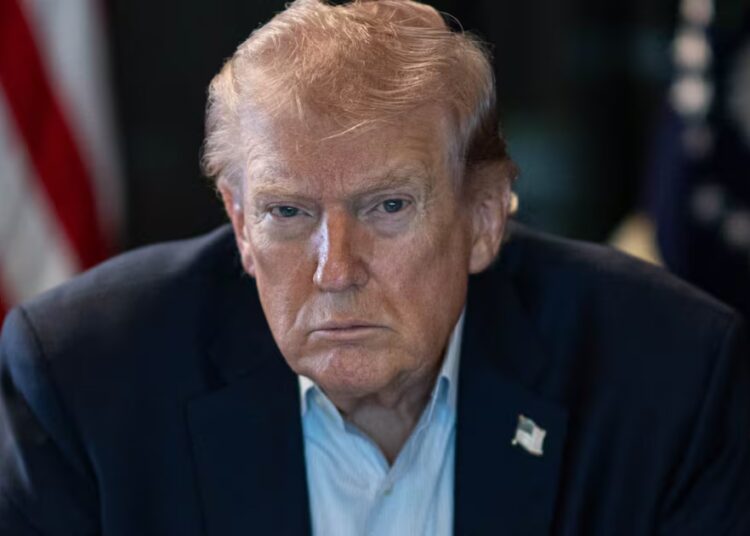
The probes placed D.C. police officials under a federal microscope at the same time the Trump administration and Republicans in Congress are attempting to exert more control over the liberal city. Over the summer, the president and his allies justified his declaration of a local emergency in part by challenging the accuracy of statistics that show violent crime dropping to historically low levels since 2023. Their voices brought increased scrutiny to long-standing complaints within the department about crime data that predate Smith’s tenure.
The House report and its Justice Department counterpart are scant on specifics about how much or whether the alleged toxic work environment affected overall crime figures. Experts say designating individual crimes can be subjective. Neither report says whether federal officials conducted a detailed review of crime reports by reinterviewing witnesses or examining investigative work.
The House Oversight Committee continues to investigate the subject, reviewing a trove of internal documents provided by the police department this year, but prepared the interim report in light of Smith’s resignation. It accuses her of helming a pressure campaign in which low crime statistics were prized above all else and to be achieved “by any means necessary” — and of instituting a system in which all crime classifications became subject to her review.
“Every single person who lives, works, or visits the District of Columbia deserves a safe city, yet it’s now clear the American people were deliberately kept in the dark about the true crime rates in our nation’s capital,” Rep. James Comer (R-Kentucky), chairman of the committee, said in a statement. “Chief Smith’s decision to mislead the public by manipulating crime statistics is dangerous and undermines trust in both local leadership and law enforcement. Her resignation should not be seen as a voluntary choice, but as an inevitable consequence that should have occurred much earlier.”
Criminologists interviewed by The Post say classifying crimes is an often subjective and evolving process: Incidents can be redefined as investigators uncover more evidence, and disagreements don’t necessarily point to corruption. They also say that while allegations of inaccurate statistics can have merit and are not unique to D.C., there is little reason to question the city’s steep declines in the most serious categories of crime — including murders and carjackings.
Brandon Del Pozo, a professor at Brown University and former police official, said after reviewing the Justice Department memo that allegations of stat-fixing should be accompanied by a thorough examination of investigative paperwork — and that investigators should show their work.
“Policing is political. There are a lot of motivations to say you’ve been mistreated by a boss or something’s been misclassified,” he said. “In order to cut through all of that, a good, transparent methodology is critical.”
Rather than auditing police data, the committee’s interim report instead scrutinized Smith’s leadership through the eyes of her commanders. Her tenure featured an exodus of high-level civilian staffers from the D.C. police department, accompanied by allegations, previously reported on by The Post, that Smith’s communication style had alienated police officials.
District commanders are high-ranking supervisors who oversee officers in each of the seven police districts; other D.C. police commanders also oversee specialized divisions like homeland security and criminal investigations.
The commanders — who aren’t named in the report to shield them from potential retaliation — described Smith as an absent, retaliatory leader who is quick to berate those who bring her “bad news,” according to the report.
An unspecified number of commanders testified that Smith pushed for more frequent use of lesser charges that are not publicly reported, the report states, alleging she “created expectations” for certain crimes to be reviewed by her office before their inclusion in public-facing data, at odds with the limited role of her predecessors in the classification process.
“There’s always been pressure to keep crime down,” one commander said but added, “the focus on statistics … has come in with this current administration.”
Routine crime briefings, as one commander described to the committee, functioned as “an atonement for our sins.”
Another commander described staffers being ousted for posing “legitimate questions or suggestions that was seen as disloyal.” Another said that fear seeped into meetings and that it was understood there was a chance of being moved out of a role if crime numbers were rising. A fourth commander described how, during a briefing, the chief issued such admonishment about a spate of robberies in the commander’s district that it left the commander feeling like a suspect.
“I did feel like I did the robberies after I left. I literally was, like, I swear I did not commit them,” the commander said.
The committee concluded that “commanders felt that reporting the reality of high crime numbers could result in retribution.”
According to the report, a commander testified about one instance in which an executive assistant chief under Smith’s direction instructed the commander to reduce an assault with a dangerous weapon offense to an endangerment with a firearm offense — a pivot from a crime that is reported to the public to one that is not. The commander described the push as “inappropriate.”
Another commander testified that they saw another pattern of pressure from publicly reported to not publicly reported crime: lower classifications of burglaries to unlawful entry.
The Justice Department’s draft report portrays Smith’s leadership in a similarly unflattering manner, asserting after interviews with more than 50 D.C. police staffers that Smith oversaw a culture of fear and retaliation — and alleging without explaining its methodology that many crimes in D.C. have been improperly recorded.
Del Pozo, a former commander in New York City’s police department, said it is difficult for an outside observer to judge whether Smith’s behavior toward her staff crossed a line.
“The most demanding job I’ve ever had is being a precinct commander,” he said. “You don’t want that pressure to translate into an incentive to downgrade crimes or to misclassify them, but you do want to have enough pressure to keep people on the ball.”
Bowser, who appointed Smith two years ago during a spike in homicides and violent crime, has stood by the chief in the face of criticism as the two leaders navigate the pressure cooker of President Donald Trump’s second term. Smith previously served as chief of the U.S. Park Police.
A spokesperson for the mayor said Bowser did not ask for Smith’s resignation. There are, however, indications it was sudden: Smith told commanders after the federal surge that she was prepared to be their chief as long as the mayor wanted her to be, according to two D.C. police officers who spoke on the condition of anonymity because they weren’t authorized to speak publicly.
Long-standing concerns about how violent crime is categorized by supervisors in the city reentered public view this year when Michael Pulliam, a police commander in Northwest Washington, was put on leave amid an internal inquiry into whether he made inappropriate changes to crime data.
They escalated when the police union went public with allegations that managers were under-classifying crimes to make the city appear safer, among a slew of other critiques. By the fall, dozens of officers were feeding information to the Justice Department, reflecting long-standing frustrations about how violent crime is categorized by supervisors, The Post previously reported. In one case, officers kept a list of more than 150 instances since March 2024 where they said offenses in a Southeast Washington police district were inappropriately classified to downplay the seriousness of crimes.
Pulliam — who denies all allegations and remains on paid administrative leave — was among those interviewed by the committee and the Justice Department.
The Justice Department draft report suggests that D.C.’s police department can address its “data integrity issues” by instituting better training, addressing the “coercive culture of fear described by sworn officials,” performing regular audits of reclassifications and taking classification authority away from commanders. The House committee recommended that Bowser appoint a chief “who will address the ongoing concerns of crime statistics manipulations and alleviate the retaliatory pressures and threats faced by [D.C. police department] personnel.”
Emily Davies contributed to this report.
The post Congressional probe adds to mounting criticism of D.C. police chief appeared first on Washington Post.