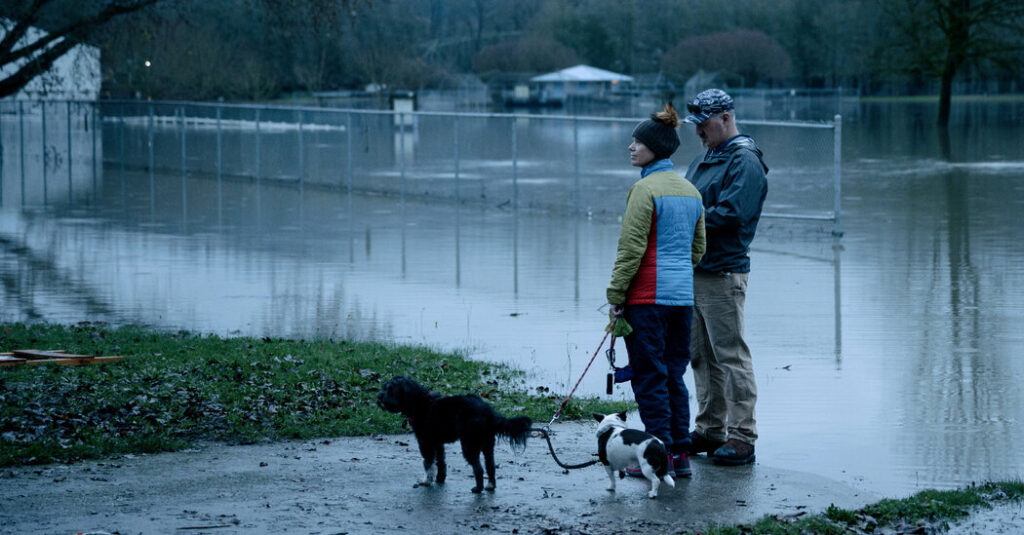
Storms that dumped as much as a half a foot of rain on parts of Washington State this week, forcing dramatic helicopter rescues and 100,000 people to evacuate, left the region facing more dangerous conditions and a heavy price tag, even as rivers began to recede on Friday.
State leaders at an afternoon news conference said no deaths had been reported despite the raging floodwaters, but warned that although the rains have eased, the risk remains. “This is not over,” said Gov. Bob Ferguson of Washington, adding, “This is not a one- or two-day crisis.”
Heavy downpours that started on Monday swamped roads and spread mudslides across western Washington, hindering efforts to assess the damage, though officials said it would certainly be significant. After pleas from the governor and members of Congress, President Trump approved a disaster declaration on Friday that could mean federal assistance.
Some residents were worried about the longer term, however. Summer Houlihan, the owner of an arts and ceramics store in Mount Vernon, feared for the future of her riverfront town — among the hardest-hit communities this week.
“We’re very used to flooding, we’re very used to sandbagging,” she said. “But it’s obviously getting way worse. People are starting to wake up to that. What kind of damage can be done when your downtown is right next to the river?”
As waterways rose to record levels in some places, surpassing records set in 1990, helicopter crews plucked people from rooftops near the Canadian border, while closer to Seattle, sheriff’s deputies rescued people who sought shelter on top of cars and trucks.
Officials warned that levees and dams would remain at risk for days, and urged residents to continue to be wary even as rivers crest and the waters recede.
They pointed to Burlington, Wash., about 65 miles north of Seattle, where National Guard soldiers went door to door late Thursday and early Friday after the Skagit River rose higher and faster than predicted. “In the middle of the night, literally thousands of folks had to flee their homes,” Governor Ferguson said, urging continued vigilance.
The waves of heavy rain are the result of an unusually potent atmospheric river system. Pulling a plume of moisture off the warm ocean, the system has spread flooding into Idaho and British Columbia in Canada, where highways were shut down.
U.S. Coast Guard video captured a dramatic rescue in Sumas, Wash., on the border with Canada. As floodwaters rose as high as 15 feet, four people found themselves trapped on the second floor of their home. A rescue swimmer and two Coast Guard helicopters got them out.
“The water just kept rising and rising and rising, and it happened very quickly,” said Scott Giard, search and rescue program manager for the U.S. Coast Guard’s Northwest District. “It’s a reminder how unpredictable these things can be.”
The force and speed of the flooding shocked people in a region used to heavy rains, prompting worries about future storms and the effects of climate change, which can supercharge the atmosphere with additional moisture and lead to increased flooding.
“In the last five years, you see a pattern that we’ve been getting really extreme floods,” said Corrin Hamburg, 32, a sixth-generation resident of the Skagit Valley and local public utility commissioner. “I don’t know if that’s climate change or what-have-you, but we need to be prepared for that.”
It will be days or even weeks before the full extent of damage is known, officials said. They stressed that the federal emergency declaration signed by Mr. Trump was just the first step in ensuring longer-term financial assistance from the White House.
“I’m not focused on the past,” said Governor Ferguson, who has sparred with the president over aid for previous disasters and had expressed concern about the federal response.
U.S. Senator Maria Cantwell, a Democrat, noted how many state highways vital to freight traffic were closed and potentially damaged after the week of strong downpours. “The cost here to the economy and the nation’s economy is significant,” she said.
More rain is coming: Forecasters expect another storm system to arrive as early as Sunday. It won’t be as strong as the one this week, according to forecasts, but it could cause landslides and more flooding on already-saturated ground.
State officials are particularly concerned that the Skagit River could again rise to dangerous levels, just as many residents who had to evacuate their homes are coming back.
Richard Olmsted, 42, returned to his Mount Vernon home on Friday, but knows he might be facing more danger in the future. “This is such a reminder that we’re guests in the river’s home,” he said. “I don’t know what the steps are moving forward, but this is a good opportunity for people to be humbled.”
Amy Graff is a Times reporter covering weather, wildfires and earthquakes.
The post Flooding That Forced People Onto Rooftops in Washington State ‘Is Not Over’ appeared first on New York Times.