Power  ︎ Moves
Clean, Limitless Energy Exists. China Is Going Big in the Race to Harness It.
Beijing is pouring vast resources into fusion research, while the U.S. wants private industry to lead the way. The winner could reshape civilization.
On a leafy campus in eastern China, crews are working day and night to finish a mammoth round structure with two sweeping arms the length of aircraft carriers.
On former rice fields in the country’s southwest, a hulking, X-shaped building is being built with equal urgency under great secrecy. That facility’s existence wasn’t widely known until researchers spotted it in satellite images a year or so ago.
Together, the colossal projects are China’s most ambitious efforts yet to harness an energy source that could transform civilization: fusion.
Fusion, the melding together of atoms to release extraordinary energy, uses fuels that are plentiful, carries no risk of meltdowns and leaves no long-lived radioactive waste. It promises near-limitless energy that might not only satisfy the surging demand for electricity to power artificial intelligence but also end reliance on the fossil fuels that are perilously overheating the planet.
Scientists first mused a century ago about fusion, the energy of the stars. In recent decades, they have made major strides toward reproducing the process in the laboratory using magnets and lasers. Yet forcing unruly atoms to combine is vastly more difficult than splitting them, as in the fission process that produces nuclear power today.
A fusion reactor must first heat hydrogen to temperatures hotter than the sun, turning it into plasma, the fourth state of matter. Then it needs to hold this violent plasma together for long enough that the atoms fuse and disgorge energy. China, the United States and other countries are now racing to develop the machines that can pull all this off and survive to do it again and again, reliably enough to power a grid.
The world’s two superpowers are in a tightening contest to dominate the energy future. Under the Trump administration, the U.S. is intent on producing oil, gas and coal and selling it abroad. Its chief economic rival, China, has become the world’s dominant supplier of clean energy in the form of solar panels, batteries and electric vehicles.
Fusion could change the calculus for both nations and the globe. Whoever conquers it could build plants around the world and forge new alliances with energy-hungry countries. But the Americans and the Chinese have very different strategies for getting there.
The United States is counting on private industry and American innovation to deliver results, with government agencies providing targeted support. From coast to coast, a fleet of start-ups has brought new urgency and ingenuity to the quest.
On the other side of the world, China’s government has made fusion a national priority, marshaling resources at daunting speed. Recently, a Shanghai start-up essentially matched an engineering breakthrough by America’s best-funded fusion company, Commonwealth Fusion Systems, in much less time. Over the summer, the Chinese government and private investors poured $2.1 billion into a new state-owned fusion company. That investment alone is two and a half times the U.S. Energy Department’s annual fusion budget.
The two countries’ progress could soon be tested head-to-head.
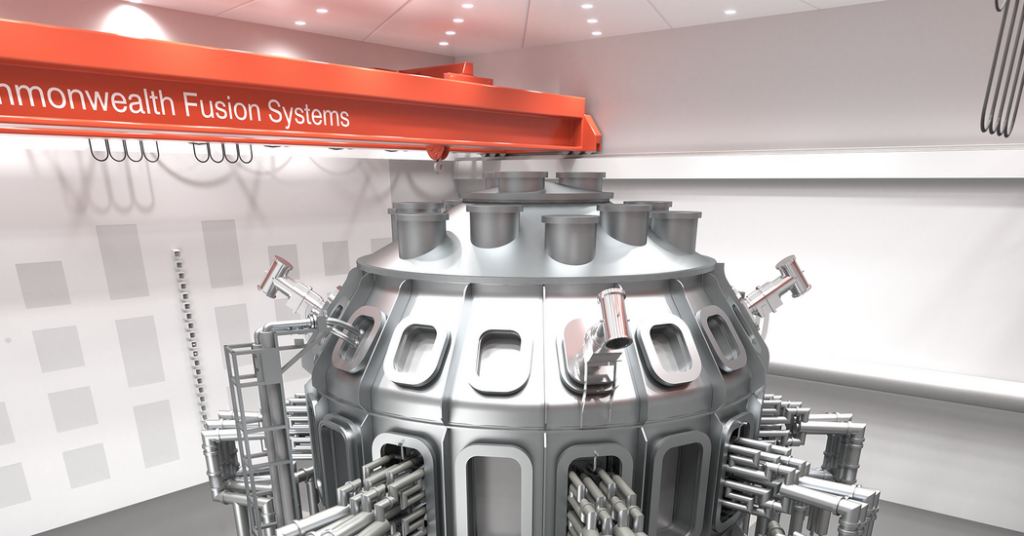
Commonwealth says that by 2027, the experimental device it is building in Massachusetts will pull off a key feat: producing more energy than it takes to run. That would be a signal that fusion could someday generate electricity for data centers, steel mills and more.
China’s leading plasma-physics lab is aiming for its new machine, which has the modest name of BEST and will sit in the twin-armed building in the country’s east, to cross that milestone in the next few years, too.
“It’s a very tight schedule,” said Lian Hui, a scientist at the lab. Even so, “we are very confident we will be able to achieve BEST’s research goals,” he said.
A National Priority
China’s commitment to science, and fusion, comes from the very top.
The government’s new five-year plan, covering 2026 through 2030, promises “extraordinary measures” to secure breakthroughs in fusion energy and other areas. China’s state-owned nuclear company is preparing detailed fusion research proposals, calling it “the main racetrack in future scientific and technological competition among the great powers.”
The country was a minnow in fusion only two decades ago, and it grew by teaming up with other nations. It worked closely with France to develop its most modern tokamak, a type of doughnut-shaped fusion machine. It became a key contributor to the 33-nation ITER fusion experiment (pronounced “eater”). During much of the past decade, American and Chinese researchers conducted joint experiments and extolled their nations’ “long-term friendship” in plasma physics.
Now, Chinese labs and companies are pouring concrete for cutting-edge research facilities of their own. The Chinese Academy of Sciences’ Institute of Plasma Physics is building both the new BEST tokamak and a 100-acre complex nearby where researchers will develop and test components to operate under the extreme conditions of a fusion device. Scientists there are also sketching out another tokamak that would power a pilot fusion plant in the 2030s and ’40s.
Richard Pitts, a British-French physicist at ITER, visited the BEST site in January last year, when it was little more than an empty platform. Today, it’s half finished.
China has learned a great deal from being part of ITER, and now it is applying that knowledge to make its own advances, Dr. Pitts said. “Every time I go there, I’m taken aback by the sheer numbers of people and the sheer efficiency with which things get done,” he said.
Even if the core technology works, however, fusion reactors won’t power the world until companies figure out how to build and operate them affordably and at industrial scale.
And on that front, China’s expertise in engineering and construction gives it a distinct advantage, said Jimmy Goodrich, a senior fellow at the University of California Institute on Global Conflict and Cooperation. “The risk for the United States is we create a viable technical pathway first, but then China engineers and scales it up before we can,” Mr. Goodrich said.
Recently, Commonwealth got a glimpse at how quickly China is moving.
Last year, scientists with the company published academic papers describing one of their biggest accomplishments: the enormous, D-shaped magnets that will sit inside its new tokamak in Massachusetts. They are made with materials that carry electricity with exceptionally low resistance, allowing them to produce superstrong magnetic fields.
Then, this past summer, scientists with a Shanghai start-up, Energy Singularity, published a paper about their own, very similar magnet.
To Dennis Whyte, a Commonwealth co-founder, this was no mere feat of reverse engineering. Mobilizing the supply chains and manufacturing expertise needed to build and test such a magnet so quickly showed “really amazing skill,” Dr. Whyte said.
The Laser Path
In the southwest, another front in China’s fusion ambitions is racing ahead with much less public fanfare.
Scientists at the China Academy of Engineering Physics, in Sichuan Province, studied attentively as their counterparts at Lawrence Livermore National Laboratory in California toiled for years before achieving a tantalizing demonstration of fusion’s potential. In late 2022, the lab’s lasers caused a pellet of hydrogen to “ignite,” meaning the reaction produced more energy than the energy from the lasers.
A senior scientist at China’s academy quickly called for his country to follow suit.
Livermore’s achievement marked “a major scientific breakthrough that will be memorialized in the annals of human history,” Zheng Wanguo said in an interview in early 2023. China, he said, should “strengthen investment and research” in fusion energy, “taking laser fusion ignition as the main technical approach.”
Within a year and a half, an enormous X-shaped facility had arisen outside the city of Mianyang.
Chinese laser industry reports, scientific papers and a patent application suggest the site will house Shenguang IV, a new laser ignition facility. Proposals for such a facility, whose name means “Divine Light,” go back in some form over 15 years. But the Livermore lab’s success seemed to put it on the fast track.
The speed of construction in Mianyang is “breathtaking,” said Livermore’s director, Kimberly Budil, given that it took her lab 20 years to build its ignition facility and get it fully running. Still, “operating that system reliably and effectively over time takes meaningful skills, and these are all lessons China will have to learn along the way,” Dr. Budil said.
Scientists at the China Academy of Engineering Physics have reason for secrecy. Like many at Livermore, they work in nuclear weapons research, and laser fusion offers a way to study the conditions of nuclear explosions without detonating actual weapons.
As China’s nuclear stockpile has grown rapidly under the country’s top leader, Xi Jinping, its military has looked for ways to maintain and perhaps upgrade warheads without violating a global ban on test explosions, experts say.
In recent months, the Academy of Engineering Physics has revealed plans to build another laser ignition facility in Chengdu, Sichuan’s provincial capital — a smaller, more commercial sibling to the one in Mianyang.
And Peng Xianjue, once an anonymous weapons designer, has transformed himself into an energy entrepreneur, promoting his vision of an untested type of reactor that would combine fusion and fission. China, Dr. Peng wrote in a proposal this year, should “aim for commercial application by 2040.”
Collaborate or Decouple
The U.S.-China divide in fusion was glaring to Alain Bécoulet, an eminent French physicist, when he was in Chengdu in October for the International Atomic Energy Agency’s annual fusion conference. There were no Americans, Dr. Bécoulet said.
The Energy Department under President Trump had discouraged U.S. scientists from attending, three researchers told The Times. The department didn’t respond to a request for comment.
“China is now innovative,” said Dr. Bécoulet, the chief scientist at ITER. “It’s not simply copying or redoing.”
China’s Institute of Plasma Physics announced in November that it welcomed partnerships with foreign scientists using its new BEST tokamak. “The door is always open,” said Dong Shaohua, who manages the institute’s overseas collaborations.
But, as energy security becomes increasingly vital to industries like A.I., many in American government and industry now see fusion as a win-or-lose battlefield for global influence.
“Whoever wins and gets it together sets the foundation for the rest of the century,” said Ylli Bajraktari, head of the Special Competitive Studies Project, a research organization in Washington.
The Energy Department in October released a new road map for helping the fusion industry grow and commercialize in the 2030s. The document calls for the building and upgrading of several scientific facilities. But it does away with an earlier initiative by the department to lead the design and construction of a pilot fusion plant by the 2040s.
The reason, according to the department, is that American start-ups are already moving quickly toward erecting such a plant.
To some scientists, the U.S. government needs to do more.
Investors have poured about $14 billion into fusion companies worldwide, with $7.6 billion of that going to American firms. “That’s a lot of money, but it’s going to take a whole lot more of that to get this across the finish line,” said George Tynan, a plasma scientist at the Massachusetts Institute of Technology.
Chang Liu worked for years as a physicist at the Energy Department’s Princeton Plasma Physics Laboratory. Recently, Dr. Liu tried to recruit some younger scientists for his team, but the lab said it didn’t have the budget, he said. Experiences like this, plus family reasons, led him to move to Peking University, one of China’s best. A Princeton spokeswoman said the lab didn’t comment on personnel matters.
In America, the lack of government support is one reason so many fusion researchers are joining start-ups, Dr. Liu said.
Chinese officials, by contrast, are putting significant resources into a possible “ultimate solution” to humankind’s energy needs, he said. “They can really invest in things that are important,” he said.
Li You contributed research from Hefei, China.
Raymond Zhong reports on climate and environmental issues for The Times.
The post Clean, Limitless Energy Exists. China Is Going Big in the Race to Harness It. appeared first on New York Times.