Belarus on Saturday freed dozens of political prisoners, including an opposition leader and a Nobel laureate, as the United States announced it would lift sanctions on potash fertilizer, one of Belarus’ biggest sources of cash.
The moves came after John Coale, the U.S. special envoy for Belarus, held talks with the country’s autocratic leader, Aleksandr G. Lukashenko, on Friday and Saturday at his palace in Minsk, the capital.
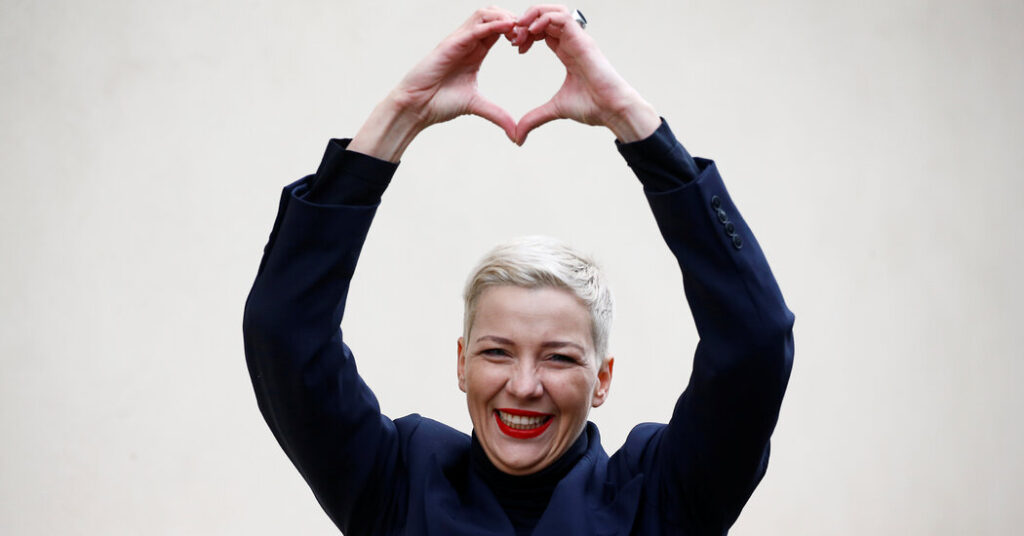
Maria Kolesnikova, a Belarusian opposition leader, was among a group of political prisoners who were freed at the Belarus-Ukraine border, according to Ukrainian authorities. Ms. Kolesnikova’s sister confirmed she had been freed.
Ales Bialiatski, a human-rights activist who shared the Nobel Peace Prize in 2022, was also freed and was soon expected in Vilnius, the capital of neighboring Lithuania, according to authorities there.
Citizens of Lithuania, the United States, Poland, the United Kingdom, Japan and Australia were also freed.
The meetings between Mr. Coale and Mr. Lukashenko — and the exchange of such high profile political prisoners — represent a slow but steady thawing of relations between Washington and Belarus, a Russian vassal state.
Mr. Coale on Saturday told journalists that the talks had been “very productive.”
“We talked about the future, about how to move forward on a path of rapprochement between the United States and Belarus to normalize relations,” he said. “That’s our goal.”
The meetings are the latest step in a monthslong rapprochement between Washington and Minsk that has seen hundreds of political prisoners freed and the slow restoration of economic ties.
Since 2020, the United States has repeatedly put sanctions on Belarus, a close ally of Russia. That was when Mr. Lukashenko, aided by President Vladimir V. Putin of Russia, suppressed widespread protests against what critics called a sham election. Relations worsened in 2022 when the Belarusian leader allowed the Kremlin to use his country as a staging ground for its full-scale invasion of Ukraine.
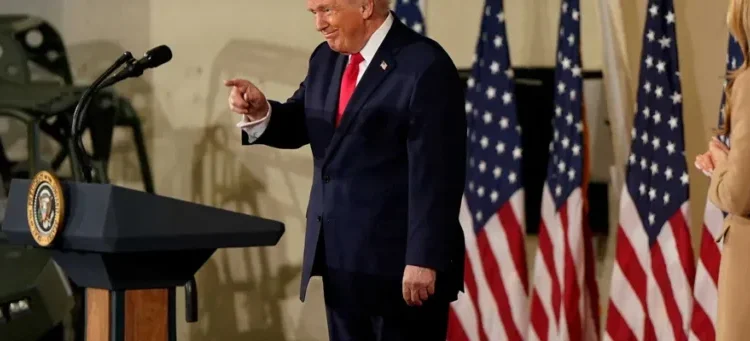
But Mr. Trump has taken a different approach to autocratic leaders around the world. On Friday, Mr. Lukashenko was fulsome in his praise for the American president.
“They say Trump loves flattery,” Mr. Lukashenko told Mr. Coale on Friday during a meeting in the Belarusian leader’s vast residence. “But I’m not here for flattery. I want to say that I really like his actions lately.”
Before 2022, Belarus, a landlocked country, used the port of Klaipeda in Lithuania to export its potash. When the war in Ukraine led the Lithuanian government to cut off that export route, Minsk was pushed further into Russia’s orbit, giving Moscow more control over global supplies of the crucial fertilizer.
Currently, most Belarusian potash is exported through Russia, a route that has been far more costly for Belaruskali, the state-owned potash company that produces around 20 percent of the world supply. The company is the Belarus’ single largest taxpayer.
The exact details of the sanctions relief announced on Saturday and of possible new export routes for Belarusian potash have not yet been announced publicly.
Minsk has freed at least 430 prisoners since July 2024, and the release of about 70 of them was brokered by the Trump administration. But the pace of political repression in Belarus has not abated, and 1,226 political prisoners remain behind bars, according to Viasna, a Belarusian human rights group chaired by Mr. Bialiatski.
Freed prisoners have spoken of being deprived of adequate food and medical care. Sergei Tikhanovsky, a Belarusian opposition blogger, was barred from communicating with his family for years during his incarceration, and he lost 132 pounds while behind bars.
Mr. Coale’s latest visit to Belarus, population 9.5 million, was at least the fourth this year. In September, Washington promised to lift sanctions on Belavia, Belarus’ national airline, and to explore reopening an embassy in Minsk.
The negotiations between the Trump administration and Mr. Lukashenko’s government come amid a flurry of diplomatic activity to end the war in Ukraine. Mr. Coale told journalists on Saturday that he had also discussed the war with the Belarusian leader.
Mr. Lukashenko, whose country is wedged between Ukraine and Russia, has consistently sought to involve himself in the negotiations to end the war, and Washington has said that it has used the Belarusian autocrat as a channel for messages to the Russian leader. Mr. Putin and Mr. Lukashenko have a long history together, Mr. Coale said.
“They are long standing friends and have the necessary level of relationship to discuss such issues,” he told reporters on Saturday. “Naturally, President Putin may accept some advice and not others. This is a way to help the process.”
Valerie Hopkins covers the war in Ukraine and how the conflict is changing Russia, Ukraine, Europe and the United States. She is based in Moscow.
The post Belarus Frees Prominent Political Prisoners as U.S. Lifts Some Trade Sanctions appeared first on New York Times.