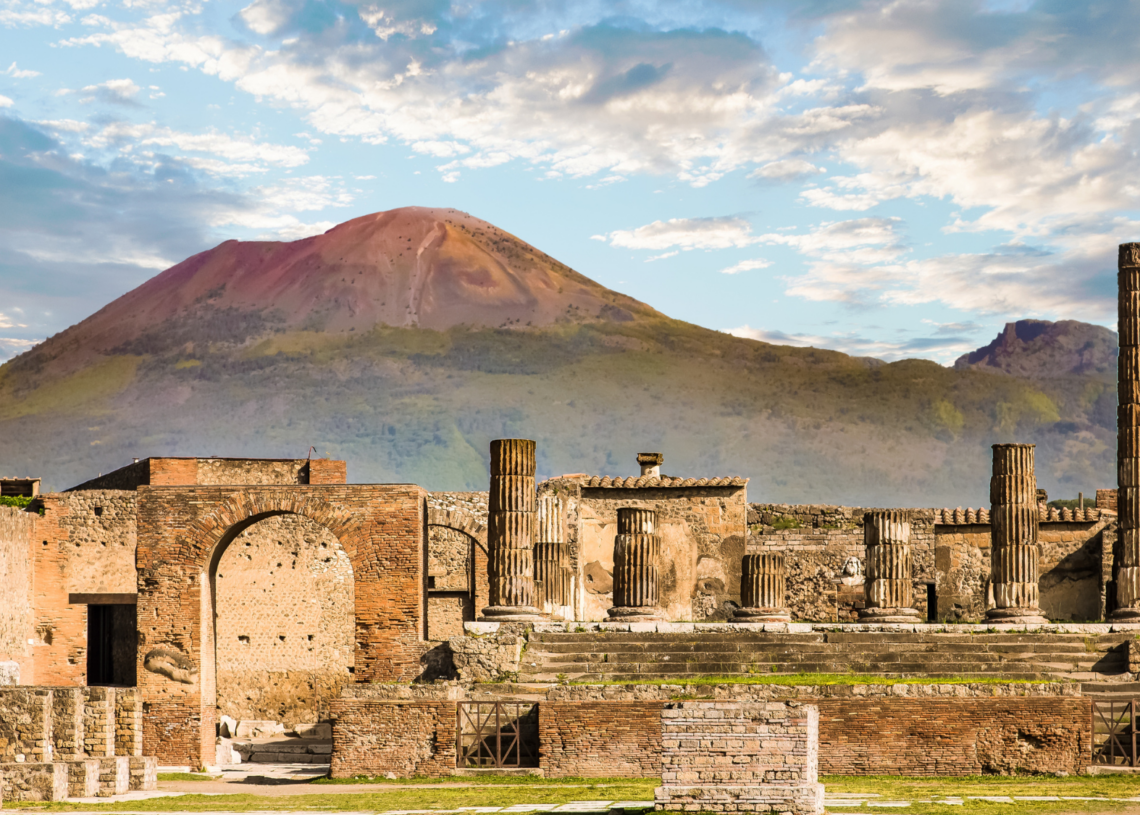
Archaeologists digging through Pompeii’s remains have stumbled onto a fully intact 2,000-year-old construction site, complete with the ingredients the Romans used to make their freakishly durable concrete. The modern stuff crumbles when faced with a stiff breeze, while the ancient stuff battled through earthquakes, seawater saturation, and volcanic eruptions, remaining relatively unscathed.
Researchers are just beginning to understand what made ancient Roman concrete so strong.
The discovery gave researchers a window into Roman building processes. Ancient Roman builders were “hot-mixing,” which means that they dumped volcanic ash and powdered quicklime together dry, then added water later, triggering a chemical reaction that cooked the mixture from the inside.
Publishing their findings in the journal Nature Communications, MIT scientists explain that the heat unlocked chemical pathways impossible with the standard method of “slaking” lime first — “slaking” being the process where the lime is first mixed with water before it’s poured out.
The hot-mixing method has faster setting times, and most importantly, creates something called a lime clast, which are little white chunks of minerals common in ancient Roman concrete that was at one point thought to be a sign of poor mixing but is now being viewed as the key to its absurd durability. These lime clasts effectively give ancient Roman concrete a self-healing ability that can keep it going for generations.
The find also solves a nerdier longstanding mystery: why the ancient concrete described in a treatise written by the ancient Roman architect Vitruvius didn’t match what scientists saw in real ruins. It didn’t make any sense. His instructions, which essentially amounted to “slake first, mix later,” wouldn’t produce lime clasts. The Pompeii stockpiles showed what the Romans were actually doing. They were grinding quicklime, mixing it dry with an ancient building material called pozzolan, then later adding water at the construction site.
Vitruvius wasn’t actually wrong; he just provided incomplete and outdated information. Or maybe he just misread it.
The researchers think all of this newly discovered information can help us reinvent modern concrete so that it lasts longer and pollutes less. Future concrete may not be an exact one-to-one replica of Roman concrete, but it will crib heavily from its ancient ancestor.
The post Ancient Roman Concrete Is Still Strong 2,000 Years Later. Now We Know Why. appeared first on VICE.