California lawmakers are demanding more information on an early earthquake warning system managed by the U.S. Geological Survey after it issued a false alert last week that a magnitude-5.9 earthquake had struck near the California-Nevada border.
Cellphones hundreds of miles away from the supposed epicenter near Dayton, Nev., buzzed with a critical alert urging people to drop and hold on to something sturdy, before the U.S.G.S. removed information on the earthquake from its website moments later. An earthquake of that size would have been one of the strongest in the United States this year.
The notifications were sent by the automated ShakeAlert system, which is designed to detect earthquakes and estimate which areas could experience strong shaking in an effort to give people a few seconds to prepare.
The system, which began in 2019, was created through a collaboration between the U.S.G.S., local emergency services and universities, including the University of California, Berkeley.
In a letter sent Thursday to the director of the U.S.G.S., Representative Kevin Mullin and four other California members of Congress, all Democrats, demanded answers about what had caused the false alert and what safeguards the program had in place to verify information before sending alerts to the public.
“The public relies on U.S.G.S. for authoritative, real-time information during earthquakes,” the letter said, calling public confidence in the system “essential.”
The letter came the day after Gov. Gavin Newsom of California had said the false alert put “a spotlight” on the Trump administration’s funding cuts and widespread layoffs at federal agencies.
A spokesman for the Department of the Interior, the parent agency for the U.S.G.S., said in a statement on Friday that cause of the false alert “was purely technical and addressed quickly by the appropriate experts.”
The statement said it was “deeply irresponsible” for Mr. Newsom to turn a technical error into a political issue.
The U.S.G.S. detects earthquakes mainly through a nationwide network of sensors called seismometers. ShakeAlert has its own additional network of nearly 1,700 stations in the three states where the system operates: Washington, Oregon and California.
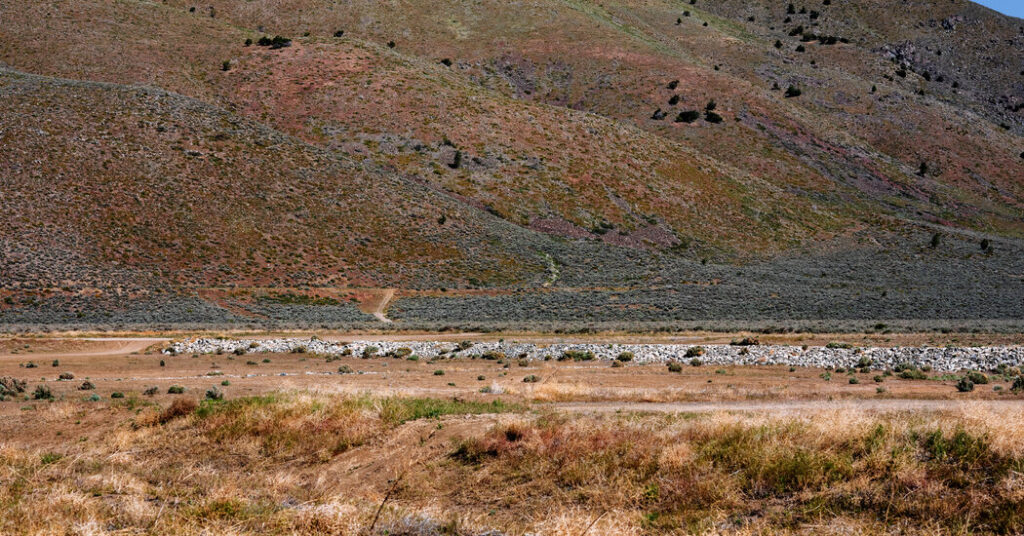
But it also pulls in data from other nearby states, including Nevada, because earthquakes there can be felt by people in the states where the system operates. That’s what happened early in the morning of Dec. 4, when sensors in Nevada prompted the sending of alerts as far away as San Francisco: The system thought it was recording an earthquake in progress in Nevada and immediately began to warn people who were likely to soon feel its shaking.
On Dec. 4, immediately after the false alert, a ShakeAlert spokesman said that at least four earthquake-detecting stations in Nevada had reported shaking.
Scientists who work with the system said they were still investigating exactly what had happened last week, but they said a technical failure was most likely to blame.
Christie Rowe, director of the Nevada Seismological Laboratory at the University of Nevada, Reno, said this week that preliminary findings had revealed that a faulty power system at one of the seismic stations in Nevada played a role in triggering the false alert.
Angie Lux, a project scientist for earthquake early warning at the Berkeley Seismology Lab, which helps operate ShakeAlert, said the malfunctioning station had created data transmission issues.
The system should have discarded the bad data, she said, but it did not.
After the false alert, some stations in Nevada that detect earthquakes were temporarily disconnected from the ShakeAlert system to prevent another false alarm while the system was investigated.
The alert was the first time the system had botched a warning since it started issuing them in October 2019, Dr. Lux said.
ShakeAlert information can be sent to televisions, telephones and radios by the government. The Wireless Emergency Alerts system (the same technology used to send Amber Alerts) uses the data to deliver early earthquake warning messages to cellphones. The alerts also reach people’s phones through the MyShake app.
Two years ago, MyShake jolted users awake at 3:19 a.m., seven hours ahead of schedule for what had been a widely publicized test of the app. A spokesman blamed a time zone mix-up.
Amy Graff is a Times reporter covering weather, wildfires and earthquakes.
The post After False Earthquake Alert, Lawmakers Demand Answers on How It Was Sent appeared first on New York Times.