Subscribe here: Apple Podcasts | Spotify | YouTube
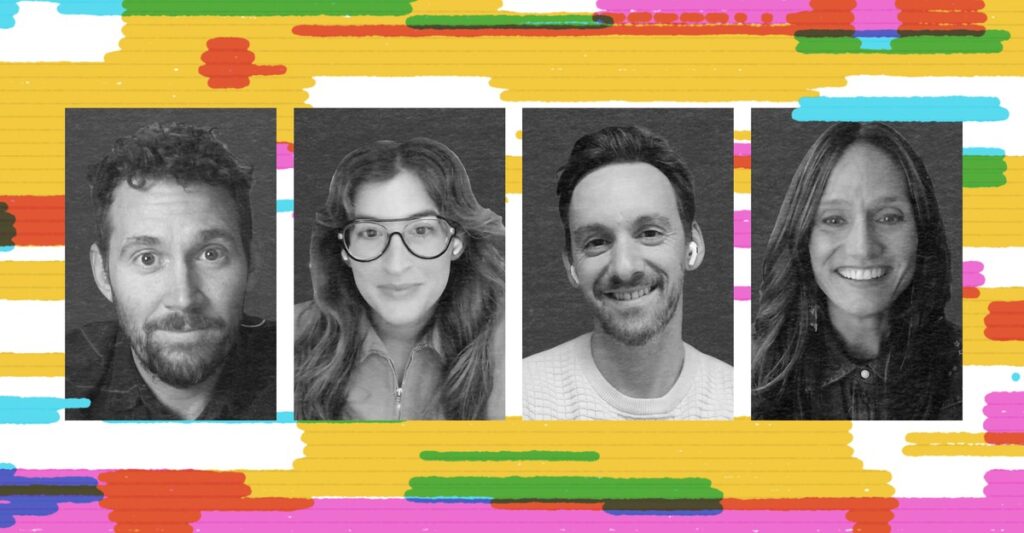
In this episode of Galaxy Brain, Charlie Warzel turns the camera on himself to ask a simple question: Why are you seeing his face?
Using YouTube’s takeover of podcasts as a starting point, he explores how video has devoured audio and turned podcasts into something closer to daytime TV and late-night talk shows. NPR’s Rachel Martin, host of the celebrity-interview show Wild Card, joins to talk about her own shift from intimate, audio-only conversations to highly visible video chats with mega-celebrities. She explains how the visual layer changes everything—from building trust with guests and audiences to deepening parasocial relationships, and why showing your face is necessary in a low-trust media world.
To trace the business and cultural arc of this pivot, Bloomberg reporter Ashley Carman explains the rise and fall of the podcast “gold rush”—from the Serial era to Spotify’s billion-dollar bet, to the collapse of expensive narrative audio and YouTube’s emergence as a true power player. Then, writer and Plain English host Derek Thompson joins to explain his theory that “everything is television now.” Warzel and Thompson explore how short-form video, autoplay feeds, and video podcasts are reshaping our attention, our politics, and even our sense of self—turning podcasts into background “wallpaper” while nudging more of us into broadcasting our lives. Together, the conversations sketch a weird, slightly berserk future where video podcasts aren’t just a format—they’re a window into a lonelier, more fragmented, video-first culture.
The following is a transcript of the episode:
Derek Thompson: Do you actually need to sit still by yourself and listen to your thoughts, ever? Like, is that good for you at all? Should you just always choose to, like, download other people’s thoughts inside of your brain so you’re never stuck with the sort of, you know, subvocal questions of your own consciousness?
I feel honest about this, because I’m not sure that these are, like, familiar feelings. I feel like we’re sort of being thrust into, again, a kind of really unnatural experiment based on these technologies. And, you know, given the changes in mental health over the last few decades, it’s not entirely clear to me that surrounding ourselves with the constant … bombarding ourselves with the constant thoughts for the people is particularly good for our sanity.
[Music]
Charlie Warzel: Hello, and welcome to Galaxy Brain. I’m Charlie Warzel. And if you’re watching this on YouTube, welcome to my face—and apologies for my face, which is actually the subject of today’s show. Why are you seeing my face, or, perhaps more appropriately, why did YouTube devour podcasting? So as a technology reporter, one thing that I absolutely love is just being an internet crash-test dummy, right there.
I think that there’s no better way to understand a platform than to try to make things and share things on them. So part of my reporting has always been to try to lean into riding the algorithmic waves myself and just watching what happens, right? That’s a big reason why we launched Galaxy Brain as a video podcast.
There’s all these questions that I have. Like, you know, how do YouTube thumbnails and titles change the way that a video performs? What happens when you make something evergreen versus something newsy? How valuable is a celebrity to having your video go viral? Ultimately, who’s watching these things, right?
I feel like there’s just no better way to really understand what is happening online than to do things online. And so that’s just one very small reason why you’re seeing my face, right? But it’s not just me. There’s just a lot of people in media and journalism who were previously scribes or just audio podcasters, right, who’ve become YouTubers or TikTokers.
And so you could say that this is just like pivoting to video, right? Back in the 2010s, there was this sort of infamous “pivot to video,” mostly caused by people responding to incentives on Facebook. And it was mostly disastrous for people. As a digital-media survivor of the 2010s, I had to endure that.
And I think that what’s happening now, though, is different. I think it’s much less responsive to the whims of these platforms, and I think it’s a lot more driven by audiences. It’s also a lot more popular. In late 2024, this research firm, Edison Research, said that “YouTube has risen to the top as the most popular service used for podcast listening in the United States. Thirty-one percent of weekly podcast listeners 13 and up choose YouTube as the service that they use to listen to it.” That’s well surpassed Spotify, which is at 27 percent, and Apple Podcasts, which is at 15 percent. They also said that “84 percent of Gen Z monthly podcast listeners listen or watch podcasts with a video component.” And so it’s very popular to be a YouTuber with a podcast.
This trend has been moving pretty steadily since about 2019, and that’s when some popular podcasts started posting to YouTube and seeing some success with these short clippings. They were called YouTube Shorts. And this was getting a lot of traction in YouTube’s algorithm, but it’s booming now.
This past October, Spotify announced that a bunch of their popular podcasts from The Ringer, like the Bill Simmons show—they’re all going to be streaming on Netflix. And so, essentially, what you have is podcasts that are behaving like normal television. There’s been a whole bunch of weird sort of externalities that have come out of this.
Recently, Bloomberg reported on this outgrowth of this video-podcasting boom, and one thing that’s happened is the rise of clippers. So these are people that capture the best moments from various videos online, and they seed them across social media. Really big YouTubers like Mr. Beast have hired them to do work for them, and they pay about $50 for every hundred thousand views.
You’ve also got record labels that are employing clippers to take miscellaneous video footage and pair it with artists’ songs on places like TikTok. In this weird way, this is this convergence of all media into one big blob of short-form video content, right? I think that all of this is just changing consumption behaviors.
I hear this from a bunch of people in my life, who—they come home, and they turn on YouTube, and they stream podcasts while they do other things. They do it from their TV. And so it seems like podcasts have moved from, like, not even a second-screen experience, right? It’s like a one-and-a-half-screen experience.
And so I think that there’s something here. I think that the shift tells us quite a bit about the way that people are moving away from the medium of text and toward basically anything that’s similar to short-form video content. Anything that can be clipped, edited, picked apart, put on social media to go viral.
And I think that all this has a lot to do with our attention spans, but also the parasocial relationships that people are developing with people who used to be in their ears a whole bunch of hours a week. Right? People are interested in seeing these creators inside and out, including their workspaces. And, apologies again. I think that this change has something to tell us about our culture and our technology, and I think it can maybe even help explain other anecdotal trends—like these concerns that people aren’t reading as much as they used to. This is a big, sprawling, really interesting topic. And to tackle it, I’ve assembled what I think is a murderer’s row of guests: people who work as video podcasters, analysts in the podcast space, and media thinkers that I’ve admired for quite a while.
So today, we’re going to figure out why you’re seeing my face. My first guest is NPR’s Rachel Martin: the host of the popular celebrity-interview show called Wild Card. And by now, a video-podcast pro.
Rachel, welcome to Galaxy Brain. Thank you for being a guinea pig in this experiment of ours.
Rachel Martin: Thank you for having me. I’m so happy to be here.
Warzel: So I wanted to do this thing like an episode, and the title is kind of like, “Why Are You Seeing My Face?”
Because the question I don’t understand, as, like, a face for blogging, you know, throughout my career. It seems like journalists are just increasingly becoming YouTubers, and YouTubers are increasingly trying to become podcasters, and there’s this sort of like—everyone’s meeting in the middle, right?
But you are somebody who has been working in the audio space for a really long time. Has, you know, worked at that craft, and had this really close long-term relationship with an audience through a specific medium.
Martin: Right.
Warzel: You are also—you’ve moved into, you know, the video space, the YouTube space. You are interacting with, like, mega-celebrities all the time on video. You’re hosting a talk show.
Martin: Yeah.
Warzel: I guess, what has that experience been like for you? Going from this, you know, very sort of intimate “ear medium” to this visual one?
Martin: I have so much to say on this topic, Charlie.
Warzel: Good, good, good, good.
Martin: And so you can direct me in any, in any particular path, conversationally. But I mean, I love audio. I should just say I still am completely in love with the intimacy of audio. That’s why I went into it. I worked in television news for a couple of years and intentionally left that job to go back to radio. Because I think it’s such a special medium. There’s just nothing like it. And to not have any distractions from anything else; it’s just you and that person and the sound of their voice. And anybody can insert themselves into that conversation, like, you know, a little fly on the wall. And it’s such a beautiful, beautiful experience.
And I spent decades doing this work. So now, I do this thing as, as you said—now I have a podcast. But podcasts now are not just audio experiences; they’re video experiences. And I didn’t do this reluctantly. When we came up with this idea, my team and I wanted it to have a visual component, because the conceit that we had for the show, it’s with cards, these conversation cards. And it’s more fun. It’s interactive in a way that really lends itself to the medium of video. But it does—it changes the experience, you know? It is no longer just me and the sound of that person’s voice as the only input. There’s lots of inputs now. But I have come, Charlie, to love the inputs.
There’s so many more things to play with in the sandbox of conversation, you know?
Warzel: So like, what is one of those things that you have found that is kind of delightful in it? Because there is the part of it that’s like, Okay, I have to look a certain way, be worried about how I’m addressing whatever, the lights—
Martin: Yeah that part’s annoying
Warzel: It’s backlit, like all that. Put makeup—
Martin: Now, I don’t wear my pajamas, and I have to like, you know, try. I have to try, but maybe I should do that anyway. But, I mean, now I get to see you smile. Right now I get to see you be amused. I get to watch someone’s body language as they think through something.
And especially for our show, there’s these big, deep questions. And they demand a lot of thoughtfulness. And I love watching someone absorb the question that I’ve asked. And so there’s just so—there are so many more ingredients to the conversation, and I find it to be really exciting.
It’s just different for me, and I have more to play with. It can feel chaotic sometimes. I’m like—oh, if I were just listening to the sound of someone’s voice, you know, I wouldn’t be paying attention to their body language. Or I wouldn’t be paying attention to like, some kind of tick that they had that they kept doing. Or the way they were tapping their foot during an answer because the question made them nervous.
But now all those inputs shape how I respond as a listener. When you’re working in audio, you’re just listening so intently, right? But now my aperture is just so much wider. I can see how someone is responding to a question or thinking through it in such a richer way.
And I honestly do feel like it leads to better conversations. I did not use to think this. You know, Terry Gross, Fresh Air: She had this rule; I think she still has it. She just does all her interviews remotely, because she doesn’t want the distraction, and she believes it’s far more intimate to just have a voice with a voice.
But I’m also trying to get people to trust me. And I think that being able to see another person’s face—you become more human to them, and then maybe you will trust me a little more with your stories. And I think that comes more readily when you see someone, the person interviewing you.
I think it helps to see them, instead of just having this like authoritative “voice of God” kind of thing in your head.
Warzel: I think that’s so important too. Because it’s funny—we’ve done probably, like, four different interviews for this show so far. And almost every one of them has gotten back to this idea somehow of trust, right?
Like, I’m very interested in mediums and the attention economy. And the way that, you know, the medium changes, and it changes us too. And this idea of, we’re all, I think in the media grappling with this notion that that trust in these institutions is lower now. And this idea of finding ways to build it—but also finding ways to build it that aren’t shallow or that aren’t pandering. Or that aren’t, you know, having to capitulate on your own values in some kind of way.
And I think you’re totally right that there is—not only in an interview, you know, between you and the interviewee, but also in terms of an audience. Like, have you noticed that the relationship to the audience, the feedback you’ve gotten, has that relationship changed? Do you feel like there’s a, a different valence to it, a different kind of trust there?
Martin: The trust is so broken that the further we can pull back the veil—and the more people can trust the curators of their news and information, and their podcasts, even though mine is not a news podcast anymore—I think it’s necessary. I think that’s the way forward. And so, it feels uncomfortable for a lot of people, especially in news spaces, and journalists in general. Like, I’m not the story. I don’t wanna put myself in it. I think that ship has sailed.
I think that people need to understand and trust the storyteller in a way that we never had to prove before. And I think putting yourself out there—literally, in your face—is one step toward that.
Warzel: Yeah. I think sometimes there are times when I have done, in my career, like Q&As with people, right?
And they’re always cleaned up—in the sense of, you know, just my rambling is a little less rambly. Their answers are maybe a little more succinct. We get to the meat and potatoes of it, and everyone looks like the most, you know, concise, professional version of themselves.
Martin: Best version of themselves.
Warzel: Phenomenal.
Martin: And not real.
Warzel: And not real. Right. And I think about, sometimes … you know, what I am excited about for a medium like this, what I think is exciting to watch, is watching us. As the people who are doing the newsgathering, or whatever you’re calling it—the interviewing, the presentation—struggling with these feelings, and struggling with our own things. Not in a way where we’re failing, but in trying to grasp it. And I think that it’s such a more human thing. One thing I’m absolutely curious about is: Have you noticed people forming more interesting parasocial relationships with you? Like, have you kind of gotten that sense of Wow, this person thinks they kind of know all of me, even though they know a side of me?
Martin: Yeah. I mean, again, I end up revealing really personal things on my show. You know, my relationship with grief, and my parents died.
And my relationship with my siblings and my insecurities. It’s ripe for that kind of parasocial relationship. So I sort of knew that that was going to be baked into the sauce here. But that’s what we want. I mean, I don’t want people showing up at my house and thinking, you know, that we’re best friends.
But the whole point in growing audience—and really how you do it—is for your audience to feel like they do know you in a way that differentiates the relationship from other podcast hosts or curators of their news and information. So, I like it. I dig it. I’m into it. And I try to get into the comments and try to respond to people and reply to their emails.
Because it’s a lonely world, and this is a way that people can feel connected to each other. And our show in particular was designed with that in mind.
[Music]
Warzel: Okay. So talking to Rachel, I kept thinking back to 2024. And the way that podcasts were playing this really important role in the media strategy around the presidential election. Recently in New York magazine, the reporter Nick Quah wrote that we are “still living in the long tail of last year’s podcast election, when audio and video shows became full-fledged political battlegrounds for messaging.”
He makes a good argument, I think. Former podcasters are now running government agencies, and the biggest political and cultural fights are taking place in long, protracted discussions on niche podcasts held by influencers and former media personalities. Especially on the right, you’ve got Tucker Carlson and Megyn Kelly, who’ve taken their big platforms from cable news and moved them to podcast land.
And Quah argues that—from the left’s growing power to the right’s fractures—podcasting is where arguments are shaped, tested, and turned into movements. Almost all of these are video podcasts. And so Rachel’s point, I think, is about the way that this format’s really ripe for these parasocial relationships.
I think that that is absolutely key to all of this. Because in this moment of waning trust, podcasters are showing more of themselves to people, for longer. Sometimes hours a day, five days a week. And people are starting to feel like they know these hosts. And importantly, they trust them. But that doesn’t explain everything, right?
Some of this is structural. Some of this is responding to business incentives. And that’s why I asked Ashley Carman, who covers the business of podcasting for Bloomberg, how we got here.
[Music]
Warzel: Ashley, welcome to Galaxy Brain. Thank you for coming on.
Ashley Carman: Yeah; thanks for having me.
Warzel: So you cover the podcast space, the media space, for Bloomberg and have done so much great reporting. Kind of contextualizing the different shifts in the areas we’re in. Pivoting to video, not pivoting to video, you know. YouTubers starting podcasts, podcasters starting YouTube pages.
Can you kind of describe to me a little bit the arc of how we got here? You know, I think we sort of have the kicking off with, like, the Serial age. But how do you see it in terms of the arc of where podcasts have gone in the last, like, seven to 10 years, in a speedrun kind of fashion?
Carman: Yeah, we could definitely do this speedrun style. So yeah, starting with the Serial era, I think this was kind of the moment that people generally realized that podcasts could become a mainstream format. If you already were a public-radio fan, you’ve probably been listening to long-form audio at this point for some time.
But Serial really captured the audiences in a podcast format, and so this was this moment where it became watercooler talk. Seemingly everyone you knew was obsessed with Serial. It was parodied on SNL. So it really became a cultural moment. And that’s when I think some agents started to pay attention to the space.
That’s when other companies started to pay attention to the space. And Spotify, you know, soon thereafter started to dip a toe into their own kind of podcast experiments. In 2019, that’s really when we started to see major deals, and that’s when podcasting kind of popped from a like, Oh my God, there’s a business happening here, and the biggest tech platforms in the world care about this.
So everyone got into the space, including Spotify, Amazon. SiriusXM, of course, was a satellite-radio company, but they started doing big podcast deals. Audible, you know, was already doing audiobooks, but they started to do their own podcast endeavors as well, also under the Amazon umbrella. And really, you just saw this focus from a probably audio-service focus that then started to care about on-demand podcasts. And then, you know—I think there’s that meme that’s like the trough of disillusionment.
Warzel: Sure.
Carman: And that kind of happens starting around 2022. You had all these tech platforms flood into the space, expecting to make significant returns on the investments they had in podcasting. And for context, Spotify spent over a billion dollars on podcasts. So they expected some seriously high returns. And it just didn’t pan out, really. I think there’s a few reasons for that we can dive into, but just podcasting as a whole, like the revenue side of it, didn’t pan out in the way they thought.
And so there were a ton of layoffs. But then, where there started to be green shoots was YouTube. And it was kind of the sleeping giant—which I feel like has happened with YouTube, basically in every creative industry. Where all of a sudden YouTube itself also realized, during COVID, Hey, people are watching podcasts on our service, and maybe we should kind of focus on that.
And they started to put money into it. They started to put product efforts into it. And really in the span of like three years, they became the top podcast platform in the U.S., according to Edison Research. So now podcasting is in this place where it’s really synonymous with the creator economy.
And so you have YouTubers who are starting podcasts. Podcasters who are becoming YouTubers. And it’s really just becoming this sort of influencer world, where the biggest stars are doing live tours. They’re releasing books; they have merch lines. They’re kind of building 360 businesses around themselves. And even the audio brands that maybe don’t have that one star talent, and they’re not a Top 50 show themselves, are also trying to find audiences on video, because the algorithms there are just so strong.
So that’s kind of how we got to this point.
Warzel: So is part of the YouTube thing, I think—YouTube’s so interesting, right? Because it is, as you put it, it’s this, like, sleeping giant. It’s been massive for so long. It’s been this, you know, big revenue creator through ads for so many different people.
It’s also this massive, massive cultural ecosystem, that people are spending unfathomable amounts of time there. And yet, if you’re like an executive or someone who’s not of that world, it might not be something that you know to go to. Right. And so I feel like YouTube kind of comes for everyone there.
But my question to you: Is the reason for this pivot that just, like, you don’t need a ton of overhead? You don’t need, you know, this big investment. And YouTube sort of gives you this access to this massive audience, where you can then sell a lot of ads and then make a lot of money.
Like, is that the reason for the YouTube pivot?
Carman: I actually think that that’s in the “cons” category.
Warzel: Oh, really?
Carman: Because audio is so much cheaper to make. You don’t have to hire video editors; you don’t have to learn to edit video. I mean, part of being in video is doing clips. People are spending money on clippers.
I mean, that’s like a whole economy in itself. So it’s actually more expensive to have a video operation.
But the thing that video offers is these algorithms. And I think when Spotify first got into the space, podcasters—like traditional podcasters in the audio world—were really excited, because Spotify was the one behind Discover Weekly.
So people thought, Well, they’re going to be able to do what they did for music, but for podcasts. They’re actually going to make it so it’s easier to discover shows, and it won’t just be word-of-mouth. That didn’t really end up panning out. And what people found instead was that if we have video clips on TikTok, or reels now—or if we’re just on YouTube—those services are amazing at showing you the content you want to see.
And that includes podcasts. Whether we would’ve thought of them as podcasts to begin with in the first place is a whole different question. But that’s why they really started to turn to video.
Warzel: Is there more to that? Because I think actually like from the layperson, there’s this, you know—people pivoted from all their bespoke podcast apps. And a lot of people are listening to their podcasts now on something like Spotify. And I think there’s this sense that actually, like, it did work out.
Maybe not from an industry standpoint. But like, can you walk me through a little, just beyond the discovery mechanism? What were some of the other reasons that it just didn’t go the way that they thought it would?
Carman: Well, audio can be cheap to make. But if you’re doing narrative series that require reporters essentially going on assignment for weeks, months, at a time—it’s very well-thought-out and a long project that’s expensive to make.
And one of the studios that Spotify was working with, and acquired, was Gimlet Studios. And they were known for these really gorgeous, long-form shows. I think at some point they were kind of dubbed “the HBO of podcasting.” And that’s where the economics, I think, became more difficult. So you had these chat shows, that I think now are what’s known in the business. And everyone, when they think of a podcast, probably thinks of a chat show.
But there is this whole other strain of podcasting. That again, coming out of the public-radio world, was kind of what podcasting was. I mean, this is Serial. It’s narrative. It takes a long time. It’s gorgeously edited; it requires on-the-ground reporting. And that’s not cheap to make. So I think people were looking maybe at a different format that didn’t end up panning out.
And those shows still exist, but it’s just not going to be the biggest moneymaker in the world, comparatively at least.
Warzel: You know, I think when we think about this move toward video, especially in this space. And also sort of like the move where like, you know, I’ve noticed the thing—a lot of people have pointed out, on TikTok, where folks sort of set up their situation to make it look like they’re conducting a podcast.
Like, they have a podcast—and they don’t even have one.
Carman: The fake podcasts.
Charlie: The fake podcast. That, to me, is wild. And such a fascinating little, like, growth hack or whatever. But I’m curious—this is obviously, people say “the pivot to video.” And that is very—there’s a lot of baggage with that phrase, right? Like I worked at at Buzzfeed in the 2010s. Like, I know about these dreaded “everyone moves and pivots to video.” And then the platforms change what they care about, how they wanna do things. And everyone’s left holding the bag.
This feels different to me, right? This feels, to me, a little more sustainable. How does it feel to you? Does this feel like a trend or a fad? Or is this an actual sort of, like, more of a reliable shift in consumer behavior and the way that we’re making things?
Carman: So there’s two sides to this. The YouTube side of—people love to get into the debate of, like, Are people watching, or are they just having it on in the background? Like, are they really watching the video? And we could talk about that. But generally speaking, are people using YouTube to consume podcasts? Yeah, just generally. I think that’s here to stay.
I think that’s a thing. Yes. Do I think podcasters are influencers and can drive purchasing decisions, and belong within that broader creator economy? Yes.
Now, where I would say it’s a little murkier is—and we haven’t really talked about this part of the pivot to video—but there’s been a pivot to video in the sense that either traditional media, like a Fox News, for example, or CNN, as well as streamers like a Netflix, or a Tubi, are looking at podcasts as programming that they can put on their airwaves. Basically. And so I think the question for that is: Do people want to watch a podcast on Netflix? Or do people wanna stick around on Hulu and watch the companion podcast to Dancing With the Stars? Those are the questions where I think that user behavior is still a little bit—I’m not sure.
But that’s … again, it’s so nascent. This is just starting out, truly, within the past year. Within the past months, even.
Warzel: You spoke earlier about—we can get into this about whether, you know, people are watching these things like second screen, first screen. Like, I am a little curious in what you’re hearing about the cultural bit of this.
To me it feels like some of this video-podcasting boom has to do a little bit with the intensity of the parasocial relationship between a lot of these creators or podcasters or journalists or whoever. Right. The idea of like, Hey, I wanna see what their room looks like. I need to know what they look like, how they say these things, what their, you know, gestures are, and facial features. And all that jazz.
I’m curious. Like, is this pivot, some of it, just because—like you said—the YouTube algorithm’s really good for this? There’s a lot of money to be made there. Like, I guess how important is the video component of this? Like, are you getting the sense that people are really watching and engaging with it in that way? Or is it kind of like—it is just the second-screen content for the most part? And it just so happens to be on this bigger platform?
Carman: I do think video’s important. And because, again, going back to kind of the beginning of podcasting. Journalists, maybe guests you didn’t know about. Podcasting is now sort of a substitute for daytime TV and late-night TV. And so, you have celebrities not only hosting these shows, but coming on as guests quite frequently, as part of the PR strategy to go on podcasts now.
[Music]
Warzel: So I think that Ashley is just dead-on here. This idea that podcasts have essentially become a replacement for daytime TV and also late night on video. You’ve got these celebrities and these interesting public figures and documentaries and news, and it’s all mashed up into usually lower-production-value versions of cable news and late-night formats.
And, a lot like regular TV, the shows just autoplay one after another. There’s always something on next. Except this time, it’s ostensibly tailored to your interests. I think that the daytime-TV cable replacement is borne out by a lot of the data, too. YouTube just keeps growing. That is in part because some of the biggest consumers of daytime TV are going to Netflix to watch this content on their TV during the day.
Nielsen data from this year shows that adults 65 and up nearly doubled their YouTube viewing on TV over the last two years. This is the group of people who are traditionally at home, have a lot of time on their hands. And they’ve discovered YouTube and are going to it. But this TV-ification of podcasts, I don’t think is a unique phenomenon.
In fact, I think that the gravitational pull of media seems to be pushing everything into this similar short-formed video. It’s this idea that my former colleague and podcaster Derek Thompson has written about recently. His take is that everything is television now. That that might actually have a lot to say about our fragmented and even lonely culture.
I brought him on to talk about it.
[Music]
Warzel: Derek Thompson, welcome to Galaxy Brain.
Thompson: Great to be here, man. Thank you.
Warzel: So you wrote a piece not too long ago that, in very classic Derek form, takes like a bunch of different disparate thoughts and puts them into sort of a grand theory of culture and attention. That theory is that everything is television.
I’m just curious. At the outset, like, what got you started on this? Because this feels like this is one of those that, like, comes about after it’s been kind of ruminating in the back of the brain. And you’re just, like, gathering examples and data for a long time. But how—what’s the spark, the genesis for this?
Thompson: I think you pretty much nailed it. You know, Charlie, it’s almost as if you and I do more or less the same thing for a living, that you read this article and understood its germination. Precisely. I mean, it really did start with—I host a podcast with the Ringer Podcast Network, which is owned by Spotify, called Plain English. And the Ringer is moving a lot of their podcasts to video.
And first they were moving it to YouTube, and now they recently signed a contract with Netflix that some of their podcasts are being moved to Netflix. And so they came to me and they said, We wanna make plain-English, essentially a YouTube show, slash, eventually maybe a Netflix show. I got into podcasting precisely because it wasn’t television.
I like listening to podcasts, not watching them. I listen to podcasts when I go on a walk with my dog. I listen to podcasts when I’m making coffee. I listen to podcasts when I’m commuting to work. I love that I can do something else that it only occupies one sensory stream and doesn’t command all of the sensory streams.
I don’t need to touch it. I don’t need to taste it.
Warzel: Preach.
Thompson: I just need to listen to it. And so my initial response was like, “No, I don’t wanna do that; Plain English is a podcast. I don’t want it to be television.” And then they, you know, suggested that I look at some of the data. And the data very clearly showed that video podcasts, including on Spotify, are growing something like 20 times faster than non-video podcasts.
And to the extent that I, Derek, am in the business of trying to get the software of my ideas running on the hardware of other people’s brains as efficiently as possible, it makes no freaking sense for me to not make this show a television show. And so I was thinking about that, and being like kind of mad about it. Because I’m eventually just going to, you know, make it a video show.
And then I read this FTC report where Meta, in a case that was ultimately successful against the FTC, the FTC says: Meta, you’re a monopoly. Meta says, No we’re not. And in one filing to prove that Meta was not a monopoly, in this lawsuit, they said, Look, we’re not a social-media monopoly because we’re not a social-media company.
The vast, vast majority of the videos that people watch aren’t from their friends at all. They’re from random strangers that are essentially making videos that are basically like short-form television. So here Meta is, with their back against the wall, telling the U.S. government: We’re not a social-media company; we’re television.
And I was like, Oh, this is a story. And now I just need to find a third thing. And then that third thing was Sora 2 and Vibes, the Facebook equivalent of Sora 2, which is an AI platform. Essentially you have these people who are working on, like, the ultimate creation. Like they’re trying to invent God.
They’re trying to invent a silicon brain that is smarter than any human brain at everything. And on the way to inventing God, they’re like, Oh, let’s essentially build a TikTok, but for AI-generated videos. Which is essentially just more short-form video on our phones; it’s more TV. And so, tic-tac-toe. I put those things together—and I was like, I’m just going to write that everything is becoming television, and hopefully, having a ride at that theory, backfill it with a lot of other research that I’ll do.
So that’s what I did. I said, “Everything is television.” And then the rest of the article sort of flowed from there.
Warzel: I can sympathize with that completely. Hey. I feel like, you know, I had a conversation with somebody, a political-science professor who I was talking to a couple years ago, who actually like, scared the crap outta me. Because they, they were like, Listen, man, I hang out with young people. And, like, no one’s ever going to read again. Truly, it was one of the reasons I left The New York Times. I was just so rattled by this thing. I was like, I need to start a Substack; like now. You know, like be someplace different. Of course, you know, retreating into words.
But, you know, one of the things that they were mentioning to me, and it wasn’t really like “everything was television.” But it was like: Go take a look at, like, how kids are expressing themselves. Or like kids, younger people, are expressing themselves on TikTok. And it was like, every single one of them is doing a Jon Stewart or a Tucker Carlson, or, you know, a John Oliver–style impression.
Like delivering a monologue to camera, and there’s like a screen grab of, you know, like a tweet or something that they’re talking about, that’s right there. Yeah. And I mean, you know, now you have obviously influencers with, like, the fake cable-news chirons underneath their YouTube videos and stuff.
But it felt, too, like not only was the form changing in terms of you know, short-form video movement and popularity. But it was also like, people were legitimately aping the style.
Thompson: It’s like they grew up on. It’s a little bit like: So I have a two-year-old, and one of the first games that she loved to play is I’m a monster and she’s prey. So I pretend to be a monster, and she pretends to run away from me. And I have all sorts of stupid evolutionary-psychology reasons about why parents have it somehow ingrained in them to pretend to be monsters—to teach our children to run away from danger.
That’s not what this is about, though. It’s about: Eventually she turned two, and now she likes to be the monster, and I’m the prey. Right? And so, like, this is essentially what’s happening, but with television. It’s like these people who grew up basking in the glow of John Oliver and, you know, The Daily Show, are like: Okay, well, now I’m starting to walk on my two feet, and I’m just going to, like, make that exact same thing, but using TikTok.
And so this is how I think, you know, the post-literate world sort of feeds on itself, right? People who are brought up in television want to express themselves in television. Which means the next microgeneration grows up watching those people express themselves in television and think, Oh, you know, image and video and straight-to-camera charisma; it’s just the way you communicate big ideas. And so that’s why, you know, a big part of me wonders whether the era of reading, like the literate world, might have just been this little tiny bubble that existed in human history. And we’re just going right back to just … we’re all oral apes, and television is just going to be everything.
Warzel: Do you get that sense? Do you feel like it will continue to like contract into a smaller, more granular form?
We talk so much about short-form video content being, like, a primary way people are expressing themselves. A primary way people who are younger, especially, want to consume media. And yet also, like these podcasts are like usually pretty long too, right? Like, the form seems to be pretty elastic in that way.
Do you feel like time matters much in all this?
Thompson: So I think that culture is always strange, and it’s always backlashing on itself. Which means you often have barbell effects. For example, in music in the 2010s. I remember as streaming was taking off, vinyl was taking off as well. Now it wasn’t taking off the same way it took off in like the 1940s, 1950s, but vinyl sales were growing a lot. And so sometimes what you have is: One trend becomes so obvious that there becomes a cultural backlash to it, and then that feeds another sort of coexisting trend. So one could tell a story. Like if I was going to report out a sort of second “Everything is television, part two” essay, one could tell a story that says, Well everything is becoming television with TikTok and with reels and with AI and with YouTube podcasts—but also Substack is big, and more people are reading. Like, you know, if you look at the people reading with The New York Times and The Atlantic, there’s lots of folks who—and maybe even a growing number of people—who are reading text.
I just think that there’s something to this notion that television—and by television, here, I’m really relying on Raymond Williams, who wrote a 1974 book called Television Technology and Cultural Form, where he said, television, to him, meant a continuous flow of episodic video.
And so in a way, based on that 1974 definition, TikTok and reels are even more television than television. Right? Continuous flow of episodic video. I do think there’s something to this idea that there’s an attractor state in media, such that many different enterprises and many different motivations become television.
So Facebook began as a student directory. It became television. AI started trying to create superintelligence. They became television. I wanted to just make a radio show. I became television. Charlie just wants to write words in paragraphs—
Warzel: That’s all I want.
Thompson: Like, leave him alone. Just let the man write words in paragraphs.
What are we doing right now? We’re talking on Riverside, where I can see your face, and you can see my face, because I’m assuming this is a podcast. That we will eventually have some video component, and maybe more people will watch it as TV than listen to it as a podcast. So there is something to this idea that television is an attractor state. And no matter where you begin in your media journey—A) I wanna make a student directory; B) I just want make a superintelligence; C) I just want to make radio for the internet—you end up in TV. Because that’s just where the eyeballs flow. So I’m always willing to hear a backlash argument and be there for the idea that, like, not everything becomes one thing in a messy culture. But man, it really does seem like everything wants to become television.
Warzel: You know, to this point—you wrote that you talked about the format of it and the idea of all of this flow. All of this, you know, volume of television that we have. Or, you know, video-based media. And something that I really liked that you wrote was that television’s not really meant to absorb our attention as much as maybe, like—you know, scratch away at it. Or I think you said “dab away at it.”
Thompson: Dab away at it.
Warzel: Right. But the idea that there is this sort of—I mean, this is the idea of the second screen, right? This is the idea of sort of creating things that make someone feel comfortable, or that there’s something on in the room that there’s presence. Or whatnot.
And I think that’s really interesting. I had—before you, I was talking to Ashley Carman, who, you know, writes about all of this stuff and reports on the podcasting industry for Bloomberg. And her takeaway from all of this is like, yeah, podcasts are becoming daytime-TV now, right?
Like, you don’t really turn on Ellen; you don’t have this thing you just throw on whatever. And, you know, Derek’s there. It is just sort of like—we don’t have to pay these people; you know, we don’t have to get these nice sets and have the studio audience clapping and do all that stuff. And all that overhead.
We can just have, you know, face-for-radio Charlie, talking to you. And have it on in the background. And YouTube serves the greatest function that it can serve. There is the recommendation engine and the autoplay. Right? And I just wonder—I mean, how do you think we make media in that world to be part of, like, a autoplay carousel? It feels very disjointed and almost a little bit sad.
Thompson: Yeah. Uh, there’s so many thoughts that I had as you were saying that; I wanna make sure that I, like, find a way to sort of put them all on.
Warzel: I don’t ask concise questions.
Thompson: I’m trying to, like, put all those gemstones in one necklace essentially. Okay. So people sometimes talk about, like, “lean-forward media” versus “lean-back media.”
And maybe that’s the wrong dichotomy. Like, lean-forward versus lean-back, I think, speaks this idea that, like … when I’m reading a hard novel, I’m leaning forward. And when I’m watching stupid television, I’m leaning back. But now that there’s so much television—and by television I mean there’s TV on our phones, there’s TV on iPads, there’s TV on our actual TV.
In a way, we don’t really pay that close attention to a lot of the television that’s playing around us. We kind of soak in it, right? It’s like, you turn on Netflix. And I don’t know if my wife’s going to be listening to this, but I hope I’m not burning her too bad.
Sometimes it’ll happen with my wife, and we’ll talk about a show we really want to watch; a movie we really want to watch. And we’ll turn it on, and then we’ll immediately recognize that one or the other one has picked up their phone. Just look at their phone within like three minutes. It’s like, I thought you really wanted to watch this.
And it’s like—I do, but “watch” doesn’t mean watch. Right, “watch” means, like, have it on. And I wonder whether what’s happening to media is: People almost don’t know how to be alone without it. We need something to be churning on in the background. We need something to be sort of like swimming in, media-wise.
Otherwise we feel almost too alone with ourselves. I mean, I’ll sometimes feel this about podcasts. I could be walking down the street, and I’ll be like, Wow; I’m just listening to myself think. Maybe I should put on Bill Simmons. Right. And it’s easier now, I think, especially when you’re sitting down at home or at work or in a bedroom to just put on lots of media. And just have it, like, basking around you, surrounding you.
And that does create a weird world where no one’s fully watching any particular thing. And Netflix has clearly responded to this. I thought it was amazing: In my reporting, there was an essay that was written by Will Lan. We reported that screenwriters working for Netflix have sometimes heard a note from company executives for their television shows—that the characters have to announce what they’re doing so that viewers of the program who just have it on the background can follow along. Because otherwise, like, complex plots are just too much. Because no one’s paying attention on a second-to-second basis. And so I just think there’s something to this idea that—as everything becomes television and no one can fully pay attention to any one thing for a really long period of time—it all just becomes different kinds of wallpaper for us. And that’s a very strange, I think, phenomenon.
Warzel: Yeah. Do you think it’s … this is just a very sort of personal, your journalistic-philosophy-type thing. How much do you try to lean out of that? Right? Because I think—you know, what you said before at the very outset of this. The software of your ideas into, like, the hardware of other people in the world, right?
And so I’m just—I’m curious how you think about that. Because there’s a way in which it’s so disenchanting to hear. You know, like it’s all wallpaper. And like, I guess like the media version of trying to announce what the plot is, is like just bashing people over the head with very blunt, sort of, maybe dumbed-down ideas.
I’m just curious: Like, how much do you think about having to chase that idea and sort of embrace this notion of: I’m going to get the audience wherever, wherever I can, however I can. Versus that sort of hard … like the work that usually comes through in the text, right?
Which is like footnotes and citing and block quotes. And the, you know, real kind of granular data. How do you parse that yourself?
Thompson: Yeah. I mean, you’re scratching it like a huge existential question. Which is like: Why do I do what I do? Like, why do we do what we do? And I ask myself this from time to time. Sometimes it’s almost like a facial wrinkle that you find for the first time at 39.
Like, you don’t wanna look too closely at it. But I think my answer is something like this: I’m not trying to optimize my audience for size. If that was my goal, if my No. 1 goal was to have the biggest possible audience, I would just lie. I would lie constantly. I would lie about conspiracy theories.
I would lie about important figures. I would take tremendous and liberal advantage of the First Amendment and just lie constantly, without any concept of a personal integrity. What do I actually enjoy about the job? I really enjoy writing pieces, like everything is television. I enjoy figuring stuff out. I enjoy having theories about the world. I enjoy having those theories interrogated. I enjoy learning where I was wrong, and then writing a new theory. I love coming up with ideas like “Abundance,” where not only is it fun to write the original essay, but also it’s fun to talk to people about it when it catches on with other people.
And so that’s where I’m basically thinking: All right. I want to have conversations with people on my podcast that are turned into essays that deal with culture and science and technology and politics. And I think the best way to have those conversations in a way that reaches the people who would be most likely to be interested in those ideas is to make my podcast a television show.
But this question of like, why do I do what I do is like—I’m always coming back to it. Because I think it’s a good, big, important question. And more people, I think, would be better served by consistently, like, checking back in with themselves about What exactly am I trying to do in this life?
Warzel: I wanted to sort of end here and talk about, you know—your essay ends on a slightly ominous note, right? Like this idea you’ve done a lot of writing and reporting on—the antisocial century and notion that people are are alone and struggling in a lot of ways. And also the technology is sort of enabling that disconnect, right? This idea of like, things in the background all the time; shortened attention spans. Less ability to engage with these ideas; less ability to engage with one’s own ideas. Or just like, you know, to be able to put something on that can serve as a buffer from reality, in whatever way. Even if that means, like, going out and seeing friends or doing whatever. I think it’s very easy to get pretty, you know, sort of staring off into the void on a lot of these things. But I’m curious if anything’s changed since you’ve written that.
Like, do you feel like if we don’t find, you know, ways to put guardrails a little bit around this societal tendency—to kind of move toward that, down the funnel to the sort of the easiest, most frictionless thing in terms of media consumption, in terms of whatever—that we’re headed toward this dangerous place? Or, how are you thinking about that now? Is it still kind of this ominous feeling that you have, or has stuff changed?
Thompson: I feel pretty ominous about the future, and it’s partly because I’m not sure that we’re made to broadcast. Like, as a species. And there’s something actually very hard and discomforting and unusual about speaking to a thousand people at once, or a hundred thousand people at once, or a million people at once, or many millions of people at once—as many podcasters are.
That’s a very strange thing. It’s surely doesn’t seem like it’s something that’s natural to our mammalian history. There’s several studies that suggest that the tenor of our conversations changes significantly when we move from one-to-one interactions to one-to-1,000 interactions. If I recall, there was a study that was done asking people to write notes to one person versus writing a note that would be read by a thousand people.
And the note to that one person asked a lot about that other person. But the note to the thousand people just reflected on themselves. Because how can you possibly have a personal conversation with a thousand people at once? You can’t. And so the idea from this study, which I think was done by Jonah Berger at Wharton, was that when we broadcast, because we can’t look outside of ourselves, all who we’re broadcasting to: We look inside of ourselves. And just talk about ourselves. Which suggests that a world in which our children are raised, and we raise ourselves, around broadcast media is a world where we’re more fixated on ourselves rather than focus on other people. And that’s a place where maybe “everything is television” and “the antisocial century” sort of come together. There’s a weird way I think in that our aloneness, as I said in that essay, or our alone time is less alone than it used to be.
And our time with other people is more alone than it used to be. That is, when you are alone—by yourself on a couch—you don’t actually have to be fully alone. You can pull out your phone and be on social media and immediately, boom, get into a fight with someone about politics. Right? So your alone time can be weirdly synthetically social.
But also, when you’re surrounded by other people, if you go to a party, you can choose to be alone whenever you want. You can stand in the corner and pull out your phone. And then boom—suddenly you’re alone. And so I think that these technologies are changing us in ways that are both talked about all the time, right?
Rise of anxiety, rise of narcissism. And they’re changing us in ways that I think might be, like, underconsidered, undertheorized. They’re changing so much about what it means to be a person, and what it means to be able to sit still with oneself. And it, therefore, raises questions about: Do you actually need to sit still by yourself and listen to your thoughts, ever?
Like, is that good for you at all? Should you just always choose to download other people’s thoughts inside of your brain, so you’re never stuck with the sort of subvocal questions of your own consciousness? I feel honest about this, because I’m not sure that these are, like, familiar feelings.
I feel like we’re sort of being thrust into, again, a kind of really unnatural experiment based on these technologies. And given the changes in mental health over the last few decades, it’s not entirely clear to me if surrounding ourselves with the constant—bombarding ourselves with the constant thoughts for the people—is particularly good for our sanity.
So, I don’t feel great about it. But also in the biggest picture, I am dispositionally an optimist. And I would hope that if you look at the history of something like the printing press—well, clearly the printing press contributed to enormous warfare throughout Europe, over the rise of Protestantism and the wars within Christianity for decades, even centuries.
But also, like: I’m very glad that books exist. So I hope that we don’t have wars that kill tens of millions of people over short-form video. But also I think that maybe one lesson of the printing press is that really destabilizing technologies have a period of destabilization, but ultimately we find some way to use them so that we can get the most out of them.
And, maybe the same way that we’re mourning the printing press—or the fruits of the printing press right now, which is to say reading on pulp—who knows, maybe a hundred years from now we’re going to be mourning straight-to-camera video, because there’ll be some other media technology. And we’re like, My God, there’s the golden ages. And Derek and Charlie didn’t even know it.
Warzel: I think that the part of all of this that stands out to me is that bit that you said about, like, how natural it is to broadcast. Right? And you cite a stat that I’ve seen before in the piece, I’m going to get it wrong, but it’s the ratio of how much people consume. The 99-1 rule.
Ninety percent of the people consume; nine percent remix; one percent actually create. And I think about that with just the internet at large—with lurkers, right? Most people are lurkers. Most people have a great online experience, because they lurk, they consume, they find stuff.
They do participate in these ways—but not in this public manner. And I think when you and I have so many conversations about whether it was the social-media revolution or the AI stuff or whatever. Going back to this idea of—as you did—the printing press and the advent of these media technologies, and how long it takes for us to sort of, you know, inoculate ourselves or develop the coping strategies. Or, you know, the social mores around these types of technologies.
And I think what makes sense to me—and I have no insight as to where this could possibly go—is this idea around, like, what is out of whack right now? It’s this broadcast-and-consumption-type thing, right? There are people, it feels to me, like—it puts stresses onto people who aren’t naturally fit for that.
Right. Or who just don’t even want it, and are forced into this, you know—basically orienting themselves to the world in a different way. Because that’s the only way they know how to, you know, maybe be seen. And I think figuring out how to come into a better balance, and with all of this, and all these technologies, like that’s my optimistic look. As to like, how these things can start to, you know, maybe level out a little bit more than they are. And feel a little less like, out of control. Or like, you know, everything is morphing [00:28:00] into one medium or one style.
Thompson: And I guess the last thing I would say is—and this is incredibly hyper-hypocritical to come from me and to to be heard by you—I’m very happy to be in the media game, the attention game. But when I read that for five straight years, members of Generation Z have told pollsters that the thing they want more than anything when they grow up is to be an influencer, which is to say essentially be in the same attention game, I just think that’s bad. I think that there’s something about getting into this attention game—and learning its rules and realizing how catastrophe sells and realizing how conspiracy sells and realizing how negativity sells—that creates an environment of catastrophe and conspiracy and negativity.
A world of too much media means a world in which the grammar of media and the psychology of media takes over things that should theoretically be a little bit more inoculated from media. I’m not sure, for example, that the right thing for our politics is for more politicians to be on TikTok.
And so again, one reason why I’m a little bit—why I think the future of everything is television is somewhat ominous is that I don’t think the values and the virtues that emerge from everyone trying to become a television star are the values and virtues that people would choose if they just had tabula rasa trying to create a society.
Where do we start? Right? Generosity, time for others, reflectiveness, inwardness. So, there’s lots of ways the future can go. But I absolutely feel like this is a trend that’s going to make the future feel quite weird and berserk.
Warzel: And that is the music of the Galaxy Brain podcast. “Quite weird and berserk future.”
Derek, thank you so much for your reporting and all your time.
Thompson: Very happy to sing your theme song.
Warzel: As it turns out, the reason you’re seeing my face is really complicated. Video seems to be eating the world, right—but it’s bigger than just that. This thing that I am obsessed with on the show is how the media we make, and the media we consume in aggregate, actually just tells us a lot about who we are and what we want. And how our technologies are shaping and influencing our behavior, our culture.
And I think now, especially in our politics, we’re living in this lonely, fragmented, hyperactive attention economy. Right? That has opened up just a ton of possibilities for people to make things, to tell stories, to understand the world and share those understandings with others. But I think that this fragmentation can—and definitely is—leading to this inwardness, this isolation, this polarization.
And I think that we’re even seeing some, in some cases, this change from a more reflective and sort of deliberative society to one that’s a lot more knee-jerk. A lot less interested in nuance. And I don’t know where any of this is heading, but I think that Derek said it best when he said that we’re kind of barreling toward this future that can feel weird and berserk.
And I don’t really know where we go from here, but I can promise you that what this show’s going to try to do is: It’s going to try to chart this trajectory and just give you something to hold onto all the while. So that’s it from us here. If you liked what you saw, if you want to continue to see my face on YouTube, new episodes of Galaxy Brain drop every Friday.
You can subscribe on Apple or Spotify or wherever it is that you’re getting these podcasts. And if you wanna support this work, and work of my colleagues, please consider subscribing to The Atlantic. You can do that at TheAtlantic.com/Listener. That’s TheAtlantic.com/Listener. Thanks so much, and I’ll see you on the internet.
The post How YouTube Ate Podcasts and TV appeared first on The Atlantic.