The Food and Drug Administration has approved two new antibiotics for the treatment of gonorrhea, giving health care providers powerful new weapons against a sexually transmitted disease that has become increasingly hard to treat.
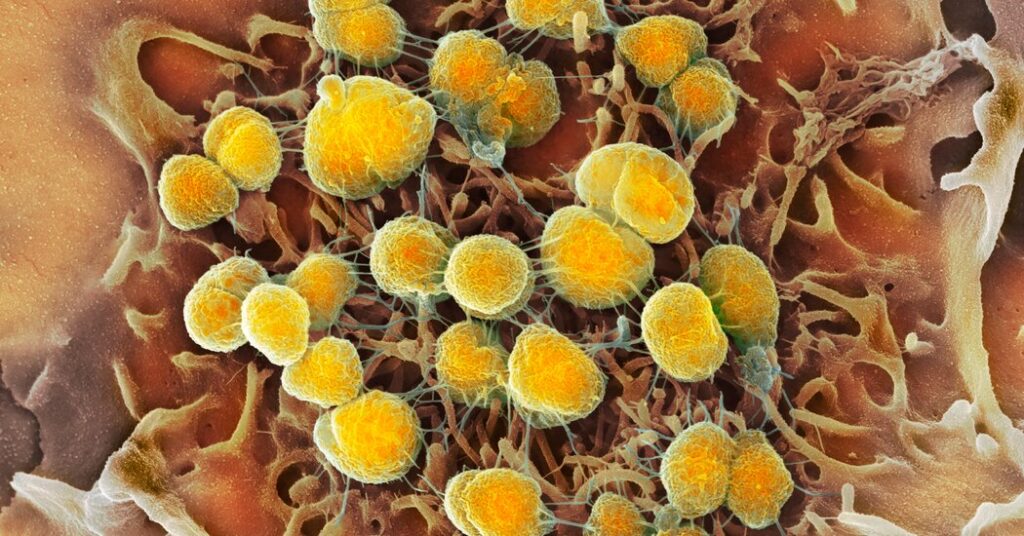
Neisseria gonorrhoeae, the bacterium that causes gonorrhea, is a wily nemesis that has outsmarted every previous antibiotic deployed against it, including the sole therapy that remains effective.
On Friday, the F.D.A. approved a new antibiotic, zoliflodacin, a day after an article published in The Lancet reported that a clinical trial had found that a single oral dose of the drug was safe and effective against gonorrhea. The disease infects more than 80 million people each year and can have serious health implications.
A day earlier, the agency approved the expanded use of another new antibiotic to treat gonorrhea. The drug, gepotidacin, developed by GSK, had previously been approved to treat urinary tract infections in women.
Infectious disease experts were buoyed by the news.
“Antibiotic resistance is something that keeps all of us up at night so anytime a new antimicrobial comes to market is a cause for celebration,” said Dr. Aniruddha Hazra, medical director of the Sexual Wellness Clinic at University of Chicago School of Medicine.
In the United States, there were nearly 600,000 cases of gonorrhea last year, according to the Centers for Disease Control and Prevention.
Gonorrhea does not cause symptoms in about half of those infected, allowing it to easily spread. But in others, the pathogen can lead to joint pain and burning urination. Left untreated, it can cause infertility and sterility, blindness in infants or even death.
Resistance to the last remaining treatment, an injection of ceftriaxone that is sometimes combined with a dose of azithromycin, has been rising. Earlier this year, the World Health Organization issued a warning about the spread of drug-resistant gonorrhea throughout much of the world, with especially worrisome caseloads in the Philippines, Cambodia and Vietnam.
Antimicrobial resistance is a growing concern across the globe, with hard-to-treat infections claiming millions of lives each year. Because antibiotics seldom make money for the companies that develop them, the pipeline for new drugs in recent years has slowed to a trickle. The last new antibiotic for gonorrhea, ceftriaxone, was approved in the mid-1980s.
Public health experts said they were especially encouraged by public-private partnership that developed zoliflodacin, which was initially discovered by another drug company that declined to take it to market.
The Global Antibiotic Research and Development Partnership, or G.A.R.D.P., a nonprofit in Switzerland, took on the drug and found a partner in Innoviva Specialty Therapeutics, a small company in Massachusetts with a modest portfolio of antibiotics.
The arrangement gives Innoviva the right to sell zoliflodacin in a number of high-income countries while G.A.R.D.P. commercializes a lower-cost version in the rest of the world.
“The beauty of our model is that we have a stake and skin in the game, and we will exercise those rights to ensure our public health objectives are met,” said Dr. Manica Balasegaram, the executive director of G.A.R.D.P.
Because zoliflodacin and gepotidacin are entirely new types of antibiotics, experts said they hoped the drugs would remain effective for a long time by limiting the bacteria’s ability to share resistance traits.
For now, both antibiotics are only approved for gonorrhea present in genitalia and the urinary tract, which will limit their use and most likely add to the duration of efficacy.
Dr. Edward Hook III, an expert on sexually transmitted infections and an author of The Lancet study, said zoliflodacin was different from most other antibiotics, which take aim at a bacterium’s cell wall.
By contrast, zoliflodacin works by targeting an enzyme that catalyzes the reproduction of the gonorrhea.
Dr. Hook, an infectious disease specialist at the University of Alabama at Birmingham, said he was especially excited by zoliflodacin because of its simplicity — a single oral dose. The current treatment, ceftriaxone, is delivered by injection.
“This is an important opportunity to expand treatment because no one wants to get a shot,” Dr. Hook said.
Dr. Amesh Adalja, an infectious disease specialist and a senior scholar at the Johns Hopkins Center for Health Security, said the approval of both drugs was arriving at a critical moment, given the mounting resistance to gonorrhea. He said he hoped the public-private partnership that brought zoliflodacin to market would be replicated with other antibiotics.
“These drugs are not just for treating infections,” he said. “They make chemotherapy safe, and make it possible for people to get artificial hips and joints. People don’t appreciate how much the control of infectious disease affects the entire practice of modern medicine.”
Andrew Jacobs is a Times reporter focused on how healthcare policy, politics and corporate interests affect people’s lives.
The post F.D.A. Approves Two New Drugs to Treat Gonorrhea appeared first on New York Times.