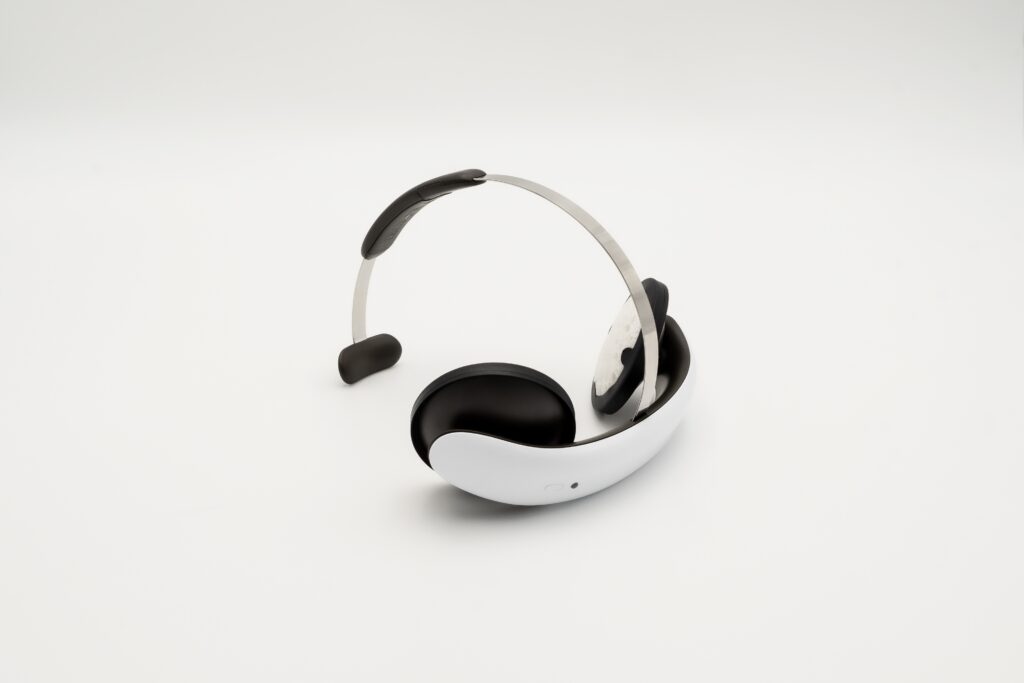
An in-home headset that allows people with depression to send mild electrical current to their brains has been cleared by the Food and Drug Administration, in what medical experts consider a milestone for expanding mental health treatment beyond drugs.
The prescription device, made by Flow Neuroscience, is designed to counteract moderate to severe depression in adults by delivering electric stimulation to an area of the brain that controls mood and stress. While such stimulation is widely used to treat depression, Flow is aiming to fill a niche with a product that delivers a relatively low dose of current at home, instead of at specialized clinics. The FDA said testing showed “modest” results for patients.
“We’re really about the democratization of access,” Erin Lee, Flow’s CEO, said in an interview, pointing out that many people lack access to in-office procedures such as transcranial magnetic stimulation. “We can put it in any home in the United States,” Lee said of Flow’s headset.
The device is cleared for use as a stand-alone therapy or in combination with drugs such as antidepressants. Pricing is still being finalized, but the headset will cost around $500, Lee said, and will be available in the United States by the middle of next year. She added that the company is in discussions with insurance companies and hopes to get coverage by the end of 2026.
Flow’s device uses transcranial direct current stimulation, a technique that has been studied for years and whose effectiveness has been debated. Some trials have failedto show that such a device delivers a benefit over a sham treatment, akin to a placebo group. Other analyseshave foundthe stimulation delivers a moderate benefit.
“This opens up a new era of treatment for depression,” said Daniel Blumberger, a senior scientist at the Centre for Addiction and Mental Health, Canada’s largest mental-health teaching hospital. While other electric stimulation devices have been marketed to treat depression at home, Flow’s evidence is much more robust, said Blumberger, who advises another company that is developing a similar device.
The evidence for Flow’s headset is largely based on a clinical trial with 174 participants. Patients used the device for 30-minute sessions over 10 weeks and were evaluated on rating scales of depressive symptoms compared with a control group, whose headsets mostly delivered no electric current. The results, published in Nature Medicine last year, found a significant reduction in depression scores. The study also showed that patients who got the treatment experienced relief at two to three times the rate of those who got the sham procedure. By one measure, about 58 percent of patients who received the stimulation were in remission.
The treatment was frequently linked to skin redness and itching but not to any serious reactions.
The FDA has previously cleared other devices that treat depression with electrical stimulation but in 2019 finalized a new rule that sets a higher bar. Citing a need for more evidence that such devices were safe and effective for depression, manufacturers would have to go through the agency’s most stringent device review. Lee said Flow’s was the first electrical stimulation device to win clearance through this process.
In evaluating Flow’s device, the FDA cited some limitations, such as a lack of consensus on what represents a meaningful clinical difference on the depression rating scale used to study to headset. Still, the FDA foundthat the benefit, “while modest, is sufficient to outweigh its probable risk.”
The FDA didn’t respond to a request for comment.
Flow’s headset is for patients at least 18 years old who aren’t determined to have treatment-resistant depression. The rechargeable device provides electric stimulation by electrodes placed on the scalp and is controlled by a smartphone app. It is designed to last for three years, according to the FDA and the company.
Lee said Flow has sold 55,000 headsets in Europe, where it has been available since 2019, and recently launched in Australia.
The post You can soon treat depression at home with this brain-stimulating headset appeared first on Washington Post.