Welcome to Current Events Conversation, where each week we round up some of our favorite responses to one of our student writing prompts.
As 2025 draws to a close, we asked teenagers to reflect on the end of the year in three Picture Prompts about gratitude, the onset of winter and Oxford’s Word of the Year.
Below, they share what they’re most grateful for this year, including their parents, their friends, their education and pesto sauce. They discuss how the darker, colder days are affecting their moods — for better or for worse. And they debate whether “rage bait,” the Oxford English Dictionary’s Word of the Year, is a good choice.
Thank you to everyone who joined the conversation this week, including students from Cerritos High School in Cerritos, Calif.; Spirit Lake High School in Spirit Lake, Iowa; and Athens, Greece.
Current Events Conversation will return in January.
Please note: Comments have been edited and condensed.
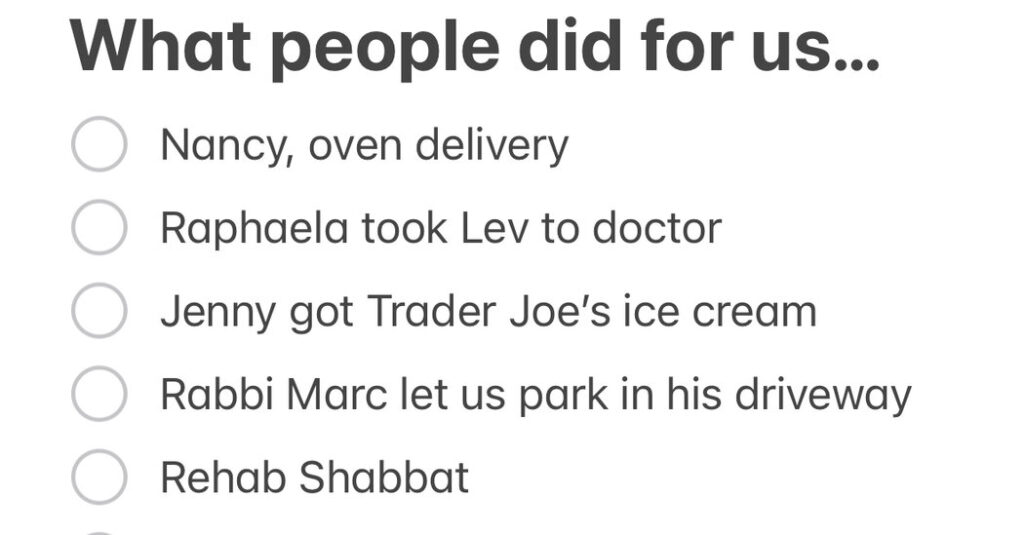
Gratitude List
What are you grateful for this year?
I am grateful for many things; my family, friends, peers, teachers, extracurriculars, and the life I have. However, if I were to shorten my list and make it oddly specific, it would consist of:
— Sleeping more than two hours — a rare occurrence as of late. — Sleeping at all. — A large iced caramel macchiato with an extra shot of espresso, pumpkin flavoring, and cold foam, accompanied by a warm cheese danish on a crisp, chilly Thursday morning. — The thought of releasing Vol. 4, No. 1 of my high school’s newspaper. — The ice-cold water I dispense into my bright, teal water bottle every morning. — The smooth black gel pen I found yesterday morning, December 3rd. — My perfectly curated Spotify playlist. — The television show “Law & Order SVU.”
To end my list, I would conclude with the most important thing — pesto sauce.
I feel like being thankful for my family and the people around me, my best friend who is always there to listen to my bizarre ideas, is something that comes to me naturally, yes. But, when I put more thought into it, the thing I am most grateful for is my education. I and many others in my country have the privilege to be educated: have access in books, be able to write and speak, even be able to read this article.
This year I am thankful for the health and well being of my loved ones. I am grateful that my family is healthy and safe. I am very thankful that I have been blessed with all of my basic needs met. I am grateful for the opportunities I have with my education and sports, and freedom of religion.
There are many things to be grateful for but one that I really stuck out to me this year was how much my friends supported me and carried me through this year. Without these people I don’t know what I would do. They are there for the good times and the bad, and that’s what a real friend would see.
— Sadie, Glenbard West High School Glen Ellyn, IL
When I get asked what I am thankful for, one word instantly comes to mind. That word is basketball. Basketball is something that I will forever be thankful for. This sport has changed my life in more ways than not and I cannot imagine taking my shoes off for the last time. This sport has opened up so many opportunities for me and created memories that will last forever.
I am grateful for many things in life, and sometimes it surprises me how much I truly have to appreciate. To begin with, I’m incredibly grateful for my family, especially the ones I live with every day: my mom, dad, and brother. My parents provide so many of life’s essentials that I often take for granted, like having a roof over my head, being well fed, and having a safe place to come home to. Beyond the basics, they support me in ways that matter even more. They’re always there for me when something goes wrong, when I’m stressed, or when I just need someone to listen. As I’ve grown older, I’ve realized how much my parents sacrifice and how hard they work.
Mountain Dew Baja Blast. There is something so majestic about that citrusy, radioactive green elixir that just makes my heart start to race when I taste it, and not just from the caffeine.
_________
Seasonal Sadness
Do the darker, colder days affect your mood?
The darker, colder days that winter inevitably brings definitely do affect my mood, and I oftentimes struggle to find ways of coping with it. The freezing walks into school each morning, paleness, and general lack of energy make it nearly impossible to start my day on the right foot. Though this season brings countless fun activities: sledding, ice skating, making gingerbread houses, I would rather be spending time outside with my friends in the sun, not having to worry about protecting every single body part with something warm to avoid freezing.
— Wynne, Glenbard West High School
The image by Audrey Helen Weber reflects my shifting in moods along with the seasons. I feel that the darkness of winter shadows my spark — my personality — like an eclipse. In summer I can wake up to the sun and the sound of birds chirping and feel motivated through their songs. However, in winter I wake up and feel like a cloud has covered the entire sky, leaving a feeling of endless gloom in its trail. Through this time we must find a new motivator to kindle our spark. Create your own light.
Although I wish I could say it isn’t, my mood definitely is a little reliant on the weather. Living in a colder-snowy state, especially, there are many times I have to change plans for weather and mixing up my schedule even a little bit makes me gloomy. I wouldn’t say it is always a negative though, sometimes “unpleasant weather” can still be appreciated. A nice rain is amazing. And sleeping in on a cloudy day can be the best. But, it is an impending Monday with tons of work combined with gray skies that can really be the test of the ages.
Not only does the darkness make people feel physically tired, it also creates a sense of loneliness or isolation. What’s more, students especially may struggle to focus, since the gloomy atmosphere makes schoolwork feel heavier than usual. I cope by taking short outdoor walks when the sun is still out and by surrounding myself with warm lights and bright colors because, as recent research has shown, small changes in light exposure can improve mood.
— Diego, Glenbard West High School
On the extra dark days, I think back to months prior, in July and August when the sun still shined at 8 p.m. with nostalgia. I remember that that time will come again, and this is only temporary. Sometimes I find spending time with friends or family helps distract my mind and focus as well.
— Zoey, Glenbard West High School
I don’t experience seasonal depression; I actually quite enjoy the colder weather. I love setting up fireplaces in my home, drinking hot chocolate, and layering with clothes and blankets during the winter. I also look forward to the Christmas decorations in both my home and others’. Since the seasons in Southern California aren’t too dramatic, it’s also never too cold to go outside during the colder days. There’s something that feels more comforting about the chilly winds during winter than the blistering sun during summer for me.
The winter doesn’t change my mood at all. If anything it makes my mood better because I can go snowmobiling, ice fishing, sledding, etc. On Sunday I went snowmobiling the whole day. The snow was so deep and it was a great time.
Personally, as much as I prefer summer, I love when it starts snowing, the air is the perfect chill, and the sense of quiet that comes with it is amazing. In other words, sometimes you have to take a step back, take a deep breath, and fully let yourself relax to see the beauty in the cold. The opportunities in the cold don’t change; if anything you get to do different things than you normally would. I don’t love winter. When the slush gets your shoes dirty, when your feet, hands, and face get so cold they feel like they are going to fall off — yeah, not my favorite — but we also get the chance to act like kids again and play in the snow. Ultimately there’s not much you can do to fix the winter grogginess, but you can try to see it differently — to see the beauty in it.
_________
The 2025 Word of the Year
‘Rage bait’ is the Oxford English Dictionary’s Word of the Year. Is it a good choice?
The word of the year “rage bait” accurately represents the nature of our digital culture. It draws attention to online loneliness, emptiness, superficiality, and overstimulation.
Creators posting rage bait are desperate for attention in order to feel significant and impactful in their empty lives.
Online audiences are vulnerable to rage bait because anger is not only the fastest emotion our brain processes but also an emotion that empowers us in a world of constant conflict and helplessness. Anger cuts through the numbness of doomscrolling and life in general and provides a clear target for us to blame amid our lost, frustrated hearts. It creates a sense of control and clarity among emotional and psychological turbulence.
Designating “rage bait” as the word of the year is signal fire in a universe of darkness. It is a call for society to confront the toxic online culture of emotional exploitation that feeds conflict instead of fostering connection.
I think that there is no word more fitting than the one they picked. Politics, online culture, and even the meta-nature of humor in recent years are all perfectly described by rage bait. As both the Merriam-Webster and Oxford dictionaries describe, rage bait is the creation and presentation of media for the purpose of eliciting anger and strong responses. I don’t think it’s a new thing, but the internet is definitely making it easier. In the past, yellow paper journalism during the Spanish-American War was a great example of this, but the internet empowers anyone to publish whatever controversial and attention-grabbing media they want. It’s everywhere, and there’s no way to avoid it when everything’s online. I might not have chosen it if I was in charge of choosing a word of the year, but it’s definitely apt.
— Sam, Fountain Valley High School
“Rage bait” is not a good choice, but it would be a little funny if it were. Rage bait has lost its meaning online from my perspective, as I keep seeing videos that are just flat-out cyberbullying or harassment and then slapping the word “rage bait” onto the video. The actual meaning of rage bait is when someone does an action that is supposed to trigger someone else. The problem is that people use the word incorrectly. I could be playing a game, and then someone types “easy rage bait” repeatedly in chat when I’m not even mad. Maybe I’m being rage baited by the word choice.
— Joseph, Julia R. Masterman, Philadelphia PA
“Aura” would be a perfect word to describe 2025. While “rage bait” is fitting and would include a main trend in the teenage world, aura is more positive and helps express not only the negative factors from this year. Aura is used by people of all ages to either joke with a friend, show interest in something, or as a gentle way to let someone know they have made a mistake. For example, if you wanted to compliment someone’s outfit, you could say “your fit has so much aura.”
If I were picking the word myself, I might choose something like “delulu” or “hyperfixate” since those also blew up this year and say a lot about how people talk about themselves and their behavior.
— Jay, CHS
If I could pick the 2025 word of the year I would pick “artificial” because now everything is man made, or most of it at least. Artificial also fits because of A.I. being very popular now.
— Abdullah, Mississauga, Ontario, Canada
… I think the word of the year should go to the term “67.” In my experience, I notice that my classmates at school, to kids as young as 5, say this word, and it seems to be a more widespread saying than “rage bait.” The word “67” is a quick, playful expression, nonsensical in meaning — almost like an inside joke. Its constant use makes it feel like a defining piece of our everyday vocabulary, and it is more deserving of the Word of the Year.
Learn more about Current Events Conversation here and find all of our posts in this column.
The post What Teenagers Are Saying About Gratitude, Winter Blues and ‘Rage Bait’ appeared first on New York Times.