Alison Murray and her colleagues were all set to dive in Antarctica. They’d gotten a grant to build on their earlier finding that sea squirts — sponge-like invertebrates on the seafloor — host a microbe that produces a molecule that could be used to fight cancer.
Then Murray’s team got word that the U.S. government was pulling its only research ship out of Antarctica.
The U.S. Antarctic Program has had at least one dedicated research vessel in the Southern Ocean for almost six decades — mapping currents, tracking melt under ice shelves, studying marine food webs and more.
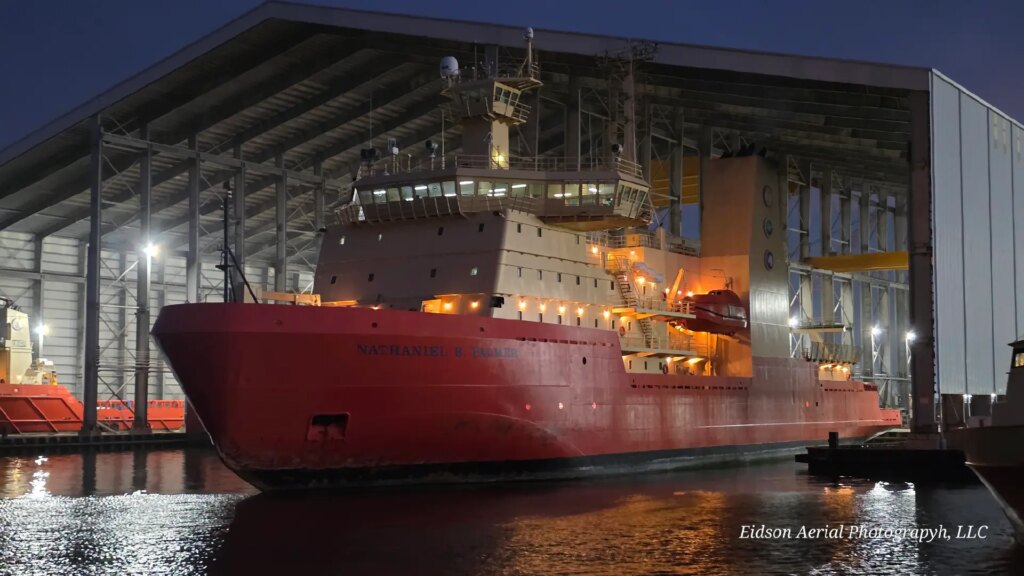
But the National Science Foundation said in its 2026 budget request that it would be terminating the lease of the Nathaniel B. Palmer icebreaker. The ship returned to Louisiana last month without a replacement lined up.
Scientists who spoke to The Washington Post said the loss of the icebreaker hinders their work, takes away important field opportunities for young scientists and diminishes America’s leading presence on the continent.
The NSF said it would continue to support all marine cruise projects, like Murray’s, for the upcoming field season, as well as the three U.S. research stations in Antarctica.
“We remain committed to enabling world-leading scientific research in Antarctica and are actively reviewing potential vessels and partnerships,” said NSF spokesperson Cassandra Eichner. But the agency said development of a new vessel had been paused, with further assessment to come in Fiscal Year 2026.
Scientists who spoke to The Post estimated that a new vessel could take years to build — even longer if the work remains paused for an extended period. In the interim, while in some cases it may be possible for U.S. researchers to get spots on other boats, the overall number of researchers able to explore the frozen continent could be reduced.
“It’s not just that next year we’re not going to have a ship. It’s what’s going to happen if we don’t have a ship for five years,” said Amy Leventer, an Antarctic researcher at Colgate University. “It’s heartbreaking.”
Losing ground in Antarctica
Since 1992, the Nathaniel B. Palmer has supported the work of countless U.S. scientists. The 308-foot ship can knock out three feet of ice at about 3 mph, enabling access to some of the most inaccessible parts of the world.
Marine geologist Julia Wellner said the vessel was critical to research on the rapidly melting Thwaites Glacier, which could raise global sea levels by two feet if it disappears. During a 2020 expedition, the Palmer plowed through heavy ice and into the open water near the ice shelf, so that she and colleagues could collect data. (Among their findings: Water flowing under the ice carried silt particles into the sea more than they expected, motivating them to further study processes at ice margins.)
“You go through the really hard-to-work areas, and you’re breaking ice and breaking ice. That’s why the Palmer’s so important,” said Wellner, a professor at the University of Houston. “As we broke in, I thought: ‘Oh wow, it’s really open. We’re going to be able to do it after all these years of planning.’”
In addition to its ice-breaking capabilities, the ship could perform mooring operations, water sampling and seafloor dredging. It could also deploy autonomous underwater and unmanned aerial systems.
The squeeze on the government’s Antarctic program didn’t begin with the Trump administration. Last year, the NSF retired its other Antarctic research vessel, the Laurence M. Gould, citing a limited budget and rising costs.
The Palmer was also nearing the end of its lifespan, but the goal was to keep it operating until a new vessel could be built to replace it. When the NSF indicated that it was pulling the plug early, more than 170 polar scientists signed an open letter asking the agency to reconsider.
“It’s really put us in a more limited place now than we have been for the last certainly 20 or 30 years,” said Peter Neff, a polar glaciologist at the University of Minnesota who has traveled on Antarctic expeditions on South Korea’s vessel. “It’s money spent to employ an expert U.S. polar workforce that, if it is not continually invested in, will go away, and quickly gaps will emerge in it.”
Those gaps could affect scientific advancements, as well as national security issues where presence is important for decision-making.
Only a handful of nations have a dedicated Antarctic vessel that can trudge through tough, icy environments and execute dangerous maneuvers in support of research. But as the U.S. decreases its maritime footprint, other nations — including China, South Korea, Japan, Britain and Australia — are expanding their marine capabilities.
The open letter signed by polar scientists stated that “the number of groups there grows each year, for research, for tourism, for exploitation of fishery stocks, and simply for exerting national presence.”
Without a dedicated research vessel, the U.S. could fall behind other countries in training the next generation of Antarctic researchers, Leventer said. “We may lose a generation of brilliant, motivated scientists doing groundbreaking and fundamental research,” she said.
Leventer, who studies sediment cores around the margins of Antarctica, first traveled on the Palmer to the continent in 1996 and has since served as chief scientist on two missions. “One thing that’s a bit different about field-based polar research is the understanding of the logistical demands coupled to extreme conditions of weather and ice,” she said. “Much of that comes through field experiences.”
Hitching rides to Antarctica
For the upcoming field season, the NSF has enlisted the help of two ships from the U.S. Academic Research Fleet, which is owned by the government but operated by universities and national laboratories.
One substitute vessel is being diverted from Alaska, the other from the Mid-Atlantic and Caribbean. In total, they will be conducting four projects, said Doug Russell, executive secretary of the University-National Oceanographic Laboratory System (UNOLS), which manages the U.S. fleet.
Murray and her colleagues have been assigned to the Sikuliaq, operated by the University of Alaska at Fairbanks, in February and March. That will allow the researchers to conduct their dives, deploy a small remotely operated vehicle and perform necessary specimen analysis onboard.
“We were quite fortunate that they found another ship,” said Murray, a microbial ecologist at the Desert Research Institute. “I think we’re really going to be able to accomplish everything that we had planned.”
Meanwhile, the Roger Revelle, operated by the Scripps Institution of Oceanography at University of California at San Diego, will take on the Long-Term Ecological Research Program, which has been collecting ecological data from Antarctica since 1990.
The ship had been under consideration for 2026 research in the Atlantic and the Caribbean, as well as for potential transit to the eastern Pacific, but then the directive changed, Russell said.
It has now obtained a Polar Code certification allowing it to operate around a certain amount of ice.
But it’s unlikely that using these two ships is a permanent solution. Russell said they are not designed for heavy use in Antarctica and will travel mainly around the less-ice-intensive Antarctic Peninsula. That means scientists studying in ice-heavy regions in East and West Antarctica, including near Thwaites Glacier, still need to find a different vessel.
These ships also have their own scientific missions and schedules. Both ships operate between 270 and 300 days each year in their own territories. Traveling nearly a month back and forth from Antarctica severely curtails their availability for other scientific projects.
“It’s not a replacement, it’s a Band-Aid,” Leventer said. “And it’s not even a giant Band-Aid.”
The post U.S. to lose ground in Antarctica after pulling out last research ship, scientists say appeared first on Washington Post.