At the beginning of “The King of Color,” Lawrence Herbert, the documentary’s subject, says that he chose to participate because he is in his 90s and “wanted to leave something behind.” But the thesis of the movie — said to have been made at Herbert’s instigation and, it’s hinted at, with his financial backing (“I’d be happier if it was a lot cheaper,” he says) — is that what he has already left behind is so pervasive that we take it for granted.
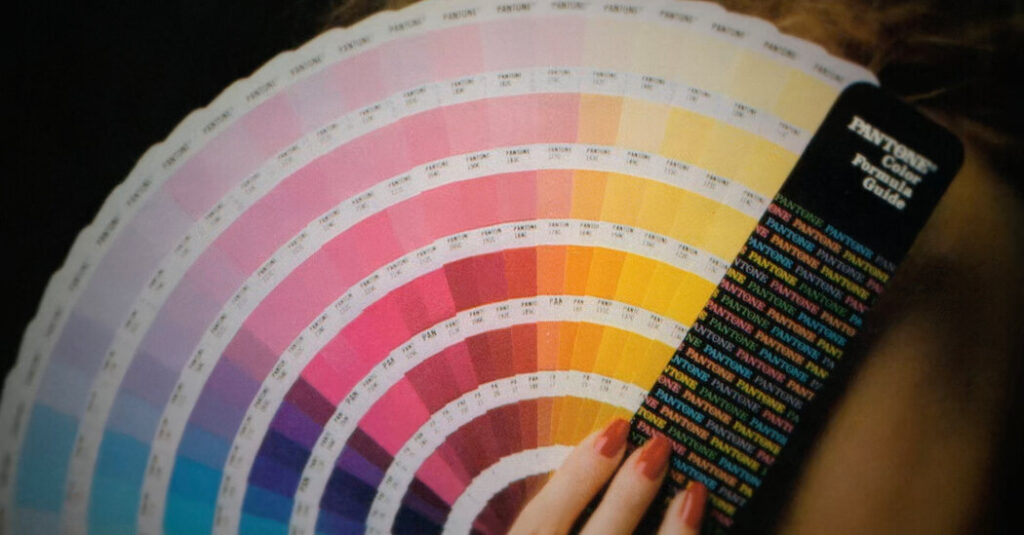
In the 1960s, Herbert created the Pantone Matching System, a rubric for standardizing colors. Before then, he explains, “If I said to you, ‘Give me a rose red,’ everybody would come along with a different color rose red.” The matching system gave every color a number, and that number corresponded to a formula. Suddenly, ink manufacturers who stocked eight basic colors, along with black and white, could produce hundreds of colors and ensure consistency across industries and the globe.
The effects spread far beyond printing into advertising, fashion and even the digital realm. (The company, which Herbert sold in 2007, is still raising eyebrows: Its selection last week of a white called Cloud Dancer, Pantone 11-4201, as the color of 2026 has prompted considerable debate.)
One interviewee suggests that Herbert has had a greater impact than Steve Jobs or Ray Kroc; he just isn’t as widely known. “The King of Color,” directed by Patrick Creadon (“Wordplay”), aims to offer a corrective.
It’s a grandiose corrective. (Even Herbert’s daughter Lisa calls the project “a little self-centered.”) And we don’t need to hear about Herbert’s party years after his first marriage faltered. But he still had a cool idea, and his explanations of printing technology and color chemistry are almost enough to carry the film.
The King of Color Rated PG. Running time: 1 hour 22 minutes. In theaters.
The post ‘The King of Color’ Review: He’s Just Into Hue appeared first on New York Times.