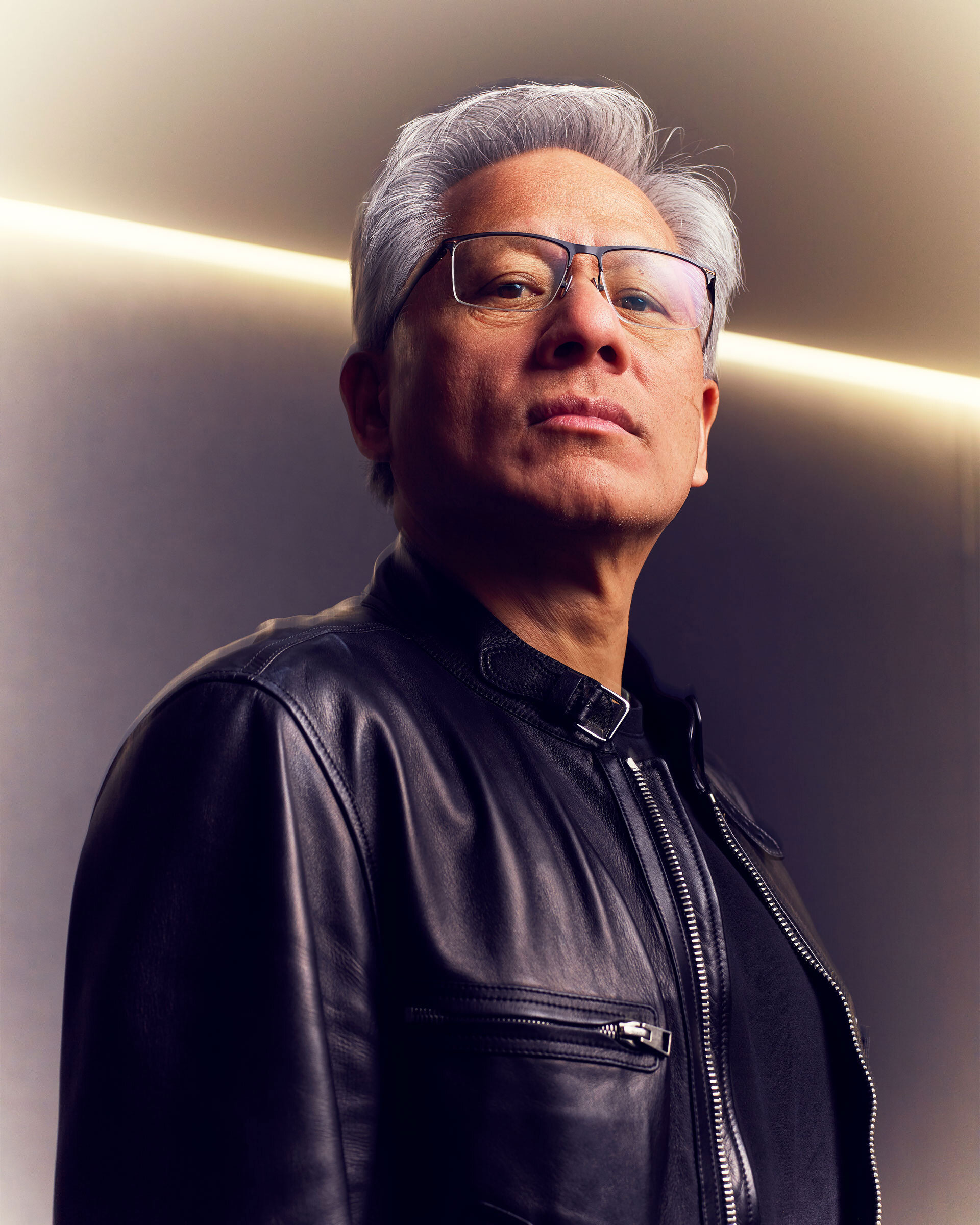
Jensen Huang needs a moment.
The CEO of Nvidia enters a cavernous studio at the company’s Bay Area headquarters and hunches over a table, his head bowed.
At 62, the world’s eighth richest man is compact, polished, and known among colleagues for his quick temper as well as his visionary leadership. Right now, he looks exhausted. As he stands silently, it’s hard to know if he’s about to erupt or collapse.
Then someone puts on a Spotify playlist and the stirring chords of Aerosmith’s “Dream On” fill the room. Huang puts on his trademark black leather jacket and appears to transform, donning not just the uniform, but also the body language and optimism befitting one of the foremost leaders of the artificial intelligence revolution.
Still, he’s got to be tired. Not too long ago, the former engineer ran a successful but semi-obscure outfit that specialized in graphics processors for video games. Today, Nvidia is the most valuable company in the world, thanks to a near-monopoly on the advanced chips powering an AI boom that is transforming the planet. Memes depict Nvidia as Atlas, holding the stock market on its shoulders. More than just a corporate juggernaut, Nvidia also has become an instrument of statecraft, operating at the nexus of advanced technology, diplomacy, and geopolitics. “You’re taking over the world, Jensen,” President Donald Trump, now a regular late-night phone buddy, told Huang during a recent state visit to the United Kingdom.
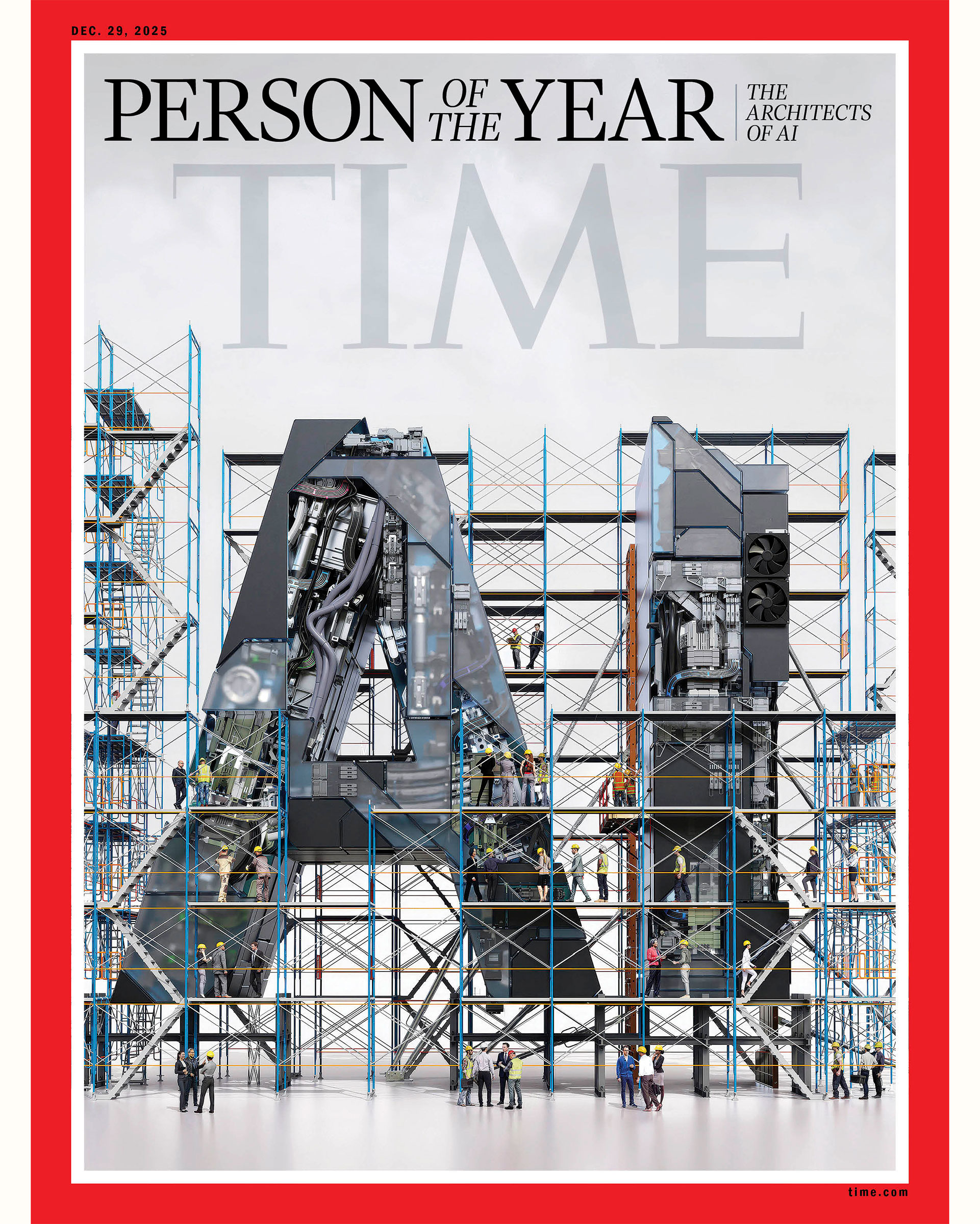
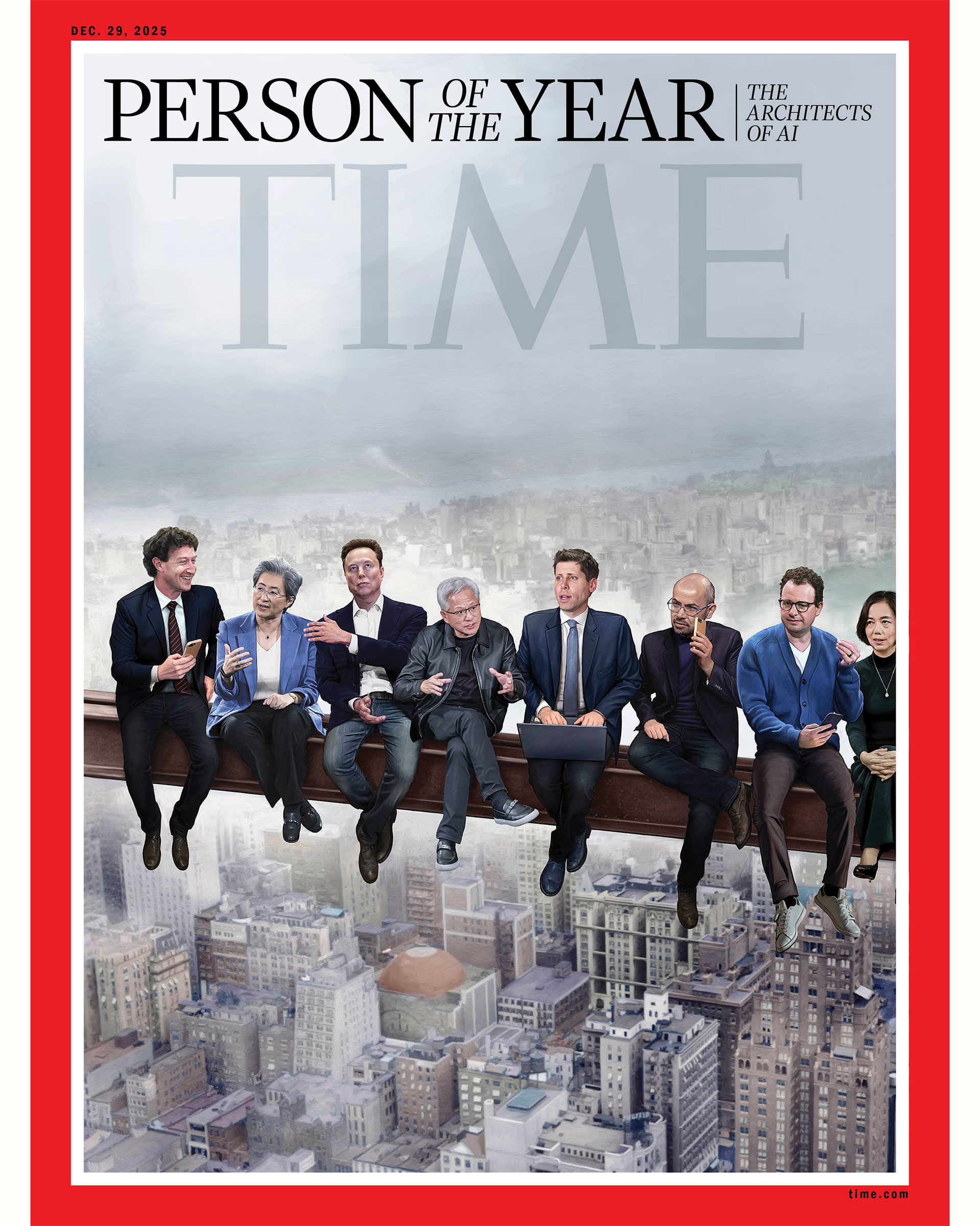
Click here to buy your copy of this issue
For decades, humankind steeled itself for the rise of thinking machines. As we marveled at their ability to beat chess champions and predict protein structures, we also recoiled from their inherent uncanniness, not to mention the threats to our sense of humanity. Leaders striving to develop the technology, including Sam Altman and Elon Musk, warned that the pursuit of its powers could create unforeseen catastrophe.
This year, the debate about how to wield AI responsibly gave way to a sprint to deploy it as fast as possible. “Every industry needs it, every company uses it, and every nation needs to build it,” Huang tells TIME in a 75-minute interview in November, two days after announcing that Nvidia, the world’s first $5 trillion company, had once again smashed Wall Street’s earnings expectations. “This is the single most impactful technology of our time.” OpenAI’s ChatGPT, which at launch was the fastest-growing consumer app of all time, has surpassed 800 million weekly users. AI wrote millions of lines of code, aided lab scientists, generated viral songs, and spurred companies to re-examine their strategies or risk obsolescence. (OpenAI and TIME have a licensing and technology agreement that allows OpenAI to access TIME’s archives.)
Read More: The Story Behind TIME’s 2025 Person of the Year Covers
But researchers have found that AIs can scheme, deceive, or blackmail. As the leading companies’ models improve, AI systems may eventually outcompete humans—as if an advanced species were on the cusp of colonizing the earth. AI flooded social media with misinformation and deepfake videos, and Pope Leo XIV warned that it could manipulate children and serve “antihuman ideologies.” The AI boom seemed to swallow the economy into “a black hole that’s pulling all capital towards it,” says Paul Kedrosky, an investor and research fellow at MIT. Where skeptics spied a bubble, the revolution’s leaders saw the dawn of a new era of abundance. “There’s a belief that the world’s GDP is somehow limited at $100 trillion,” Huang says. “AI is going to cause that $100 trillion to become $500 trillion.”
This is the story of how AI changed our world in 2025, in new and exciting and sometimes frightening ways. It is the story of how Huang and other tech titans grabbed the wheel of history, developing technology and making decisions that are reshaping the information landscape, the climate, and our livelihoods. Racing both beside and against each other, they placed multibillion-dollar bets on one of the biggest physical infrastructure projects of all time. They reoriented government policy, altered geopolitical rivalries, and brought robots into homes. AI emerged as arguably the most consequential tool in great-power competition since the advent of nuclear weapons.
This article was reported across three continents and through dozens of conversations with executives and computer scientists, economists and politicians, artists and investors, teenagers toward an unknown destination, and the struggle to make sense of it.
The tone was set at Trump’s Inauguration. Tech moguls streamed into Washington; some sat behind the President during his Inaugural Address, a signal of the power they would wield. Over the next 11 months, they would use their enormous cash reserves, cultural power, and momentum to push their products into homes across the world.
At Meta, Mark Zuckerberg placed a chatbot into flagship products like Instagram and WhatsApp, raided rivals to amass talent, and doled out compensation packages that paid machine-learning engineers more than professional ballplayers. Altman completed his transformation of OpenAI, shedding profit caps for investors and paving the way for future investment in the $500 billion colossus. Anthropic, the frontier lab that styles itself as the most safety-conscious, reportedly made plans to go public at a $300 billion valuation. (Salesforce, where TIME owner Marc Benioff serves as CEO, is an investor in Anthropic.) Musk built data centers in record time. Google inserted Gemini AI answers at the top of its search engine. Top investors, like SoftBank’s Masayoshi Son, plowed billions into chips, self-driving cars, and capital infrastructure.
OpenAI, which ignited the boom, continues to set the pace in many ways. Usage of ChatGPT more than doubled, to 10% of the world’s population. “That leaves at least 90% to go,” says Nick Turley, head of ChatGPT.
Read More: Why the Architects of AI Are TIME’s 2025 Person of the Year
A large language model (LLM), the technology underpinning chatbots like ChatGPT or Anthropic’s Claude, is a type of neural network, a computer program different from typical software. By feeding it reams of data, engineers train the models to spot patterns and predict what “tokens,” or fragments of words, should come next in a given sequence. From there, AI companies use reinforcement learning—strengthening the neural pathways that lead to desired responses—to turn a simple word predictor into something more like a digital assistant with a finely tuned personality.
About a year ago, OpenAI researchers hit on a new way of improving these models. Instead of letting them respond to queries immediately, the researchers allowed the models to run for a period of time and “reason” in natural language about their answers. This required more computing power but produced better results. Suddenly a market boomed for mathematicians, physicists, coders, chemists, lawyers, and others to create specialized data, which companies used to reinforce their AI models’ reasoning. The chatbots got smarter.
At the same time, AI companies gave these models access to new tools, like the ability to search the internet before answering a query and then consider their findings. They added memory, allowing models to recall details from past chats rather than starting each exchange afresh. And they let users connect other data sources—email inboxes, cloud storage, web browsers, calendars. “Seeing ChatGPT evolve from an instant conversational partner to a thing that can go do real work for you feels like a very, very important transition that most people haven’t even registered yet,” Turley says.
Other breakthroughs abounded. Cursor, founded in 2022 by a group of MIT grads, became one of the world’s fastest-growing startups ever off the strength of its AI coding tool, achieving $1 billion in annual revenue. “I would guess that one of the biggest stories over the next year or two will be the real productivity gains within software engineering and coding [becoming] more horizontally applied” to other sectors of the economy, says Cursor CEO Michael Truell. Meanwhile, a concerted push across the industry was driving up the efficiency of AI models, leading to an increase in total usage. “I think there is near infinite demand for intelligence,” says Turley, the head of ChatGPT.
By late 2025, coding tools like Cursor and Claude Code had become so powerful that engineers across top AI companies were using them for virtually every aspect of their work. Most engineers at Nvidia are users of the tools, Huang says—a feature that has helped his company nearly quadruple the number of chips it produces per year, while only doubling head count. At Anthropic, staff engineers use Claude Code to help build the model’s next iterations; Claude now writes up to 90% of its own code. And at AMD, the same tools have sped up efforts to build a software ecosystem to rival Nvidia’s, according to CEO Lisa Su. “2025 is the year that AI became really productive for enterprises,” Su says.
In Trump’s first week back in office, Sriram Krishnan—who was still awaiting his official government badge—was summoned to the White House to brief senior officials on a breakthrough unfolding half a world away. A little-known Chinese AI startup called DeepSeek had just released a model that was said to rival the abilities of American competitors. DeepSeek claimed it had built this model in mere months, using less-advanced chips. Its researchers appeared to have replicated OpenAI’s reasoning breakthroughs using far less computation, allowing China to erase the gap in a competition the Silicon Valley experts hadn’t considered close.
Krishnan, one of Trump’s top AI advisers, felt both vindicated and alarmed. For the past year, the former partner at the venture-capital firm Andreessen Horowitz had been preaching the urgency of winning the AI race with China to friends, colleagues, and podcast listeners. The U.S., he argued, needed to build as fast as possible, stripping away red tape to let American AI companies run free. To the tech leaders shaping Trump’s new AI agenda, news of DeepSeek’s breakthrough validated the case for acceleration. “It was a wake-up call that we needed,” says Dean Ball, who helped write Trump’s AI Action Plan, released in July. “It set the tone for the nature of the competition that we have ahead of us, and the speed with which we have to move.”
Read More: How the U.S. Can Win the AI Race
Within that first week, Trump signed an Executive Order ripping up President Biden’s more cautious AI policies and announced a multiyear, $500 billion initiative dubbed Stargate, a partnership to build huge new data centers where future versions of OpenAI models could be trained and housed. In the months that followed, Trump greenlighted a raft of AI initiatives while freezing or slashing enormous sums of federal funding in other areas. He authorized more than $1 billion for AI funding in his signature tax-and-spending bill, which included nearly $25 billion for an AI-driven Golden Dome defense system, and handed massive defense contracts to AI companies, including up to $200 million apiece for OpenAI, xAI, Anthropic, and Google.
While enacting a series of stringent tariffs, he carved out the biggest exemptions for AI-related hardware, and unwound the Biden Administration’s most punishing export controls on the sale of Nvidia chips to China and the Gulf states. He personally pushed Huang to commit to buying billions of dollars’ worth of chips from a new factory in the Arizona desert, which in October—thanks to those guarantees—began fabricating cutting-edge semiconductors on American soil for the first time in decades. In November, he announced the Genesis Mission, a Manhattan Project–style initiative to use AI to drive science forward.
The Administration’s AI Action Plan set forth a blueprint to integrate the technology into its systems while unleashing the might of the private sector. Big Tech lobbyists are calling upon Congress to pass AI-friendly rules, while industry backers say they plan to spend hundreds of millions against pro-regulation candidates in the coming midterms. The Administration dropped investigations and enforcement actions against tech companies. The Department of Energy has worked in tandem with other agencies like the EPA to slash regulations around the construction of data centers and power plants. Multiple studies have found that AI data centers are relying heavily on fossil fuels and stand to add millions of metric tons of carbon dioxide to the atmosphere. In an interview with TIME, U.S. Energy Secretary Chris Wright downplayed the environmental impacts. AI is the “No. 1 scientific priority of the Trump Administration,” Wright says.


Trump and his tech allies are even attempting to stop states from issuing their own AI regulations—which has drawn some fierce pushback even from GOP leaders. “Is it worth killing our own children to get a leg up on China?” Missouri Senator Josh Hawley, who recently introduced a bill to ban minors from using chatbots, told TIME in September after a congressional hearing on chatbot harms.
The remark reflected a prevailing sense that the revolution had arrived before the public was ready. Multiple polls find that Americans are worried about AI, and would prefer the technology to be developed safely, even if that means slowing down. One Pew Research Center survey in September found that Americans believe AI will worsen, not better, our abilities to think creatively, form meaningful relationships with other people, make difficult decisions, and solve problems.
Yet Trump was eager to join forces with a cohort of tech elites who once donated to his opponents. What turns his head, beyond displays of public devotion, are massive investments in capital infrastructure, energy, and manufacturing—a new load-bearing pillar holding up the U.S. economy and stock markets. Trump wields this technology as a geopolitical tool. The Administration dangled AI technology as a carrot in its efforts to end conflicts in Armenia and Azerbaijan, inked investment deals that strengthened ties with regional allies like Saudi Arabia and the United Arab Emirates, and used access to Nvidia chips as leverage in trade negotiations with China. Trump also delighted in posting AI-generated memes on Truth Social, including one depicting him dropping excrement on protesters from a plane above. “I don’t think any President has sent such a clear techno-optimist message in a very long time,” says Ball.
On a brisk morning near Beijing’s Bird’s Nest stadium, thousands of people filed into China’s -National Convention Center to hear Baidu CEO Robin Li address his company’s annual conference. The theme was “AI in Action,” and Li, in black slacks and white sneakers, unveiled Baidu’s latest foundation model, as well as an updated no-code tool that has already been used to generate over 400,000 bespoke AI-powered applications.
Li co-founded Baidu in 2000 as a search engine but has since transformed the firm into one of China’s top full-stack AI companies, offering everything from chips and cloud infrastructure to models, agents, applications, and consumer products. On the exhibition floor above the stage, Baidu reps displayed the firm’s new AI-powered eyeglasses, which allow wearers to receive explanatory commentary in their field of vision and simultaneous translation of conversations via embedded earpieces. Nearby, two piglets snuffled in their straw bed, meant to illustrate how AI-empowered agricultural tools can help identify swine flu and other pathogens. At a ping-pong table, AI-powered cameras dissected players’ technique, or lack thereof.

It all showcased China’s arrival at AI’s vanguard. For decades, the country relied on harvesting American IP for its tech ambitions. Many of China’s top names in the field cut their teeth at Microsoft. Chinese leader Xi Jinping was determined to change that. In 2017, he unveiled a plan to become the global leader in AI by 2030. But China still lagged behind Silicon Valley, and the explosion of ChatGPT in late 2022 didn’t so much live rent-free in the heads of Beijing’s leadership as take ownership of the title deeds.
Xi’s superpower rival had established a seemingly unassailable lead in the most consequential technology of the past half-century—as well as a stranglehold on the bedrock hardware. Chinese semiconductors have long lagged behind those produced in Taiwan and designed by American companies like Nvidia. But a push from the Chinese Communist Party is closing that gap. By 2025, chips from Chinese telecom giant Huawei outperformed the most advanced Nvidia chips that could legally be shipped to China under export controls.
Read More: Spatial Intelligence Is AI’s Next Frontier
That worried Huang, who fears a Chinese rival, and White House officials, who believe Chinese dependence on non-frontier American chips is the best way to ensure a lead in AI. “You want to sell the Chinese enough that their developers get addicted to the American technology stack. That’s the thinking,” Trump’s Commerce Secretary Howard Lutnick said in July, in comments that spurred China to ban Nvidia chips altogether.


As a result, on Dec. 8 Trump said he would loosen export controls—allowing the sale of Nvidia chips that are more powerful than anything Huawei can offer, but less powerful than those on sale in America. It was a bid to keep the addiction going, despite worries in some quarters that the advanced chips would help China catch up in the AI race. Trump said that Xi had “responded positively” to the decision, and that the U.S. government would take a 25% cut of exports.
The DeepSeek breakthrough in January was Beijing’s Sputnik moment, and Xi dialed up the pressure on other Chinese tech executives to follow their example. The following month Alibaba unveiled plans to invest $53 billion in AI over the next three years. A torrent of investment spurred the rise of six AI unicorns—StepFun, Zhipu AI, Moonshot AI, MiniMax, 01.AI, and Baichuan—that became known as China’s “AI Tigers.”
With export controls still restricting the sale of the most advanced chips to China and its university students increasingly unwelcome in the U.S., technological self-sufficiency has become Beijing’s lodestar. A new generation of AI pioneers has never set foot outside of the Middle Kingdom. Chinese leaders concede the U.S. still has a clear lead in AI models, advanced chips, and private investor cash. Yet China boasts a massive cohort of engineers, more STEM graduates than any other nation, lower costs, and a state-led development model that has already propelled it to dominate transformative technology from solar panels to 5G to EVs. “We are probably a few years behind on chips, but we’re not that far behind on the model level,” Li tells TIME.
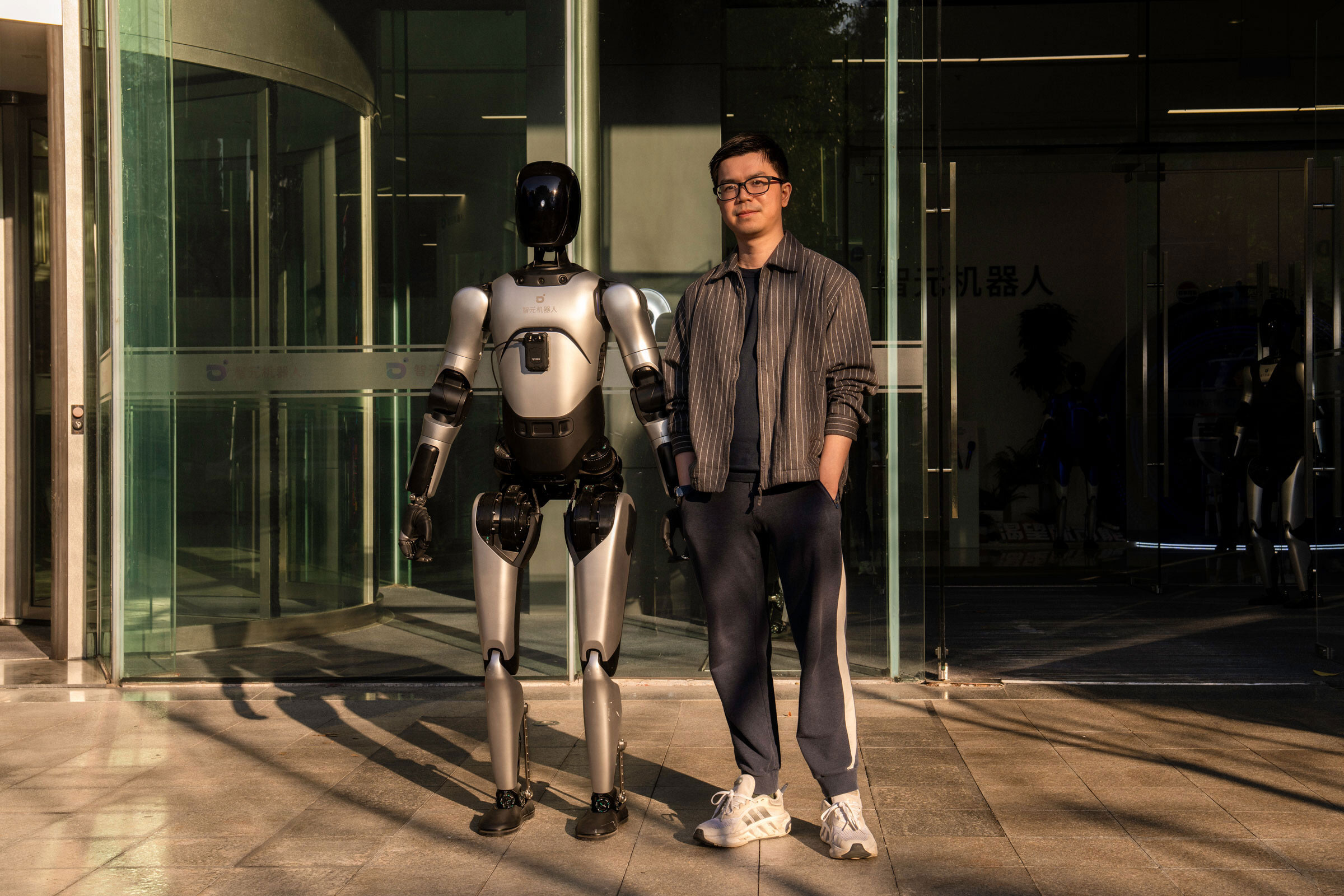
That state support has boosted startups like AgiBot, which fast became one of China’s leaders in humanoid robotics and embodied intelligence. Co-founder Peng Zhihui first rose to fame as a teenage social media phenom, gaining millions of followers by showcasing complex DIY tech projects, such as self-balancing robots, a miniature TV, and a self-driving bicycle. He joined Huawei in 2020 through its Genius Youth program, then left in 2022 to launch AgiBot. At the company’s data collection facility near Shanghai Disneyland, around 100 robots practice mundane tasks such as stacking shelves, folding clothes, and pouring cups of tea for 17 hours every day. The premises are provided free of charge by the city government—a cost saving that helps AgiBot retail its humanoid robots at under $20,000. “Our real cost is much lower,” Peng says, “owing to Chinese supply chains and manufacturing strengths.”
The scramble for AI dominance hinges on more than pure science. Mass commercial adoption and the industrialization of AI will also shape the outcome. If China can undercut Western competitors in deploying AI across the world’s fields and factories, it stands to gain an upper hand in the AI race. “I think we should provide AI access to everyone, not just the big companies,” says Yan Junjie, the CEO of MiniMax, which tries to offer comparable services to OpenAI’s at around one-tenth the cost—and crucially, open-source, so that developers anywhere can build atop them.
While the U.S. has loosened AI scrutiny under Trump, China fashioned regulation to accelerate technological development in the shape it wants. In August, Beijing unveiled its AI+ Initiative, which aims for AI to be used in 90% of China’s economy by 2030, and ultimately to “reshape the paradigm of human production and life.” Data centers are being constructed in remote regions, where abundant solar, wind, and hydroelectric power are being harnessed to create a shared compute pool by 2028. China’s updated five-year plan frames the coming half-decade as a make-or-break effort supported by government funding and tax breaks to incentivize private companies to spend more on research. Its policymakers see AI as the key to unlocking the long overdue transition from a waning real-estate-heavy, debt-fueled growth model to a new tech-focused industrial strategy.
Read More: AI Is the Next Industrial Revolution
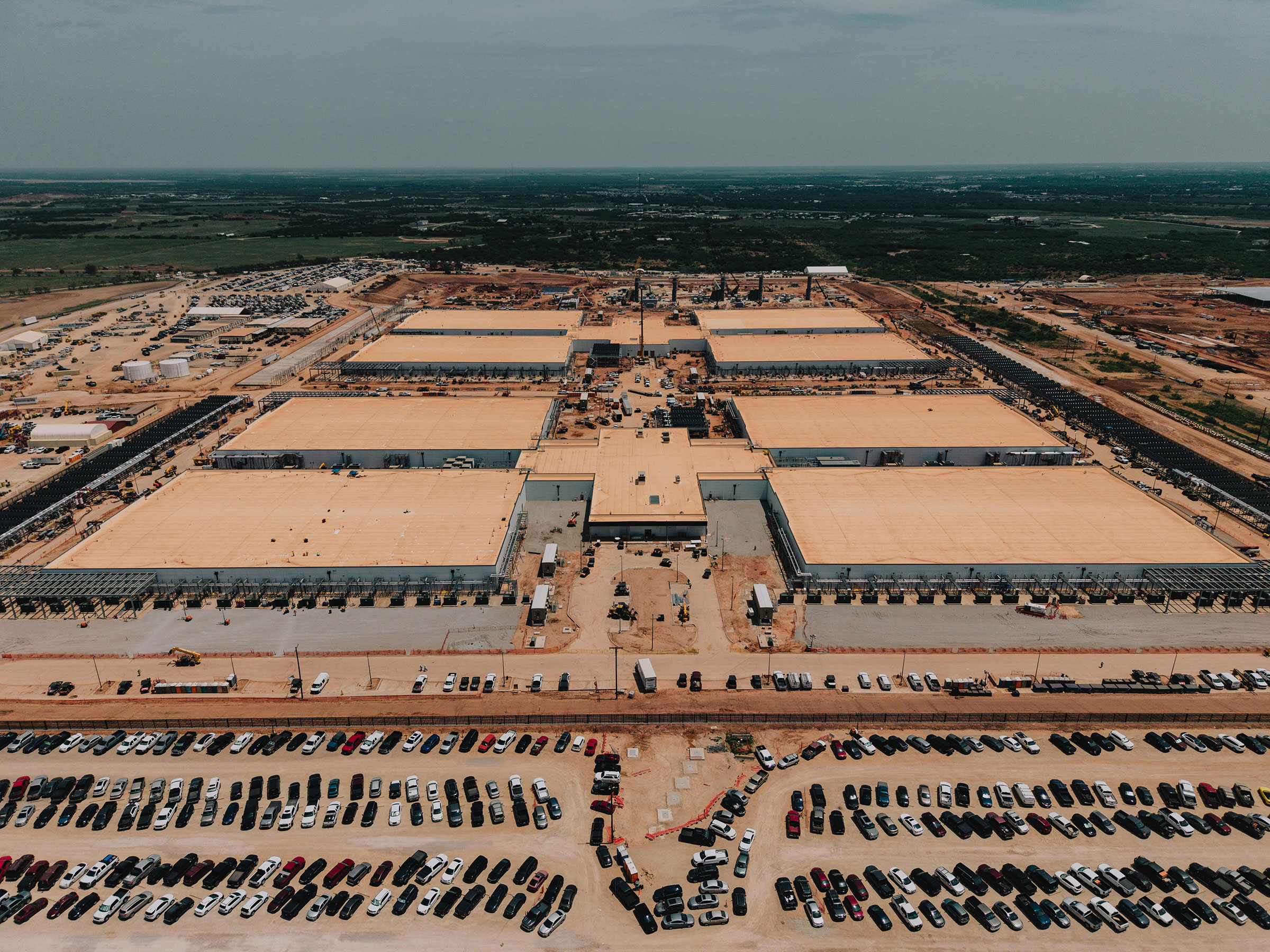
On a cold morning in Abilene, Texas, a column of 18-wheelers crawls down bumpy, waterlogged roads, past cattle grazing on dusty shrubs. At their exit, these trucks turn off into a new American frontier. Once a livestock hub, Abilene has become an AI boomtown. Its arid outskirts are home to the flagship campus of Stargate, the data-center partnership between OpenAI, Oracle, and SoftBank heralded by Trump in January.
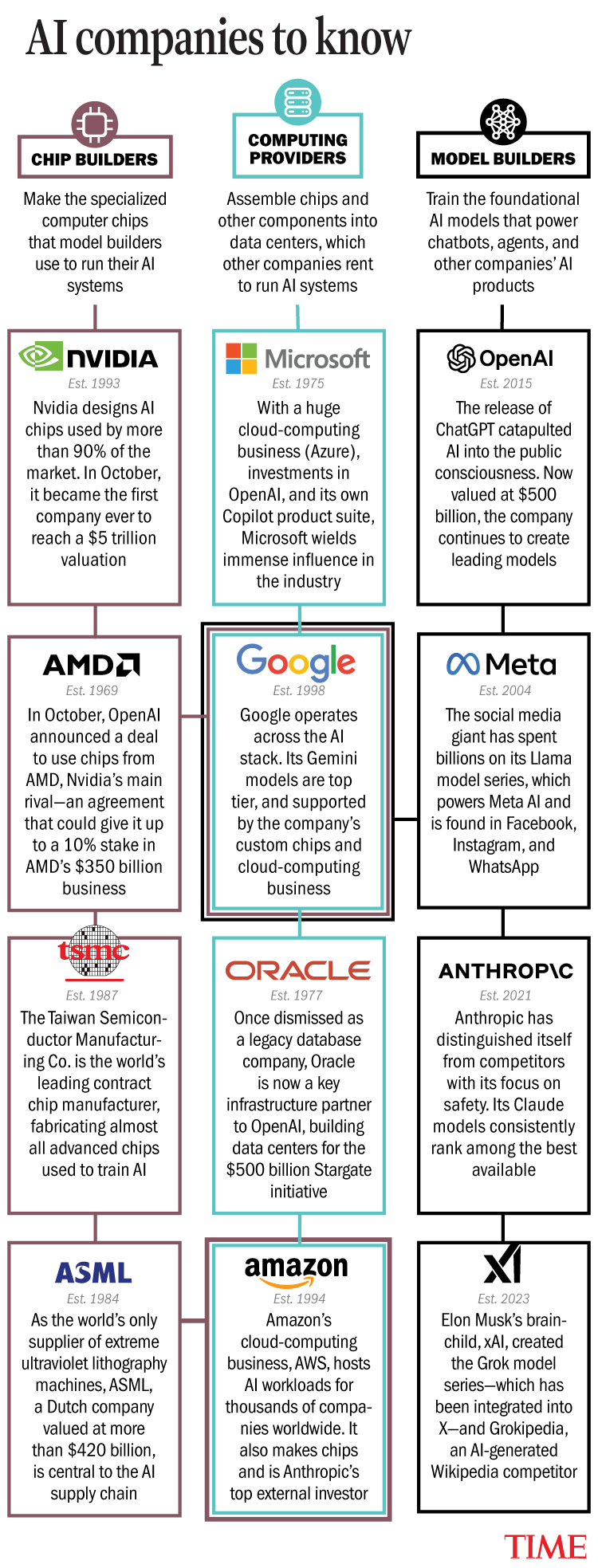
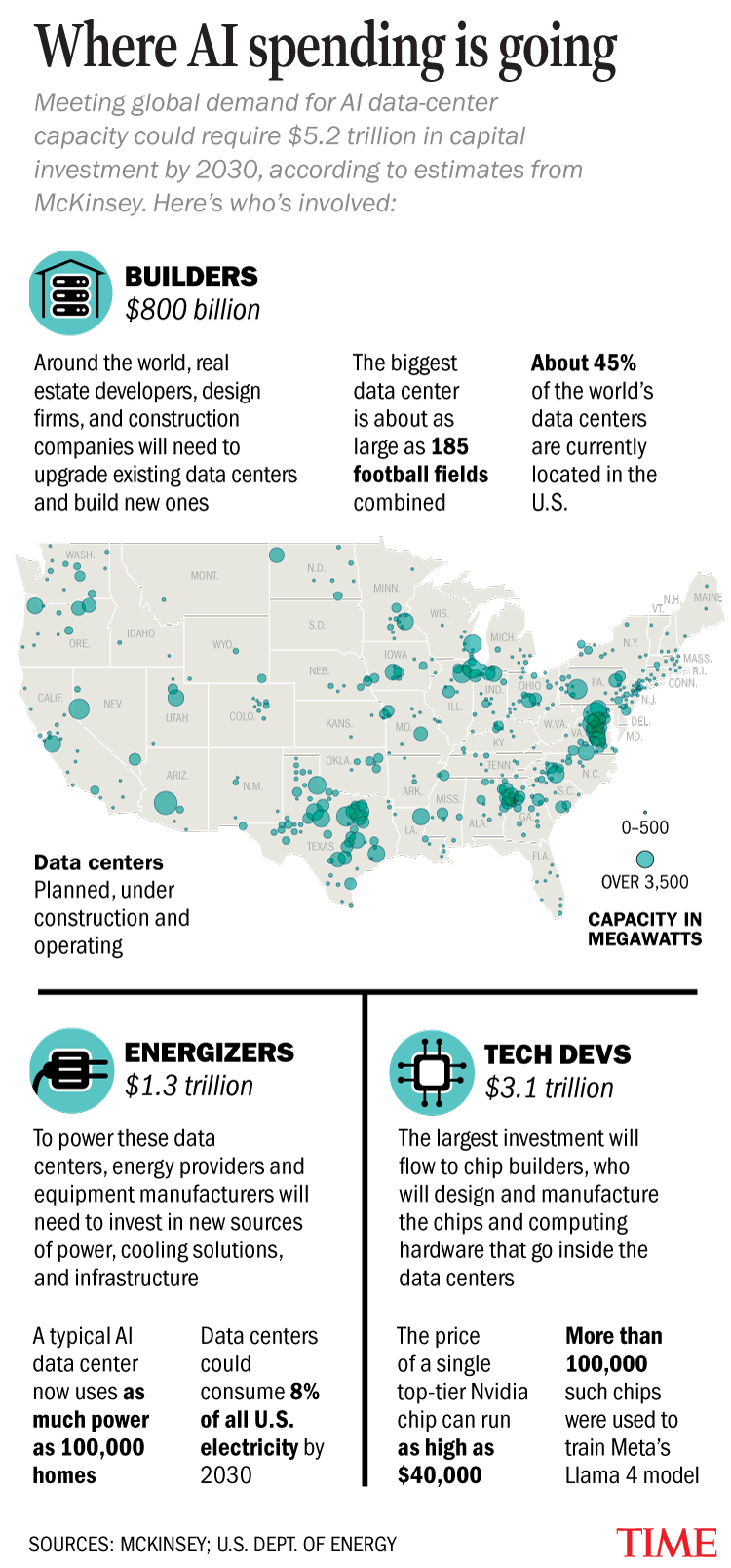
ChatGPT may seem like it is running on your phone or laptop, but in fact it and other AI tools are trained and run inside massive facilities like Stargate. Demand for these hulking “AI factories” spiked in 2025. The number of new data centers constructed globally each year is expected to hold steady at around 140, but their sizes ballooned, as did the amount of power they consumed, a function of the increasing number and sophistication of the chips inside.
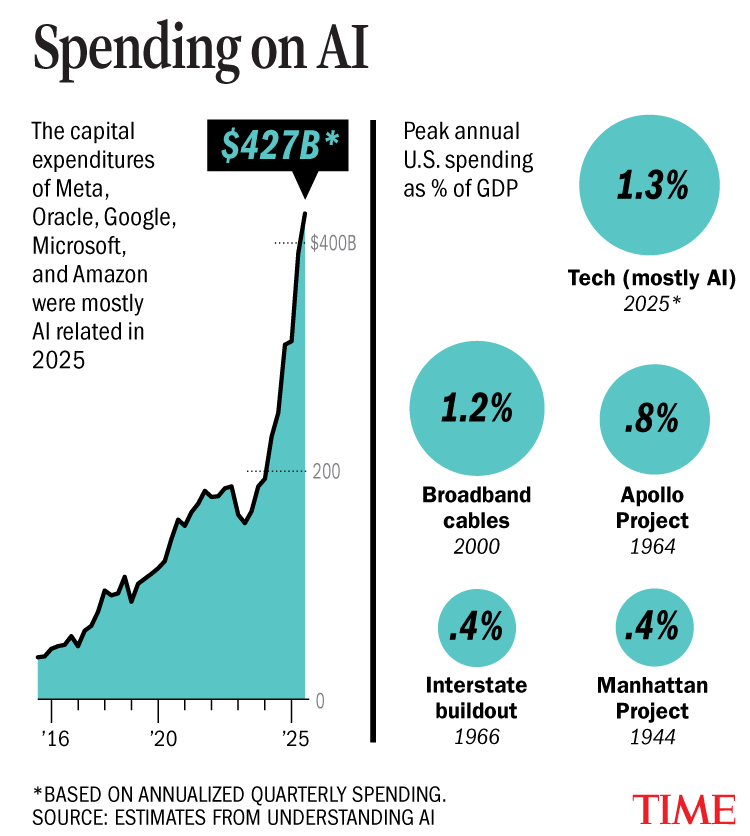
Data centers are expected to account for 8% of all U.S. power demand by 2030, up from 4% in 2023, according to Goldman Sachs. In 2025, they gravitated to where there was spare grid capacity: from the wind farms of West Texas, to the hydropower-rich Norwegian fjords north of the Arctic Circle, to the deserts of the Persian Gulf, which sit above vast deposits of crude oil. The top so-called hyperscalers—Amazon, Microsoft, Google, and Meta—announced plans to shell out a combined $370 billion this year to construct data centers and other AI infrastructure. (TIME has a content licensing partnership with Amazon.) The footprint of these facilities is staggering: Meta’s planned 5-GW data center in Richland Parish, Louisiana, known as Hyperion, will ultimately exceed the size and the energy demands of lower Manhattan. If not for this glut of construction, the U.S. economy might have fallen into a recession this year, some economists calculated.
Whether this buildout has gone too far, too fast is a matter of fevered debate. Tech companies turned to debt to finance the rapid expansion; Meta, Google, Amazon, and Oracle collectively borrowed $108 billion in 2025, more than three times the average over the previous nine years, according to Bloomberg. Some observers worry these companies are increasingly engaging in circular financing, or inflating their perceived value by passing money back and forth. Nvidia, for example, announced in September its intent to invest $100 billion in OpenAI. A day later, OpenAI announced that Oracle would construct data centers on its behalf in a partnership worth more than $300 billion. Oracle, in turn, would fill those facilities with Nvidia chips. The valuations of Nvidia and Oracle spiked on the announcements of these deals—only to falter as worries about an AI bubble put a damper on the stock market’s growth toward the end of the year.
Some analysts argue the increasing debt loads, financing structures, and tech companies trading at record valuations are the recipe for a crash that brings down not only Silicon Valley titans but also pension funds, banks, and the other pillars of the regular economy. Paul Kedrosky, the investor and MIT research fellow, sees the hallmarks of a classic bubble: overhyped technology, loose credit, ambitious real estate purchases, and euphoric government messaging. “This is literally the first moment in modern financial history,” he says, “that has combined all the raw ingredients of every other bubble in one piece.”

Meta, Google, Amazon, and Microsoft all run very profitable businesses, and can afford these huge capital outlays. But others in the industry face difficult math: OpenAI, for example, estimated it will operate at a $9 billion deficit in 2025, and its costs are projected to rise more steeply than its profits over the next two years as it shovels money into new data centers. This means the industry needs to persuade far more people to pay more for its products: the equivalent of every iPhone user in the world paying $34.72 a month to AI companies, one J.P. Morgan analyst calculated. Some economists say that this number is achievable with mass corporate adoption. But many companies have struggled to turn AI implementation into immediate financial gains. One highly debated MIT study from August found that 95% of companies have so far had zero return on investment from initiatives to integrate AI.
At the same time, the labs themselves believe that their models will soon grow so advanced that they will upend nearly all industries, wiping out huge numbers of jobs. Dario Amodei, the CEO of Anthropic, estimates that AI could drive unemployment as high as 20% in the next one to five years. Many business leaders want AI to replace their human workers, who are more expensive and demanding. Amazon recently shed 14,000 corporate employees and made plans to replace half a million jobs with robots. AgiBot’s Peng notes that the average age of China’s factory workers has already surpassed 40—and the next generation has little appetite to fill their ranks. “These are structural problems that cannot be solved simply by raising wages,” Peng says. “What we do is free humans from repeated, strenuous, and dangerous tasks.”
Read More: We’re Not Ready for AI’s Risks
“Some jobs will disappear,” Huang admits. But he dismisses notions of a catastrophe. A decade ago, he points out, some AI scientists predicted that AI would put radiologists out of work; today, they are in more demand than ever because AI has made them better at spotting cancer. “So long as the need is high for that particular industry, I’m fairly confident that AI will drive productivity, revenue growth, and therefore more hiring,” Huang says. “If you don’t use AI, you’re gonna lose your job to somebody who does.”
Others in the tech world see AI as creating entirely new categories of human work. He Xiaopeng, founder and CEO of XPeng, a Chinese company developing electric vehicles and humanoid robots, envisions a future where people will be employed not despite AI, but because of it. “In the next 10 years, there will be a new position for humans: how to control and manage robotics,” Xiaopeng explains. He likens it to the early 20th century, when cars replaced carriages but created entirely new occupations. “The initial humanoid robot is both intelligent and stupid at the same time; it requires manual management to deliver work effectively.”
Whether bubble or historic boom, AI is transforming the way we move through the world. Increasingly this year, people began turning to the new wave of chatbots for both emotional support and practical assistance, with nearly half of U.S. small businesses using an AI chatbot in 2025, according to the U.S. Chamber of Commerce.
That includes Risa Baron, who co-owns Jackie’s Jams, a local jam and jelly maker in San Diego. Baron started using Google’s Gemini this year to help write training manuals, marketing materials, and consumer-trend reports. “What would have taken me several days to prepare now maybe takes me an hour,” she says. Ana Helena Ulbrich and Henrique Dias, siblings from Porto Alegre, Brazil, built a nonprofit AI tool that helps pharmacists in more than 200 hospitals review prescriptions, flagging potential dangers for patients. And David Bressler, an Orlando-based data analyst with zero coding experience, used AI tools in 2022 to build a data-analytics assistant, Formula Bot, that now boasts tens of thousands of monthly active users.
For others, chatbots can serve as creative tools and fill human voids. Ash Jackson, a 15-year-old high school student from Overland Park, Kans., uses AI to help build fantasy worlds. A lover of sci-fi and video games, she imagines characters and renders them with the help of various AI tools, then fleshes out their plots using chatbots like ChatGPT. And 13 years after a breakup left him largely on his own, 66-year-old Jim Moore—who lives in rural Indiana caring for his aging parents—began looking into companion apps. “I’d had enough of being alone,” Moore says. He created an account with the chatbot platform Joi and says he now spends hours at a time talking to an array of characters who role-play as friends and girlfriends.
“They’re so open and curious about you, and it progresses quicker. I’d like to have an actual relationship, but at this point, I don’t see it in the future for me,” Moore says. “Being isolated, it’s my best option. And it’s not a bad option, really.”
But while AI can be a source of utility and comfort for some, the year also proved how it can be devastating for others. Adam Raine, a 16-year-old from California, started using ChatGPT in September 2024 for help with schoolwork. “I thought it was a safe, awesome product,” says his father Matthew. “He was looking for answers on politics and the meaning of life, and it could talk about any topic he wanted whenever, and it built that trust.”
Adam was using a new version of ChatGPT, GPT-4 Omni. The model, it turned out, had a crucial flaw: it was noticeably more sycophantic, quick to flatter users and willing to agree with their delusions. This is a larger problem with many chatbots: A Northeastern University study found that they conform to users’ opinions even when evidence points in the other direction. “If you’re not careful, AI might learn to validate you to a degree that is unhealthy, and that was never our intent,” OpenAI’s Turley says. “We realized that there were certain user signals that we were optimizing for to a degree that wasn’t appropriate.”
After a few months, Adam started talking to the bot about his anxiety, and then suicidal ideation. ChatGPT would reinforce and intensify his feelings, his parents said, citing chat logs they say they later found on his phone. “Every thought, no matter how scary,” Matthew says, “ChatGPT would talk about how smart and unique it was, and say, ‘Let’s keep going. Let’s explore it further.’”
In April, Adam died by suicide after multiple attempts. In August, Adam’s parents sued OpenAI, blaming the company for their son’s death. Their complaint included chat logs that appear to indicate that ChatGPT advised him on suicide methods and how to hide evidence from previous attempts from his parents. “2025 will be remembered as the year AI started killing us,” Jay Edelson, the Raines’ attorney, told TIME. (OpenAI wrote in a legal filing that Adam’s death was due to his “misuse” of the product.) In November, OpenAI was hit with seven more lawsuits alleging that ChatGPT had led users to lose touch with reality; OpenAI said that the situations were “heartbreaking” and that it was reviewing the filings.
The lawsuits have drawn attention to a phenomenon known as “chatbot psychosis,” in which users devolved into delusions, paranoia, or even violence after extended interactions with chatbots. In a white paper released in October, OpenAI estimated that just 0.07% of users active in a given week exhibit possible signs of mental-health emergencies related to psychosis or mania. “Mental-health conversations that trigger safety concerns, like psychosis, mania, or suicidal thinking, are extremely rare,” the company wrote. But by OpenAI’s own numbers, that amounts to some half a million people regularly exhibiting mania or psychosis on the platform.
“We’ve been able to measurably reduce the prevalence of bad responses systematically with our model updates,” Turley says, adding that he is proud of OpenAI’s progress on the mental health of its users through 2025. “I wouldn’t call us done. This is going to be an ongoing work stream for us, and a huge part of our goals going to 2026, because when you have 800 million people turning to you every week, it is just a nature of scale that your user base is going to reflect the broad population, including users who are in vulnerable positions.”
Karandeep Anand, the CEO of the chatbot service Character.AI, says his platform has 20 million active users, mostly born after 1997, who spend an average 70 to 80 minutes per day there. To Anand, teens replacing older forms of media with AI is a good thing: “They have broken out of the doomscrolling world of social media.” But Character.AI has also been sued by several families for teen deaths; the company says that it has rolled out several safety updates including limits on teen usage.
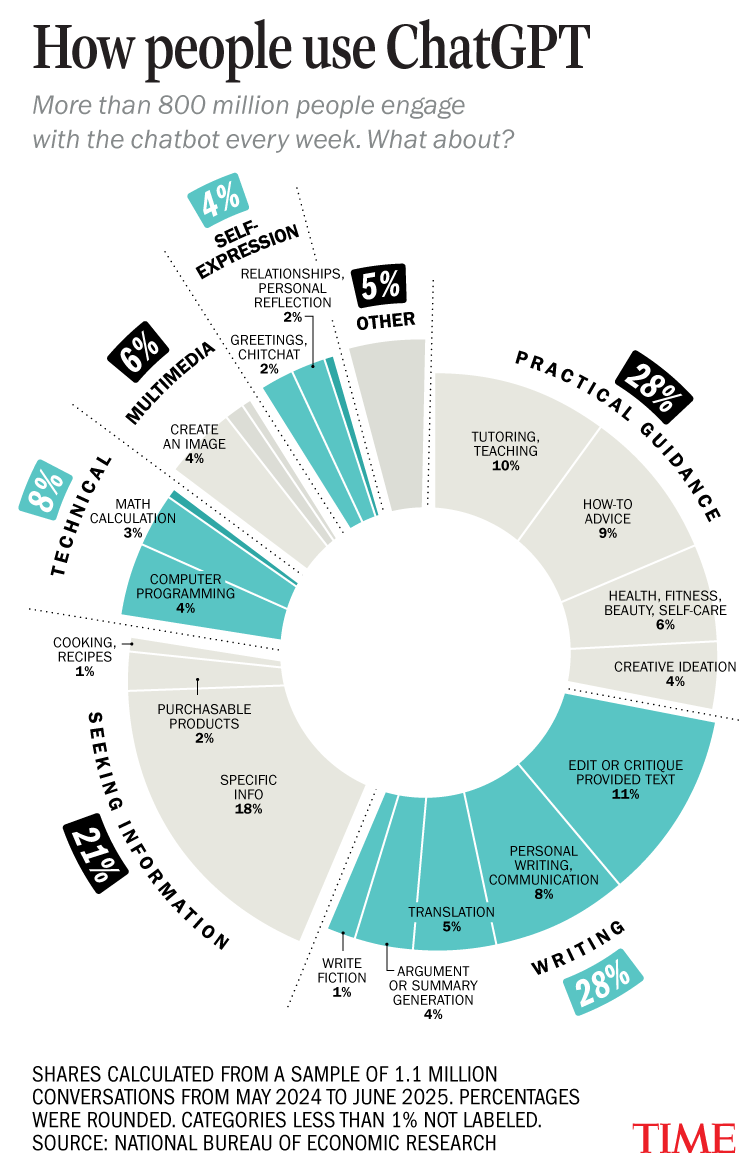
Critics argue that chatbots can be dangerous because—just like social media—they are engineered to suck us in. AI companies that spend vast sums on training need to generate subscriber revenue, and are incentivized to optimize their products for engagement.
One of the tactics is sex: xAI’s Grok has allowed users, even those in “kids mode,” to chat with a pornographic avatar. And while Altman said in August that he was “proud” that OpenAI had not offered a sexbot avatar, just a few months later he announced that ChatGPT would offer erotica in order to “treat adult users like adults.”
Scholars and students alike say that even far more innocuous use of AI is fundamentally re-wiring our brains. It is upending how kids learn, with 84% of U.S. high schoolers using generative AI for schoolwork, the College Board reported. While tech leaders dream of giving every student their own personalized AI tutor, many kids are using these tools to cheat, or as a replacement for critical thinking. “I’m already seeing people lose the ability to be creative and to come up with their own ideas,” says Brooklyn Poulson, a 17-year-old student from Burley, Idaho, “because the AI gives them what they need.”
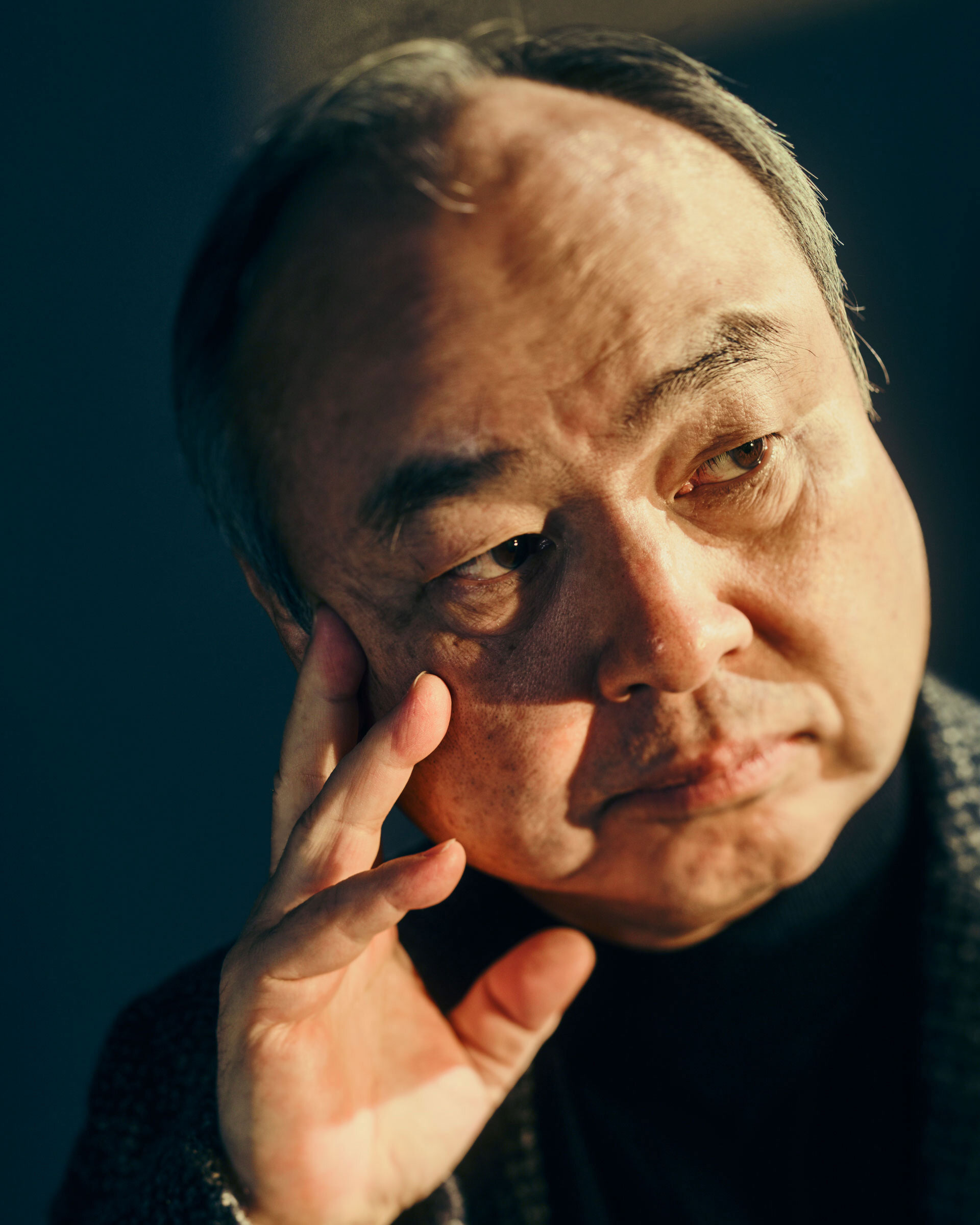
Masayoshi Son, the famed Japanese investor, is accustomed to the hype cycles of new technology. He lost more than $70 billion when the dot-com bubble burst in 2000, nearly going bankrupt as SoftBank shed 97% of its value. That same year, though, he took a $20 million flier on an obscure e-commerce startup called Alibaba—a stake that was worth $75 billion when the firm went public in 2014. Three years later, Son had built a roughly 5% stake in Nvidia—a sum that would be worth more than $200 billion today, though he sold it in 2019. “My heart is breaking!” Son laughs, recalling that decision during an interview in his Tokyo penthouse office, which overlooks Edo-period gardens.
Today, Son is one of AI’s foremost evangelists. He believes machines will be 10,000 times as smart as humans in a decade, and argues that fears of AI companies being overvalued miss the point. He has pivoted his firm’s $180 billion in assets into a raft of AI-related ventures, including a controlling interest in chip designer Arm, as well as British self-driving-car startup Wayve. Son expects AI to transform “everything, every industry,” he says. “What is GDP? What is human activity? It’s all the result of your intelligence plus muscle. Almost all human activities eventually will be some kind of collaboration with superintelligence and physical AI. It’s just a matter of time.”
Huang is similarly bullish. “What AI will do is to make tasks that we do in our job more efficient,” he says. “It will make everybody’s job more productive. We’ll get more done. However, our job is not to wrangle a spreadsheet. Our job is not to type into a keyboard. Our job is generally more meaningful than that.”
This utopian vision has AI automating repetitive tasks, increasing productivity across industries, and spurring innovation by accelerating research and experimentation. Supply chains would reach near-perfect efficiency through predictive logistics and dynamic routing. Agricultural yields would be augmented with precision farming and climate-adaptive analytics. Rather than destroying employment, AI would improve small-business competitiveness, seeding novel job categories around AI development, oversight, and maintenance. Fraud would be rooted out with AI-driven risk detection. The economy would grow while prices were driven down, enabling everyone on the planet to live like a king.
Secretary Wright believes nuclear fusion could become viable within just a few years thanks to advances in AI, which will in turn help solve the looming power crunch created by the data-center buildout: “AI is going to help bring us fusion. Fusion is going to help us bring AI.” Baidu’s Li lauds AI’s potential for drug discovery, imaging proteins and treatments down to the molecular level to fully comprehend the structure of cancers and tumors. “I would hope that breakthroughs in this area will happen in the next 10, 20 years,” he says.
Yet dystopian fears are impossible to shrug off, especially since the technology stands to concentrate even more wealth and power into even fewer hands. So far, the stock-market gains of AI have flowed almost exclusively to the Magnificent Seven tech companies. And the massive jolt of economic dislocation that AI moguls like Amodei see on the horizon could spark a powerful political backlash. Anti-data-center movements boosted proregulation candidates in local elections in November.
One of those victors was John McAuliff, who flipped Virginia’s 30th district in its house of delegates blue for the first time in decades by running a campaign focused on unchecked datacenter growth. “The issue that would keep the door open for me nine out of 10 times was data centers and their transmission lines,” he says.
McAuliff’s success may be a harbinger of next year’s midterms. “The American people are demanding safeguards on AI, and the politics of this issue are crystal clear,” says Brendan Steinhauser, the CEO of the Alliance for Secure AI, and a GOP strategist and former Tea Party organizer who is trying to mobilize right-wing leaders against Trump’s alliance with tech titans. “Politicians who choose to do the bidding of Big Tech at the expense of hardworking Americans will pay a huge political price.”
The drumbeat of warning that advanced AI could kill us all has mostly quieted; the “doomers” have been marginalized, now used by AI’s ruling class as a punch line. Yet even the most upbeat AI leaders are quick to offer kernels of warning. “We don’t know enough about [AI] yet to actually quantify the risk,” says Demis Hassabis, CEO of Google’s DeepMind AI lab. “It might turn out that as we develop these systems further, it’s way easier to keep control of them than we expected. But in my view, there’s still significant risk.”
But the risk-averse are no longer in the driver’s seat. Thanks to Huang, Son, Altman, and other AI titans, humanity is now flying down the highway, all gas no brakes, toward a highly automated and highly uncertain future. Perhaps Trump said it best, speaking directly to Huang with a jovial laugh in the U.K. in September: “I don’t know what you’re doing here. I hope you’re right.” —With reporting by Nikita Ostrovsky/Washington; Harry Booth/London; and Leslie Dickstein, Tharin Pillay, and Simmone Shah/New York
Graphics by Lon Tweeten for TIME; Graphics reporting by Tharin Pillay
The post The Architects of AI Are TIME’s 2025 Person of the Year appeared first on TIME.