Lost Science is an ongoing series of accounts from scientists who have lost their jobs or funding after cuts by the Trump administration. The conversations have been edited for clarity and length. Here’s why we’re doing this.
Jenny Carlson Donnelly: I have been to many countries — Ethiopia, Burundi, Uganda, Rwanda, Mozambique, Sierra Leone — as an entomologist with the President’s Malaria Initiative. At U.S.A.I.D., the United States Agency for International Development, we worked in 27 countries to prevent malaria.
For malaria vector control, we have two main interventions. One is insecticide-treated nets that hang over people’s beds. That is the most effective way to prevent malaria. The second one is going inside people’s houses and spraying with insecticide.
As a donor agency, we awarded money to a partner that would put people on the ground. They would be trained as entomologists and would collect mosquitoes. My job was to look at the collected data from all the countries we were supporting, and then go out and see how and where the larvae — the water stage of the mosquito — were being collected and ensure that it was being done correctly.
We also worked with them to test the mosquitoes’ DNA to see what species they were, to understand which mosquitoes were transmitting the parasite. And helped them test if mosquitoes still responded to an insecticide. If they become resistant, then you are spending all this money toward not killing them anymore.
The other part of my job was meeting with foreign health officials to discuss the data and make sure that they understood what the data was saying.
U.S.A.I.D. was the first agency to go down. I knew I was going to lose my job, but I didn’t know when or how. I was initially terminated as a probationary person in February, but because of incorrect paperwork and reinstatements, my termination date was July.
For me, my career was over. I had spent years working up to that, and I would never again be able to do what I did as an entomologist there. It was just a complete loss.
This research mattered because we were training people in each country to collect this data on their own. We invested a lot of money in building these insectaries or laboratories, and then it just suddenly stopped.
If you take away the support that quickly, universities and governments are not prepared to move money around to cover this. It was kind of all for nothing.
I was part of a system trying to make people’s lives better. To me, that was a good reason to get up in the morning. I was proud to show support from the American people. As a scientist, being able to use scientific data to make decisions that are going to impact people’s lives — that is the best thing you can do.
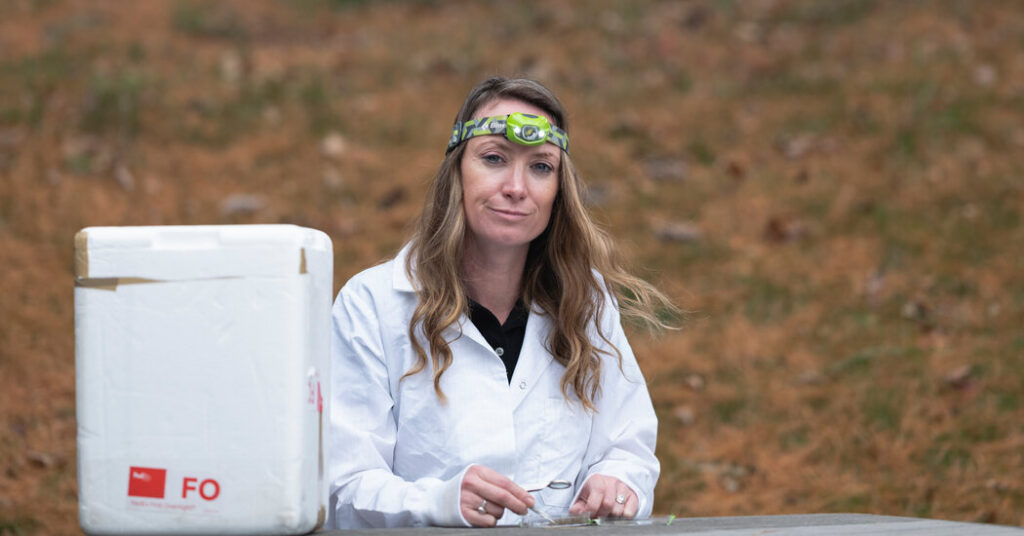
Jenny Carlson Donnelly was the malaria outbreak emergency adviser for the United States Agency for International Development. She now works as a territory manager at Becton, Dickinson and Company, a medical technology firm.
Alexa Robles-Gil is a science reporter and a member of the 2025-26 Times Fellowship class, a program for journalists early in their careers.
The post She Studied Mosquitoes to Prevent Malaria appeared first on New York Times.