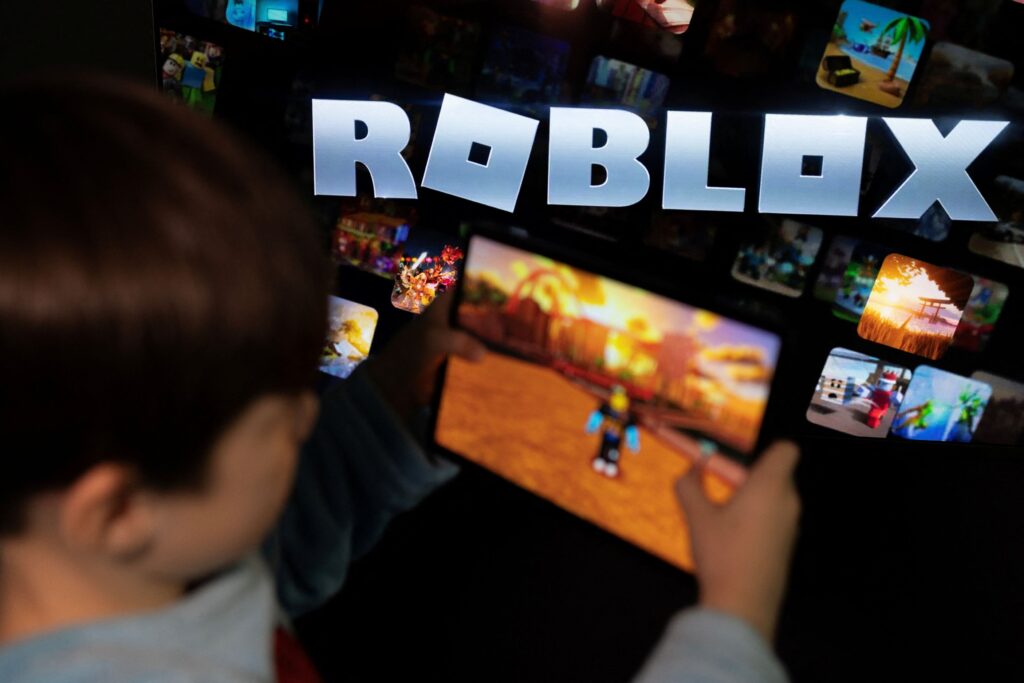
Russian children have flooded President Vladimir Putin with pleas to restore access to Roblox, a gaming platform that is hugely popular with kids and teenagers and was abruptly blocked across the country this month.
Roblox, the California-based platform that allows users to create and share their own games, stopped working for Russian users on Dec. 3. The state media regulator, Roskomnadzor, later confirmed it had restricted access, accusing the company of hosting “extremist materials” and “LGBT propaganda,” and claiming its moderation allowed content that could “negatively affect the spiritual and moral development of children.”
The move is the latest in Moscow’s broader campaign to tighten control over foreign technology platforms and steer users toward domestic alternatives — an effort internet freedom experts warn would enable greater state surveillance of communications.
In the same week as the Roblox restriction, regulators also blocked Apple’s FaceTime, citing its alleged use in coordinating attacks and other crimes, as well as Snapchat.
Previously, authorities moved to restrict WhatsApp, the country’s most popular messaging app, while promoting a Russian-built alternative known as Max, modeled in part on China’s WeChat through its integration with government services and intended to replace foreign apps across daily life, from schools to government agencies.
For now, WhatsApp calls are unavailable, and officials have signaled the app could be fully banned in the coming months.
While many Russians have complained about losing access to messaging and calling services, the Roblox ban, affecting a platform that boasted nearly 8 million monthly users and ranked as the country’s second most popular gaming service according to Mediascope, a Russian monitoring agency, has sparked an especially intense backlash among young users.
Putin’s press secretary Dmitry Peskov said earlier this week that the Kremlin has received “many” letters from children on the matter ahead of the end-of-year presidential press marathon and call-in show on Dec. 19.
Yekaterina Mizulina, head of the Kremlin-aligned Safe Internet League, claimed that since the ban “every second child” aged 8 to 16 had written to her saying they wanted to leave Russia.
In screenshots she shared, children begged for access to be restored. “My brother is six and he really loves Roblox. I feel so much pain seeing his sad face,” one message read. “I hope everything works out and the platform will be unbanned. I hope for a New Year’s miracle.” Other messages said children who want to become software developers use Roblox to learn basic game and app development.
Roblox is popular the world over, but has faced some criticism for exposing children to sexual content, grooming, extremist material, and financial exploitation, leading some countries to ban or restrict the platform over child-safety concerns. Critics argue its design and moderation failures make it too easy for predators to contact minors and push children into excessive spending through gambling-like mechanics such as loot boxes.
Roblox is blocked in several countries, including China, Turkey and Iraq. Western governments have moved to restrict access to the app by very young users or pushed the platform to introduce safeguards. In Australia, Roblox rolled out an age verification feature through facial recognition, which is meant to make the app comply with the country’s new ban on any social media access for children under 16.
This feature will become mandatory in Australia, New Zealand and the Netherlands in December with a wider rollout early next year, and is intended to also prevent adults from impersonating teenagers and infiltrating children’s online communities. However, some critics suggested that with the rapid development of AI image generation it will be possible to circumvent the restriction.
In the United States, the platform has been linked to dozens of grooming and abuse cases, with at least 30 arrests since 2018 and lawsuits following incidents of sexual exploitation and attempted abduction. State attorneys along with private law firms have launched investigations and dozens of lawsuits accusing the company of failing to implement basic safeguards while continuing to profit from young users.
In Russia, Roskomnadzor also highlighted the problem with sexual harassment of children within Roblox, saying in a statement that “children get tricked into sending intimate photos and they are forced into depraved acts and violence — after all, Roblox is popular with pedophiles who meet minors directly in the game’s chats and then move on to real life.”
Mizulina, despite her reputation for advocating tighter internet controls, criticized the ban, arguing that it fails to address the broader problem of predatory behavior on major online platforms.
“Kids will simply move on to other resources or use work-arounds. How many kids have downloaded a three-letter app in the last few days since the game was banned?” she wrote in a Telegram blog post, referring to virtual private networks, or VPNs, which allow internet users to get around bans and have been largely restricted in Russia.
“As some parents of schoolchildren write, the widespread circumvention of blocking measures also fosters a generally dismissive attitude toward government decisions. From a young age, children are instilled with the understanding that there is another option,” she said.
A Roblox spokesperson said in a statement about the Russian ban that the company “respects the local laws and regulations in the countries” and “believes Roblox provides a positive space for learning, creation and meaningful connection for everyone.”
The post Russia blocks Roblox game site, and the kids aren’t alright with that appeared first on Washington Post.