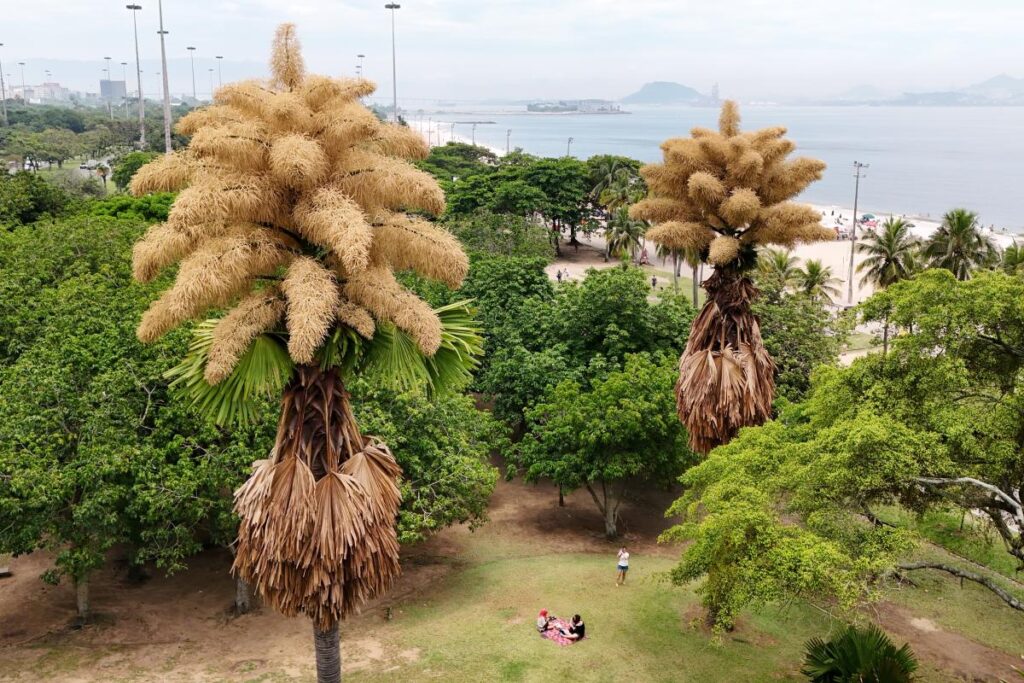
There are late bloomers, and then there’s talipot palms.
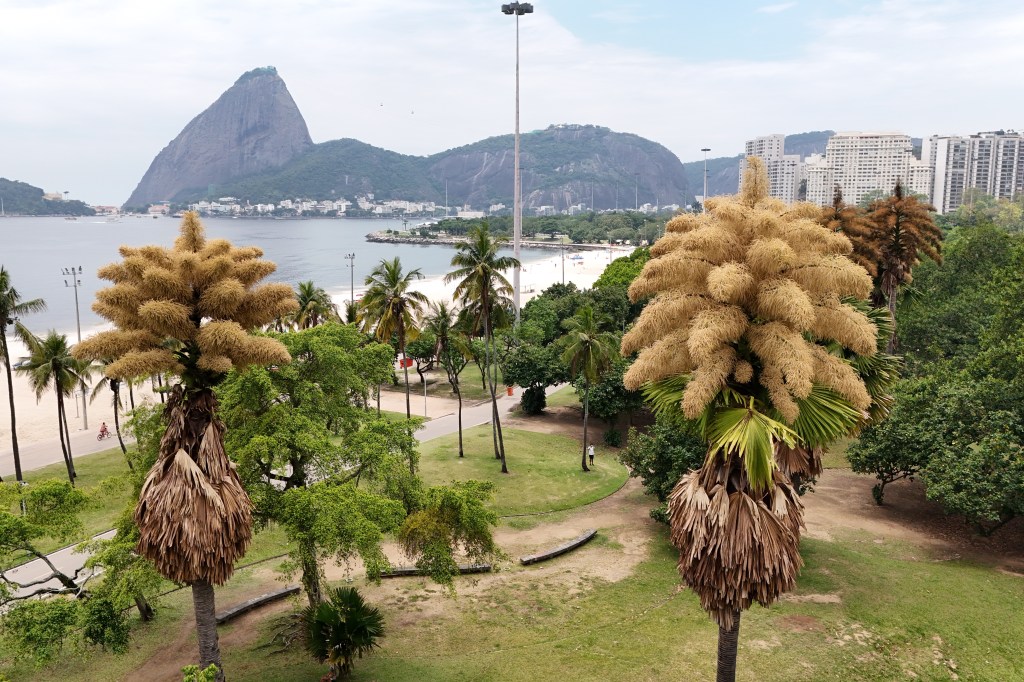
In Rio de Janeiro, Brazil, a crop of imported palms is flowering for the first and only time after being planted by renowned Brazilian landscape architect Roberto Burle Marx back in the 1960s.
The plant, which originates from southern India and Sri Lanka and has a typical lifespan of 40 to 80 years, is best known for having its ‘big moment’ near the end of its life. During this brief spectacle, the up to 98 feet high palm tree produces a large plume with approximately 25 million tiny, off-white flowers.
Passersby in Flamengo Park and Rio’s Botanical Garden have been enchanted by the rare and recent spectacle, frequently stopping to look up and take photos of the beautiful blossoms.
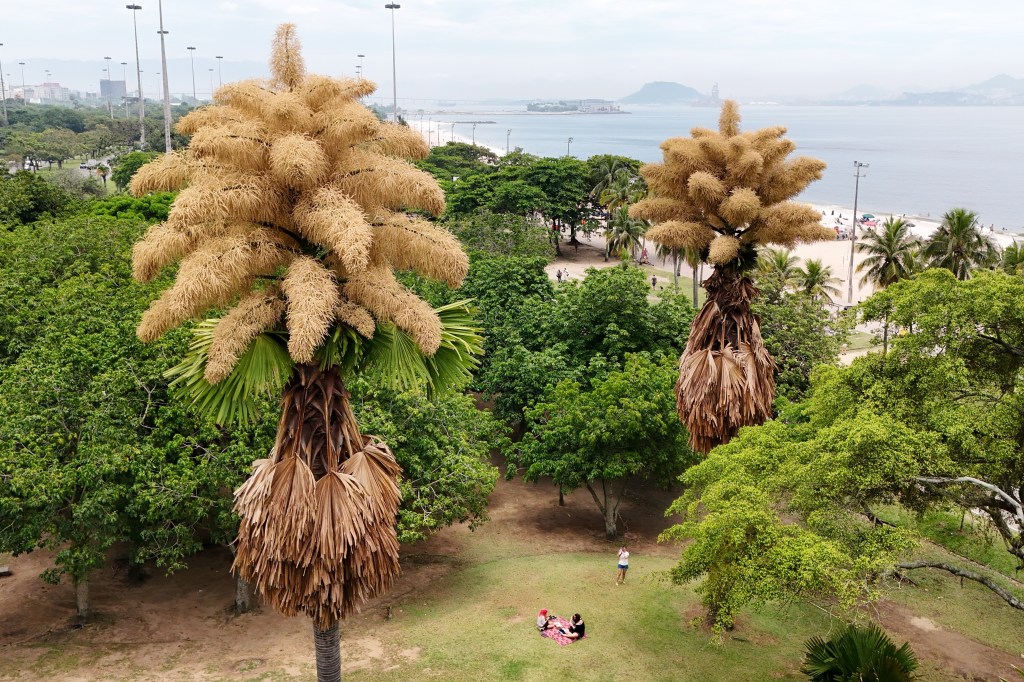
42-year-old civil engineer Vinicius Vanni has a goal to collect seedlings from the now flowering and plant them, according to the Associated Press.
“I probably won’t see them flower, but they’ll be there for future generations,” Vanni said from Flamengo Park.
The talipot palms in both Flamengo Park and Rio’s Botanical Garden were originally brought across southern Asia together. According to Aline Saavedra (a biologist at Rio de Janeiro State University), they have the same metabolism and have been brought up under the same passing of Brazilian daylight.
Though environmental laws prohibit transporting species that are native to other continents, the palms’ sloth-like development categorizes them as non-invasive.
Savvedra hopes that the renewed interest the flowering plants have brought up in Brazilian citizens will encourage people to protect the environment instead of tearing it down.
This palm species gives us a reflection on temporality, because it has roughly the same lifespan as a human being,” Saavedra told AP News. “Marx also wanted to convey a poetic perspective.”
The post Rare palm trees in Rio de Janeiro finally bloom for first and only time after six decades appeared first on New York Post.