Earlier this year, Health and Human Services Secretary Robert F. Kennedy Jr. pledged that the search for autism’s cause — a question that has kept researchers busy for the better part of six decades — would be over in just five months.
“By September, we will know what has caused the autism epidemic, and we’ll be able to eliminate those exposures,” Kennedy told President Trump during a Cabinet meeting in April.
That ambitious deadline has come and gone. But researchers and advocates say that Kennedy’s continued fixation on autism’s origins — and his frequent, inaccurate claims that childhood vaccines are somehow involved — is built on fundamental misunderstandings of the complex neurodevelopmental condition.
Even after more than half a century of research, no one yet knows exactly why some people have autistic traits and others do not, or why autism spectrum disorder looks so different across the people who have it. But a few key themes have emerged.
Researchers believe that autism is most likely the result of a complex set of interactions between genes and the environment that unfold while a child is in the womb. It can be passed down through families, or originate with a spontaneous gene mutation.
Environmental influences may indeed play a role in some autism cases, but their effect is heavily influenced by a person’s genes. There is no evidence for a single trigger that causes autism, and certainly not one a child encounters after birth: not a vaccine, a parenting style or a post-circumcision Tylenol.
“The real reason why it’s complicated, the more fundamental one, is that there’s not a single cause,” said Irva Hertz-Picciotto, a professor of public health science and director of the Environmental Health Sciences Center at UC Davis. “It’s not a single cause from one person to the next, and not a single cause within any one person.”
Kennedy, an attorney who has no medical or scientific training, has called research into autism’s genetics a “dead end.” Autism researchers counter that it’s the only logical place to start.
“If we know nothing else, we know that autism is primarily genetic,” said Joe Buxbaum, a molecular neuroscientist who directs the Seaver Autism Center for Research and Treatment at the Icahn School of Medicine at Mount Sinai. “And you don’t have to actually have the exact genes [identified] to know that something is genetic.”
Some neurodevelopment disorders arise from a difference in a single gene or chromosome. People with Down syndrome have an extra copy of chromosome 21, for example, and Fragile X syndrome results when the FMR1 gene isn’t expressed.
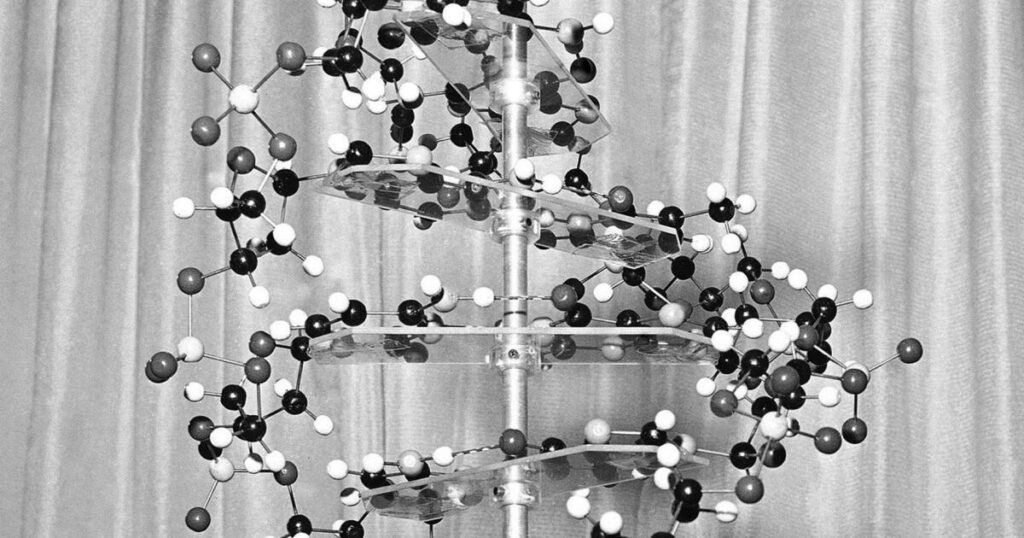
Autism in most cases is polygenetic, which means that multiple genes are involved, with each contributing a little bit to the overall picture.
Researchers have found hundreds of genes that could be associated with autism; there may be many more among the roughly 20,000 in the human genome.
In the meantime, the strongest evidence that autism is genetic comes from studies of twins and other sibling groups, Buxbaum and other researchers said.
The rate of autism in the U.S. general population is about 2.8%, according to a study published last year in the journal Pediatrics. Among children with at least one autistic sibling, it’s 20.2% — about seven times higher than the general population, the study found.
Twin studies reinforce the point. Both identical and fraternal twins develop in the same womb and are usually raised in similar circumstances in the same household. The difference is genetic: identical twins share 100% of their genetic information, while fraternal twins share about 50% (the same as nontwin siblings).
If one fraternal twin is autistic, the chance that the other twin is also autistic is about 20%, or about the same as it would be for a nontwin sibling.
But if one in a pair of identical twins is autistic, the chance that the other twin is also autistic is significantly higher. Studies have pegged the identical twin concurrence rate anywhere from 60% to 90%, though the intensity of the twins’ autistic traits may differ significantly.
Molecular genetic studies, which look at the genetic information shared between siblings and other blood relatives, have found similar rates of genetic influence on autism, said Dr. John Constantino, a professor of pediatrics, psychiatry and behavioral sciences at the Emory University School of Medicine and chief of behavioral and mental health at Children’s Healthcare of Atlanta.
Together, he said, “those studies have indicated that a vast share of the causation of autism can be traced to the effects of genetic influences. That is a fact.”
Buxbaum compares the heritability of autism to the heritability of height, another polygenic trait.
“There’s not one gene that’s making you taller or shorter,” Buxbaum said. Hundreds of genes play a role in where you land on the height distribution curve. A lot of those genes run in families — it’s not unusual for very tall people, for example, to have very tall relatives.
But parents pass on a random mix of their genes to their children, and height distribution across a group of same-sex siblings can vary widely. Genetic mutations can change the picture. Marfan syndrome, a condition caused by mutations in the FBN1 gene, typically makes people grow taller than average. Hundreds of genetic mutations are associated with dwarfism, which causes shorter stature.
Then once a child is born, external factors such as malnutrition or disease can affect the likelihood that they reach their full height potential.
So genes are important. But the environment — which in developmental science means pretty much anything that isn’t genetics, including parental age, nutrition, air pollution and viruses — can play a major role in how those genes are expressed.
“Genetics does not operate in a vacuum, and at the same time, the impact of the environment on people is going to depend on a person’s individual genetics,” said Brian K. Lee, a professor of epidemiology and biostatistics at Drexel University who studies the genetics of developmental disorders.
Unlike the childhood circumstances that can affect height, the environmental exposures associated with autism for the most part take place in utero.
Researchers have identified multiple factors linked to increased risks of the disorder, including older parental age, infant prematurity and parental exposure to air pollution and industrial solvents.
Investigations into some of these linkages were among the more than 50 autism-related studies whose funding Kennedy has cut since taking office, a ProPublica investigation found. In contrast, no credible study has found links between vaccines and autism — and there have been many.
One move from the Department of Health and Human Services has been met with cautious optimism: even as Kennedy slashed funding to other research projects, the department in September announced a$50-millioninitiative to explore the interactions of genes and environmental factors in autism, which has been divided among 13 different research groups at U.S. universities, including UCLA and UC San Diego.
The department’s selection of well-established, legitimate research teams was met with relief by many autism scientists.
But many say they fear that such decisions will be an anomaly under Kennedy, who has repeatedly rejected facts that don’t conform to his preferred hypotheses, elevated shoddy science and muddied public health messaging on autism with inaccurate information.
Disagreements are an essential part of scientific inquiry. But the productive ones take place in a universe of shared facts and build on established evidence.
And when determining how to spend limited resources, researchers say, making evidence-based decisions is vital.
“There are two aspects of these decisions: Is it a reasonable expenditure based on what we already know? And if you spend money here, will you be taking money away from HHS that people are in desperate need of?” Constantino said. “If you’re going to be spending money, you want to do that in a way that is not discarding what we already know.”
The post In search for autism’s causes, look at genes, not vaccines, researchers say appeared first on Los Angeles Times.