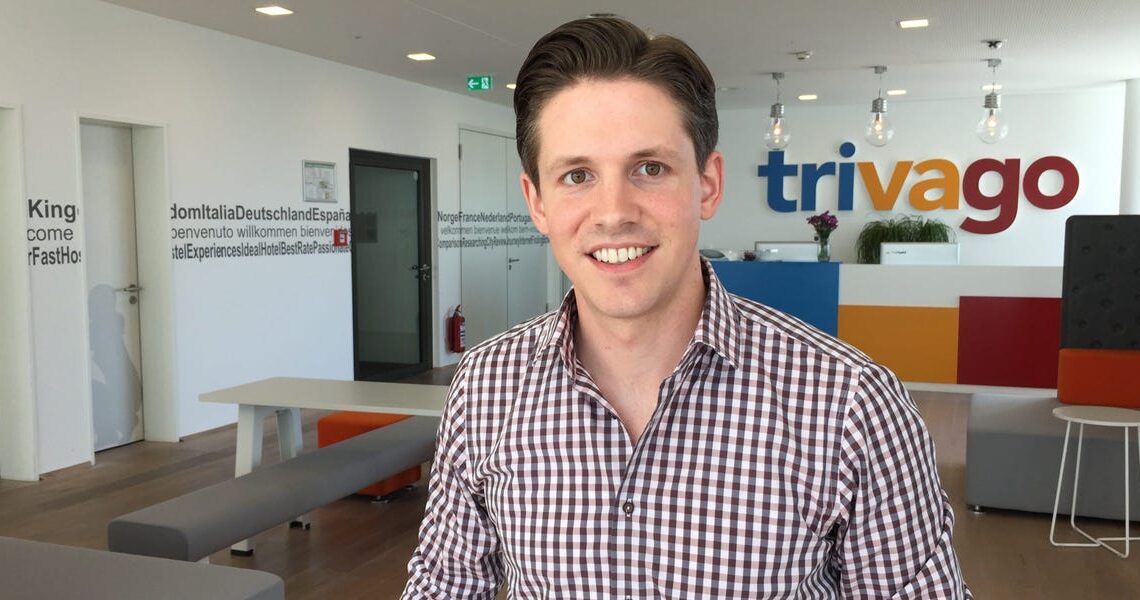

This as-told-to essay is based on a conversation with Johannes Thomas, CEO of Trivago. It has been edited for length and clarity.
In 2011, I took a six-month internship at Trivago. I was in my third year of university, nearing completion of a four-year degree in economics and tourism. I had started a digital travel company on the side, and I planned to learn from the internship and apply the new skills to my own company.
The internship came with a steep learning curve. Back then, the company had about 50 employees, many of whom were interns. I had a lot of responsibility and room to grow. Being at Trivago felt like playing in a crazy sandbox where I could try anything.
By the time the internship was halfway over, I knew I could learn more working than I ever could at university. When the company offered me a job, I decided to stay. Fourteen years later, I’m the CEO.
I rarely think about the fact that I don’t have a degree
I never had the expectation of following a traditional career path. My father was an entrepreneur who ran a tour company in Germany. I considered joining the family business, but I was interested in the digital side of tourism. Coming from an entrepreneurial family, I was taught to follow my curiosity.
Still, my mother wasn’t thrilled when I dropped out of school. She argued that I only had one more year, and I should just finish. I have no regrets about not getting my degree, however. I rarely think about it these days.
I changed jobs every 2 to 3 years to keep learning
My internship at Trivago was focused on online marketing in the UK. At the time, Google’s performance marketing was the new frontier. You couldn’t learn about it at school, because once a book was published, its information was outdated.
You had to learn by trying things out, which gave young people like me a real advantage. Since I was able to understand performance marketing, I was hired to handle global search engine marketing. I stayed in that role for three years before moving on to strategic projects.
I’ve changed jobs at Trivago every two to three years. I try to make myself obsolete within a team, and always move on to something that’s a new learning experience. Since my internship, I’ve held six different positions.
I left briefly during the pandemic, but returned as CEO
The pandemic, which hit when I was chief revenue officer, was a near-death experience for Trivago. We lost 95% of our revenue within a matter of weeks. No one knew when it would come back.
That’s when I stepped away from the company for the first time. I formed a startup with other Trivago folks. I’m still involved with that as an investor, but in 2023 I returned to Trivago as CEO.
When I came back, the team was very demoralized. As the leader, I needed to take decisive actions to stabilize the company and create success. Luckily, travel came back stronger than ever. Today, Trivago has about 600 employees (down from about 1,500 before the pandemic), but we’re able to make a great impact due to technology like AI.
I’m not the only former intern who’s leading the company
Three of the four leaders of Trivago started as interns, so my experience is not unique. We aim to be a company where people can grow long-term.
Trivago still has a strong internship program: in fact, I’ve about doubled the number of interns since 2023. It’s great for recruiting. When someone has a six-month internship, you really get to see whether they’re going to contribute to your team.
When I hire, I always ask people about their portfolio before I ask about their degree. A degree is important for getting into the workforce, but it becomes less important when you’re able to demonstrate the real impact you’ve had. I’ve been successful because I take initiative and execute ideas. That’s more important than any degree.
Read the original article on Business Insider
The post I dropped out of college to work at Trivago. Now I run the company. appeared first on Business Insider.