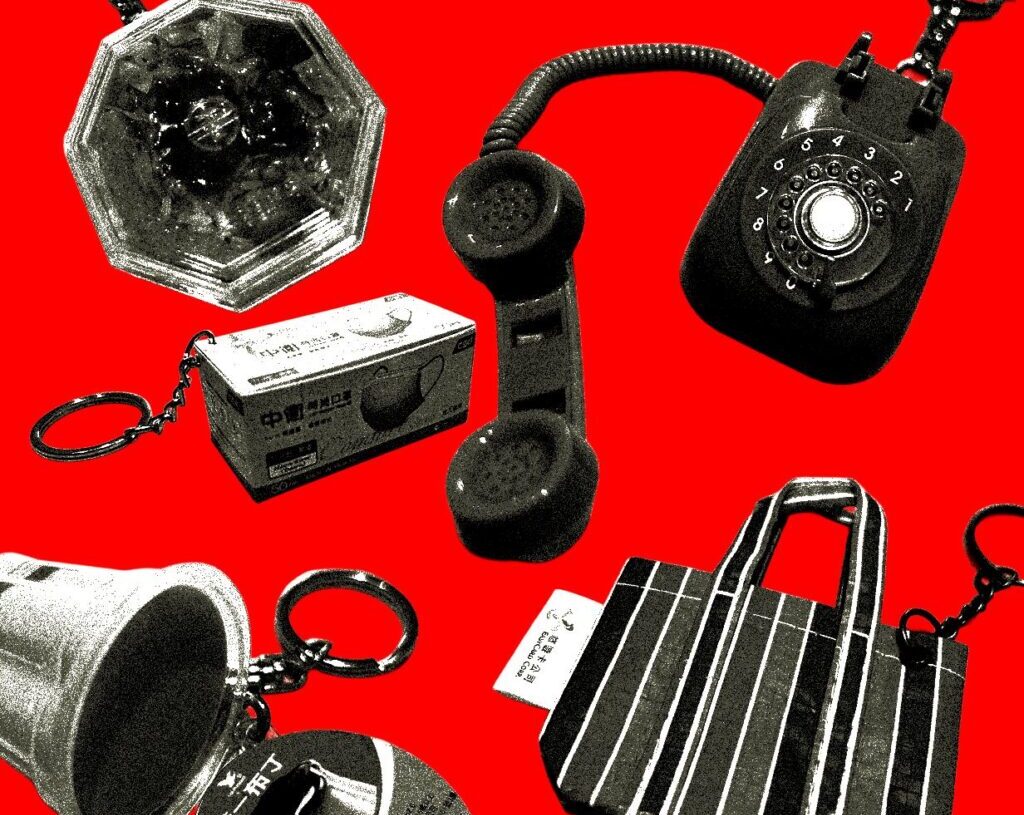
At a 7-Eleven convenience store in Taiwan, you can pick up a 4-inch plushie of Miffy, the bunny character from the Netherlands, a mini bento box charm complete with a realistic chicken drumstick, or a tiny plastic rotary phone. Produced by iCash Corporation (a 7-Eleven affiliate), these keychains are more than just trinkets: Each contains a contactless chip that connects it to Taiwan’s elaborate stored-value payment system.
iCash cards, along with those made by competitors like EasyCard and iPASS, can be used to ride the subway and buses, as well as to make purchases at convenience stores and other retailers in Taiwan. The over-the-top branded keychains, which cost anywhere from $10 to over $30, generate modest direct sales. But their real value lies in their marketing power, drawing shoppers deeper into 7-Eleven’s rewards ecosystem and keeping small payments inside its orbit.
Decentralized and Deeply Local
Over the past decade, iCash Corporation and its rivals have turned dozens of everyday products in Taiwan into limited-edition keychains. Many are miniature versions of snacks and household items available at 7-Eleven stores, such as a can of the sports drink Super Supau, a tube of Darlie toothpaste, and a cup of Uni-President’s classic yellow pudding dessert. Those who prefer something weirder can get a teeny package of toilet tissues, or a doll-sized Scotch-Brite kitchen sponge. When I lived in Taipei for a few months last year, I paid for things with a bag of crinkle-cut potato chips.
iCash Corporation has also licensed Sanrio characters like Hello Kitty and Cinnamoroll, as well as Pikachu from Pokémon and Stitch from Disney’s Lilo & Stitch. One of my favorite Taiwanese payment cards isn’t even a keychain at all—it’s a plastic version of Sailor Moon’s wand made by EasyCard, which (naturally) lights up when you complete a transaction.
I have been obsessed with these keychains and novelty toys since I began reporting on Taiwan several years ago. They’re the most delightful side effect of the island’s move toward cashless payments, and they demonstrate just how different Taiwan’s digital infrastructure is from China’s. Nearly every consumer transaction in China happens through either Alibaba or Tencent, two tech giants that have a near monopoly on payments. Whether you’re buying a bowl of noodles at a street stall or a designer purse in a Shanghai boutique, you will almost always find both an Alipay and WeChat Pay QR code.
In contrast, Taiwan has developed a pluralistic network of NFC cards and mobile wallets layered atop its dense transit system and network of convenience stores. The result is a cashless framework that is tactile, decentralized, and deeply local. In Taipei, people often “tap” to pay, while in Beijing, they “scan.” At least in some ways, Taiwan’s technology is arguably just as sophisticated as China’s. In fact, Alibaba followed the island’s lead last year and launched its own tap payment method.
If you do want to use mobile payments in Taiwan, many stores accept LINE Pay, a digital wallet built into the messaging app LINE, which is effectively the local default communication platform. Many small businesses, however, still only accept cash—a rare sight these days in China.
Taiwanese Humor
Earlier this week, I visited a small kiosk in Taipei where I heard you could buy a wide variety of iCash cards, including rare versions like a light-up Pokémon ball. On the fourth floor of an enormous toy and collectibles market in Xinyi District, I met Yue Liu, a 34-year-old toy collector and dealer who has been in the business for 10 years.
Alongside Labubu dolls and plastic figurines, Liu sells iCash cards shaped like desk fans, barber poles, a bottle of hand sanitizer, medicinal ointment, badminton birdies, cartons of milk, subway train cars, Starbucks coffee cups, and so much more. He says that most of the customers who buy his keychains are foreign tourists. “That’s a good thing. It shows they want to take different styles of Taiwanese culture back home as souvenirs,” Liu says. “Taiwanese food-themed designs are the most popular—after all, good food knows no borders.”
Liu told me he once had an iCash card shaped like a game controller, but he sold it shortly after getting it because his store was struggling financially at the time. “Later, I had a lunchbox-shaped one, but looking at it too long would make me hungry, so I never really used it. I just kept it as a toy,” he says.
I agonized over which cards to buy from Liu. In the end, I settled for five keychains, including the pudding cup, a striped “grandma” tote bag that’s iconic in Taiwan, and a bento box with a marinated egg inside promoting the local high-speed rail network. My most absurd selection, however, was a box of face masks, which were part of what appeared to be a group of pandemic-era keychains. There were boxes of masks from at least three different brands, as well as standalone pink cheetah print mask that might fit a newborn baby.
To me, these particular toys—and iCash keychains more broadly—are the physical manifestation of Taiwan’s unique brand of humor. Even in very dark times, I’ve found that people here often still find something cute to joke about. “What makes many toys interesting often comes from the little things in life,” Liu says.
The last keychain I purchased, I admit, was the one I was coveting the most: a green rotary phone. I loaded it with the equivalent of $3 and entered the subway to return to my hotel. When I put the keychain on the ticket turnstile, it blasted out a loud, unmistakably vintage rotary phone ring, startling me so much that I burst out laughing as the gate opened.
This is an edition of Zeyi Yang and Louise Matsakis’ Made in China newsletter. Read previous newsletters here.
The post How Taiwan Made Cashless Payments Cute appeared first on Wired.