Michal Cotler-Wunsh, formerly Israel’s special envoy for combating antisemitism, is chief executive of the International Legal Forum, where Nadav Steinman is board chair.
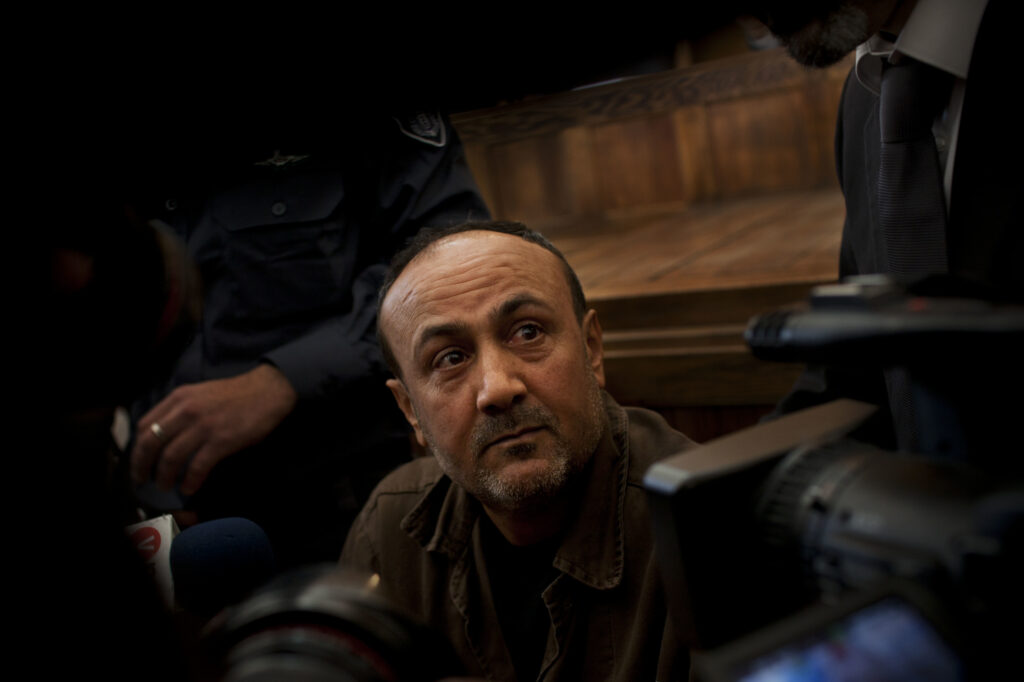
What do musicians Paul Simon, Sting and Annie Lennox, along with actors Mark Ruffalo, Tilda Swinton and Benedict Cumberbatch, and writer Margaret Atwood and Virgin Group founder Richard Branson, all have in common? They are among 200 signatories to a letter last week calling on Israel to release convicted Palestinian terrorist Marwan Barghouti.
The Post, reporting in 2004: “Barghouti was found guilty of ordering attacks that killed a Greek Orthodox monk in the West Bank in 2001, an Israeli at the Jewish settlement of Givat Zeev in 2002 and three people at the Seafood Market restaurant in Tel Aviv in 2002.” Barghouti is serving five life sentences. The court determined that there was insufficient evidence to convict him of 21 other violent deaths cited in the original indictment.
Though the celebrities’ letter calling for Barghouti’s release has prompted debate about whether the signatories understood who and what they were defending, the problem is deeper than a misinformed petition.
For decades, efforts to demonize, delegitimize and apply double standards to Israel, and implicitly if not overtly justifying violence against Jews, occurred mostly in academic institutions, fringe activist movements and international forums. But lately, these ideas have migrated decisively into mainstream public life in the West — into sports stadiums, concert halls, music festivals and entertainment platforms.
Last week, just when those celebrities were clamoring for a terrorist’s freedom, public broadcasters in Ireland, the Netherlands, Slovenia and Spain announced that they would refuse to participate in the 2026 Eurovision Song Contest if Israel is allowed to compete.
In Britain on Nov. 6, fans of the Israeli soccer team Maccabi Tel Aviv were banned from attending a match in Birmingham, in an area that is 70 percent Muslim, after police said they couldn’t guarantee the fans’ safety. Pro-Palestinian protests had been planned. Police suggested that the visitors from the Jewish State might themselves instigate violence. Prime Minister Keir Starmer later criticized the ban and said, “We will not tolerate antisemitism in our streets.”
Yet it’s also on British concert stages. In September, the Irish hip-hop trio Kneecap played London’s 12,500-capacity OVO Arena Wembley, having ridden a wave of controversy over the previous year amid reports that a band member had donned a Hezbollah flag onstage and chanted “Up Hamas, up Hezbollah,” and that the band’s online posts have included a cartoon featuring a Star of David with a swastika. (As the band started losing concert dates in recent months, it issued a statement denying it supports Hamas or Hezbollah.)
Last summer, the English punk-rap duo Bob Vylan led the crowd at the Glastonbury music festival in a chant of “Death, death to the IDF” — the Israel Defense Forces, in a country that has compulsory conscription.
In the United States, one of the country’s most popular podcasts, “The Tucker Carlson Show,” featured an interview last month with the unreservedly antisemitic commentator Nick Fuentes.
Though these episodes, and countless similar ones in the Western arts and entertainment worlds, sometimes stir prominent denunciations and even police investigations, the fact remains: Demonizing and otherwise targeting Jews and the Jewish State, once the realm of U.N. resolutions or academic debates, have now become commonplace in mainstream forums.
To understand this phenomenon, consider the working definition of antisemitism by the International Holocaust Remembrance Alliance. Adopted by more than 40 countries, including the U.S., Germany, France and Britain, the definition explicitly identifies as antisemitic the denial of Jewish self-determination and the application of double standards to Israel. The definition specifies that criticism of Israel isn’t in itself necessarily antisemitic. It is today’s virulent anti-Zionism, masquerading as criticism of the Israeli government, that has stoked Jew hatred and helped unleash and normalize it in the public square.
The IHRA definition helps explain why Israel, the Jew among nations, is uniquely targeted for bans from cultural events, Israeli artists and athletes are singled out, Jewish visibility is increasingly framed as provocation, and convicted terrorists are recast as political prisoners. Without the definition, these might seem like unrelated, stand-alone incidents. With it, the pattern is unmistakable.
The letter calling for Barghouti’s release must be understood within this broader cultural shift. It reflects an environment where violence against Israelis is romanticized, anti-Zionism is presented as a moral duty, couched in the language of human rights. Once antisemitism acquires the patina of legitimacy, the justifications for extremism spread through the same channels.
The normalization of ever-mutating antisemitism creates the conditions for hate that does not stop with Jews, because it’s never about Jews alone. What is being mainstreamed is a thuggish sensibility in which any targeted group can be demonized, and people can be barred from public spaces for their own “safety.” The deeper threat from rising antisemitism is the general erosion of fundamental principles of life and liberty.
The Barghouti letter shows not just the moral lapse of (several dozen) celebrities. It is a siren, joining many others, warning of a fire that isn’t even close to being extinguished. The fire brigade needs the help of millions, Jews and non-Jews alike, who treasure the principles of life and liberty.
The post How antisemitism is entering mainstream culture appeared first on Washington Post.