Rivian is all-in on autonomous driving, stepping deeper into a territory Tesla has long positioned itself to dominate.
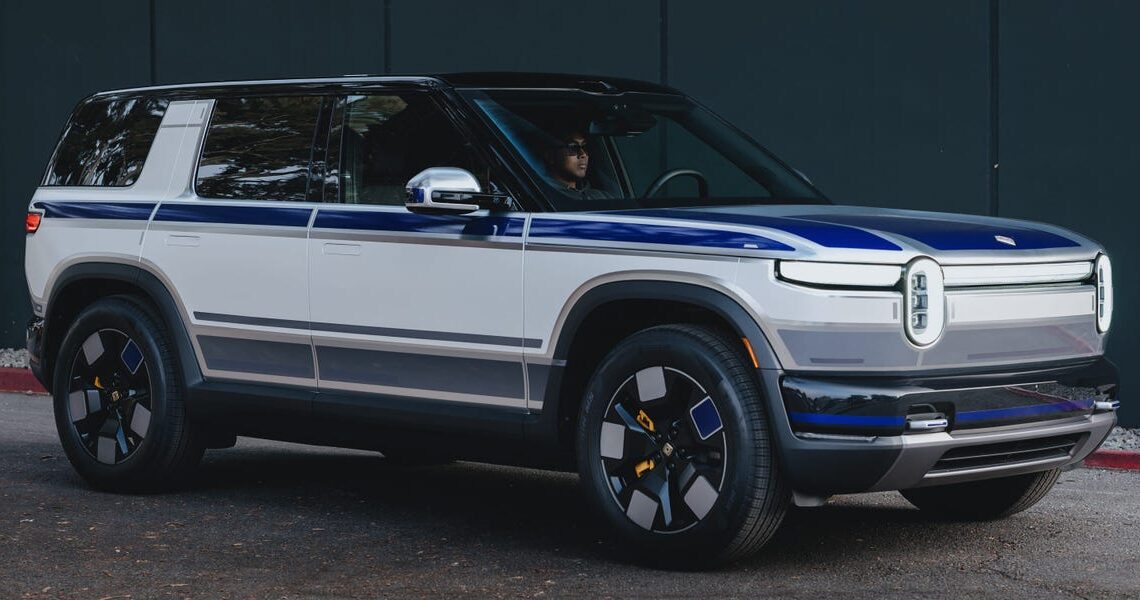
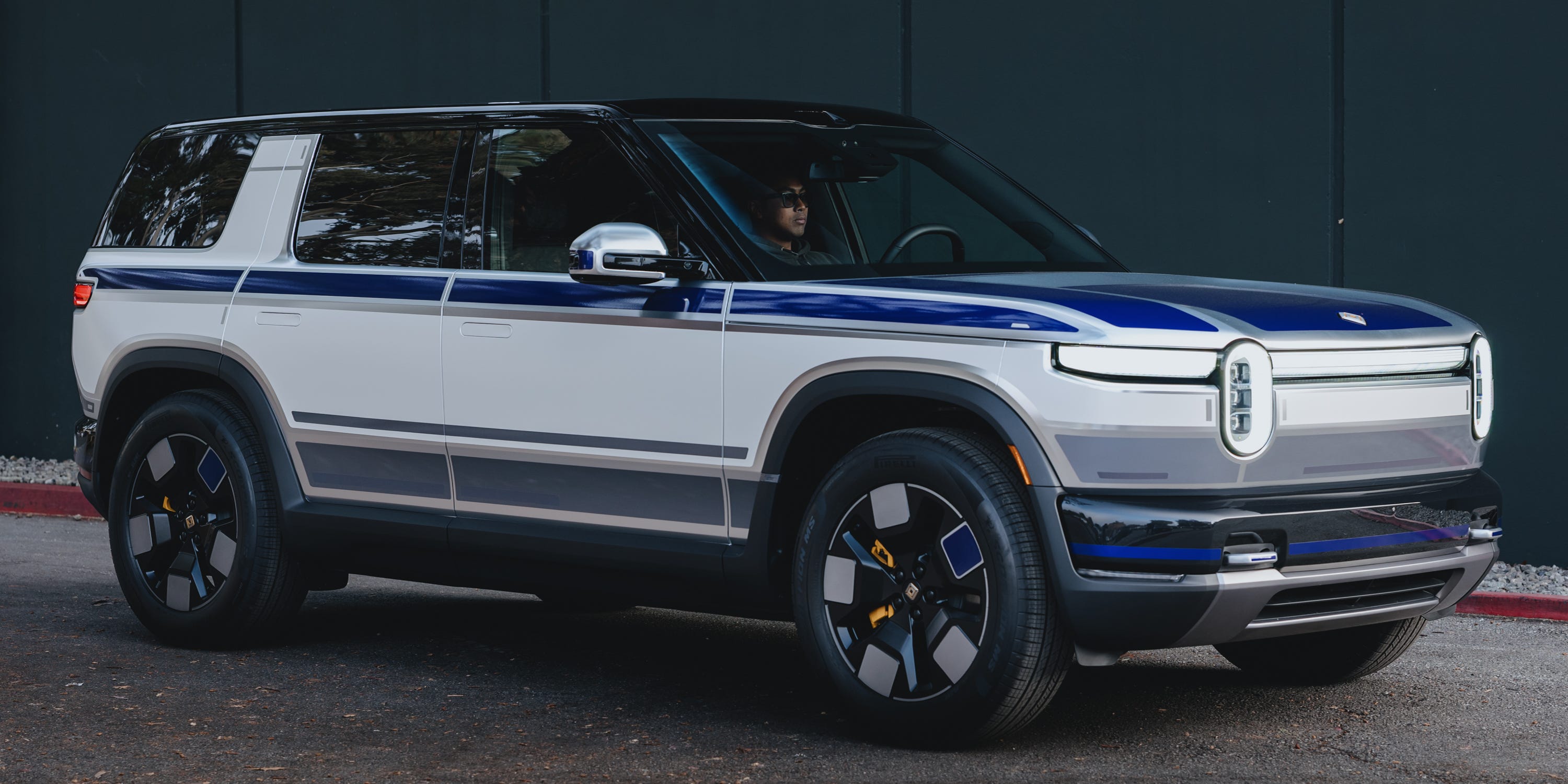
On Thursday, at Rivian’s R&D office in Palo Alto, the EV maker unveiled a road map to develop autonomous-driving capabilities for its future lineup of vehicles, including new hardware for the highly anticipated R2 — Rivian’s cheapest car to date.
That road map includes a new silicon chip, designed in-house, that will power Rivian’s next-generation hardware and support self-driving functions. The new hardware is expected to ship with R2 by the end of 2026, Rivian said.
Rivian CEO RJ Scaringe has been hinting at autonomous ambitions in recent years. However, since the company’s first shipment of vehicles in 2021, Rivian’s advanced driver assistance system (ADAS) software — Driver+ and the Rivian Autonomy Platform — has been more akin to Tesla Autopilot than Full Self-Driving Supervised. Tesla’s Autopilot provides lane-centering and adaptive cruise control, while FSD can recognize traffic lights, conduct turns, and drive to a destination under constant driver supervision.
Thursday’s announcement deepens Rivian’s rivalry with Tesla as both companies have expressed goals of fully autonomous driving and licensing their software platforms to other automakers.
Rivian’s partnership with Volkswagen, announced last year, was a clear first shot at those licensing ambitions. Tesla CEO Elon Musk recently balked on X that no automaker wanted to license FSD.
Here are four ways Rivian is taking a page out of Tesla’s playbook.
In-house chips
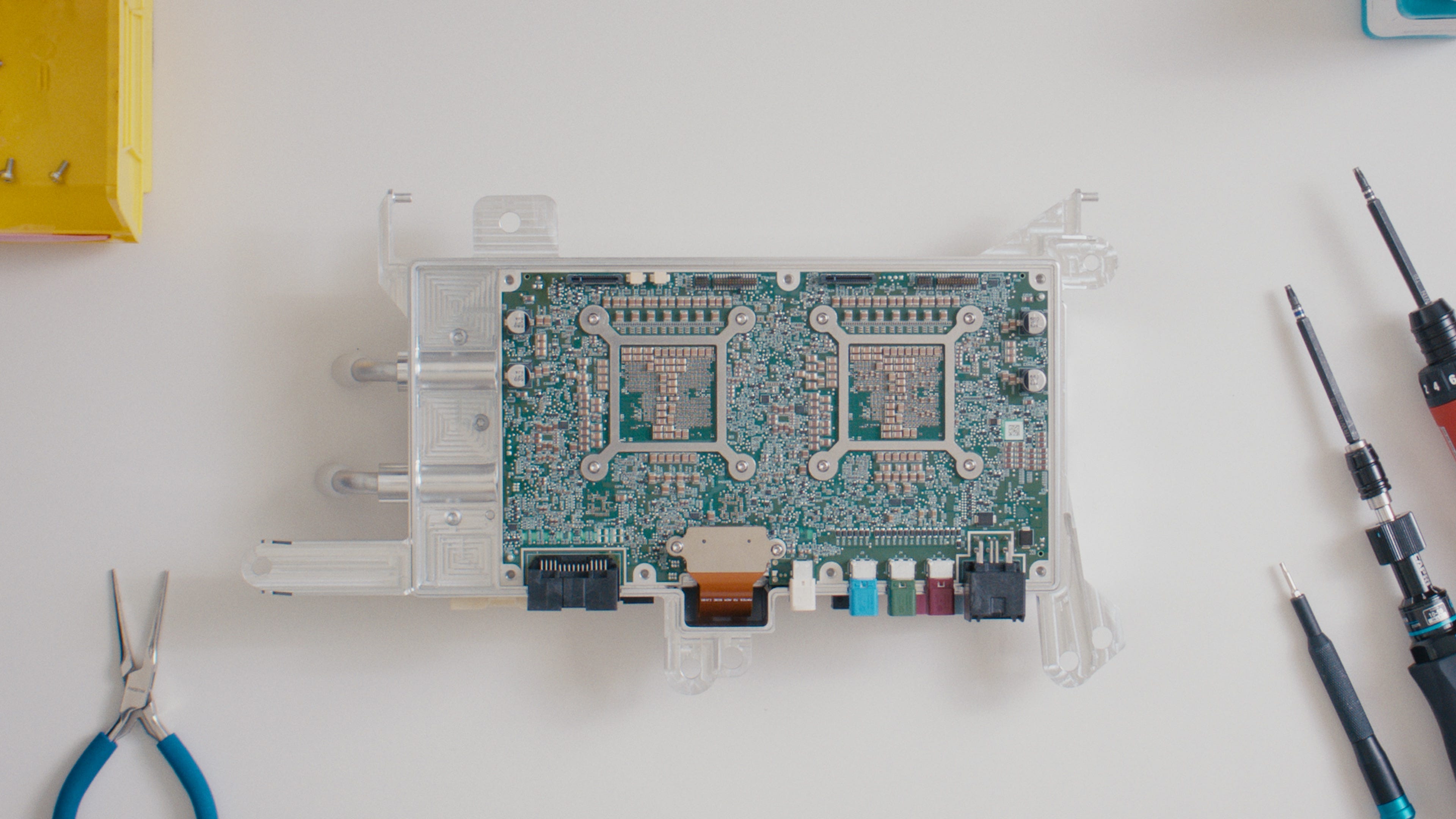
Rivian has been using a combination of Nvidia and Qualcomm Snapdragon chips to power various vehicle functions, including driver-assistance and infotainment systems.
Now, the company is turning to in-house silicon to power its next-generation autonomous driving hardware.
“At the core of Rivian’s technology roadmap is the transition to in-house silicon, designed specifically for the vision-centric physical AI,” the company said.
A Rivian spokesperson told Business Insider that the chips will be manufactured by TSMC.
Tesla began a production shift toward in-house chips in 2019 and has since released two iterations, AI3 and AI4. Musk has said that Tesla’s next-generation chip, AI5, will be 40 times better than its predecessor.
Rivian’s “Gen 3 Autonomy” hardware is under validation and is expected to be shipped with R2 by the end of 2026, the company said.
Going fully autonomous
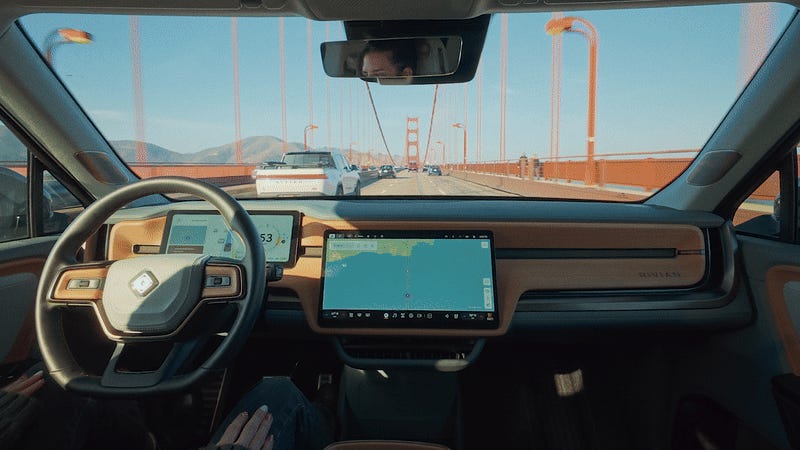
With the new chips, Rivian’s explicit goal is to achieve full autonomy — that’s Level 4, or the kind of self-driving technology seen in Alphabet’s Waymo, in which driver supervision is not required.
Musk has already made full autonomy Tesla’s north star, pledging to turn every personally-owned Tesla into a robotaxi that can generate revenue.
The Tesla CEO’s goals have been met with considerable skepticism, particularly due to the company’s decision to abandon lidar, a sensor that many industry leaders consider essential for safety and redundancy in self-driving cars.
Rivian, for its part, plans to incorporate lidar into the R2 vehicle. The sensor appears to be installed within the car, just above the middle of the windshield.
A Rivian spokesperson told Business Insider that the company collaborated with a third party on the “exterior design” of Rivian’s “lidar implementation.”
The company did not share a timeline for launching fully autonomous driving.
In the near term, Rivian will update its ADAS with hands-free assisted driving capability. The feature won’t be functional on every road, according to a press release.
Rivian said it will be available on “over 3.5 million miles of roads across the USA and Canada” and can operate “off-highway on roads with clearly painted lines.”
At Thursday’s event, Scaringe also suggested potential robotaxi ambitions.
“This also enables us to pursue opportunities in the rideshare space,” the CEO said.
FSD-like subscription model
Rivian is following Tesla’s FSD subscription model for what it’s calling “Autonomy+.”
The software will launch “early 2026” and be priced at $49.99 a month or $2,500 for a one-time purchase.
Tesla’s FSD is $99 a month or $8,000 up front.
Rivian said the software will be continuously updated. The “trajectory” for the feature will be “point-to-point” navigation — where users type in a destination, and the car drives itself just like FSD — as well as eyes-off driving capabilities and “personal L4” capabilities, according to the automaker.
The Rivian spokesperson told Business Insider that “hundreds of millions of miles contribute to the development of Autonomy+.”
“This data is comprised of samples from around the US and Canada year-round, capturing diversity in both geography and seasonality,” the spokesperson said.
AI voice assistant
Musk announced in July an integration of xAI’s Grok in Tesla vehicles, providing a chatbot that drivers can talk to and, more recently, ask for directions.
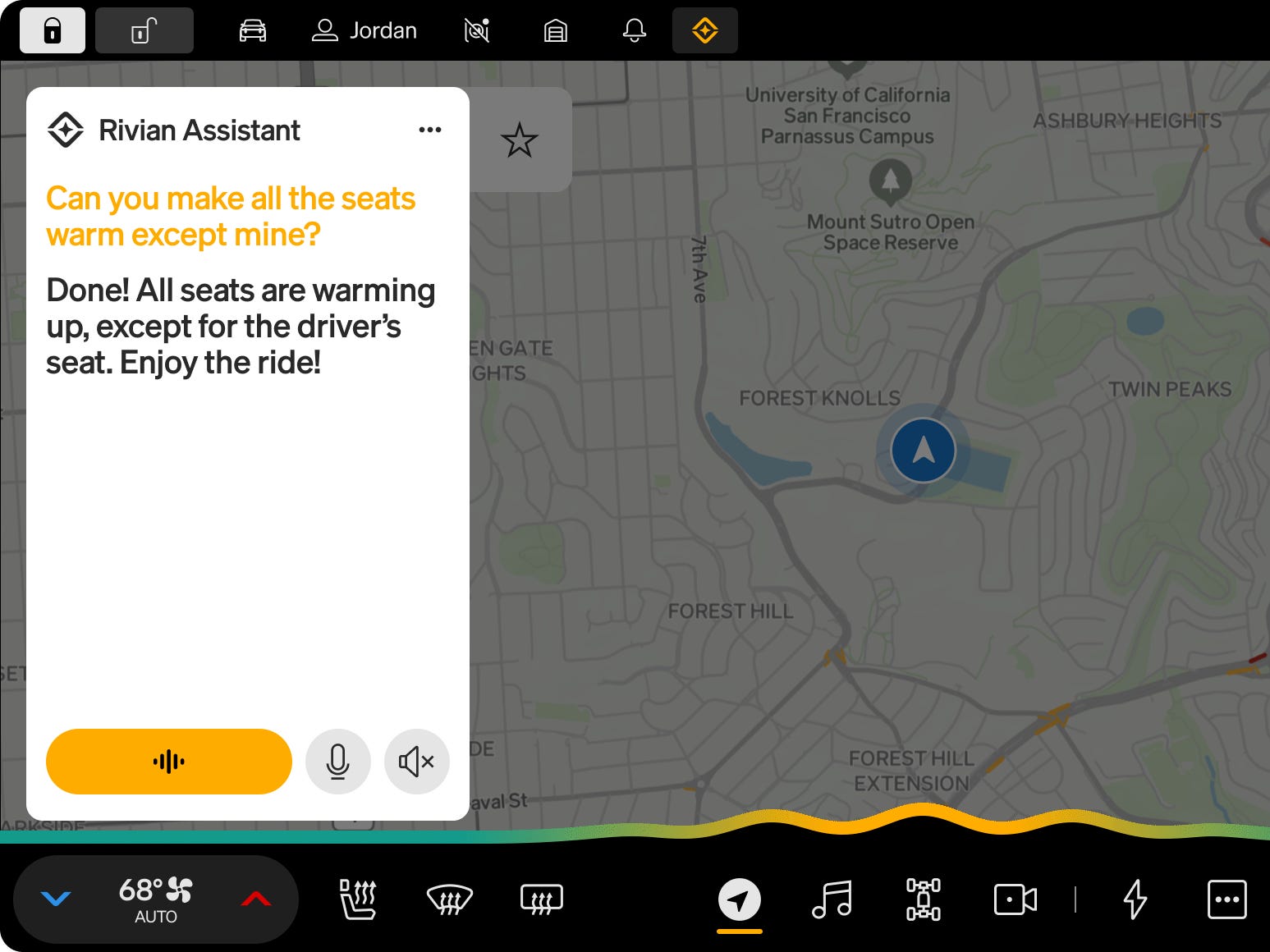
Rivian will be following a similar playbook with “Rivian Assistant,” an AI voice interface that will be “model-agnostic,” according to the automaker.
“Our framework allows us to orchestrate different models and choose the best one for the task,” a Rivian spokesperson said.
The company said in a press release that the AI assistant can connect to third-party apps and will start with the integration of Google Calendar.
The AI assistant can also assist with vehicle diagnostics and control certain vehicle functions, such as activating the car’s seat heaters.
The feature will be shipped early 2026 on Gen 1 and Gen 2 R1 vehicles.
Read the original article on Business Insider
The post Here are 4 ways Rivian just stepped deeper into Tesla’s turf appeared first on Business Insider.