Just before Thanksgiving, Google boasted that its new and improved Artificial Intelligence model, Gemini 3, had surpassed the technology from its young rival OpenAI and was now the best in the world.
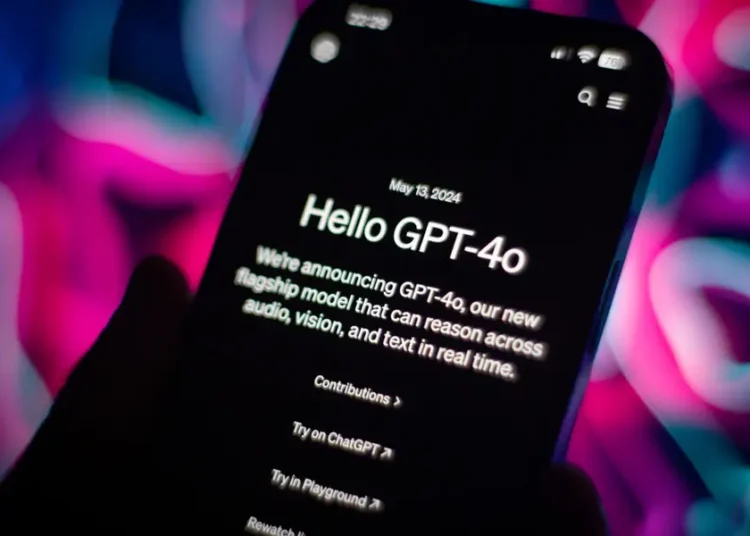
Less than a month later, OpenAI has released a new model of its own, GPT-5.2, and has claimed that it is “the best model yet for real-world, professional use.” In a blog post, the company said that the technology topped several industry standard benchmarks involving computer programming, math and science.
But for many industry experts, the real story was that the technical gap between OpenAI’s so-called foundational A.I. model and everyone else had become practically nonexistent. And this tightening of the A.I. race has arrived at a precarious time for OpenAI, as it tries to close a yawning gap between how much money is heading out the door and how much it is taking in.
By the end of 2025, OpenAI expects to reach monthly revenues that translate to $20 billion in income each year, according to Sam Altman, the company’s chief executive. But OpenAI is still a long way from being profitable. Over the next several years, the company says it is committed to spending $1.4 trillion on the computing power it needs to build and deploy its many A.I. technologies.
When OpenAI set off the A.I. boom with the release of its ChatGPT chatbot in late 2022, the San Francisco start-up had a clear lead on its rivals. It maintained that lead for more than two years. But over the past 12 months, companies in the United States and China have built technologies that match or even exceed what OpenAI’s leading models can do.
“The overall shape and form of what it takes to build foundational models is well understood — and is happening roughly the same way inside every major A.I. lab,” said Rayan Krishnan, the chief executive of Vals AI, a company that tracks the performance of the latest A.I. technologies.
A week after the arrival of Google’s new A.I. model, the San Francisco start-up Anthropic also released a new model, Claude Opus 4.5, that was on par with OpenAI’s technology. Earlier on Thursday, the New York start-up Runway unveiled a model that exceeded the performance of OpenAI’s video generation technology, Sora, according to standard industry benchmarks.
But like its rivals, OpenAI continues to push its technology forward. The new GPT-5.2 model showed particular improvements in generating computer code and performing tasks in other specific areas, including health care and finance. The company said that it would charge customers roughly 40 percent more to use the new model compared to previous technologies. The model arrived just hours after Disney announced an investment in OpenAI and that it had agreed to license its characters for use by Sora.
After Google unveiled its improved chatbot in mid-November, Mr. Altman sent a “code red” memo to OpenAI employees urging them to focus on improvements to ChatGPT and to move newer projects to the back burner, according to a person familiar with the memo who spoke on the condition of anonymity because details had not been made public. He was intent on protecting a key part of the company’s business. More than 800 million people use ChatGPT each week, which translates to a 76 percent market share, according to the research firm Similarweb.
“Consumer A.I. is OpenAI,” Mr. Krishnan said. “If that disappears for them, the company would not be nearly as valuable.”
With his memo, Mr. Altman pressed OpenAI employees to improve the speed of ChatGPT, reduce the number of questions it declined to answer and give people more ways of personalizing the chatbot for their particular needs. These changes, he said, should take priority over the company’s newer efforts involving advertising, shopping and health care.
He said the company would move some employees, at least temporarily, from other teams onto this multiweek push to improve ChatGPT.
Aspects of Mr. Altman’s memo were previously reported by The Information and The Wall Street Journal.
ChatGPT is OpenAI’s main source of revenue, as about 6 percent of those 800 million people shell out $20 a month to use more advanced versions of the chatbot. And, as Mr. Altman alluded to in his memo, the company aims to make money from the free version of ChatGPT, too.
The plan is to prioritize the development of ChatGPT for the next several weeks. After the release of its new GPT-5.2 model this week, the company is working toward a larger release early next year.
(The New York Times has sued OpenAI and Microsoft, claiming copyright infringement of news content related to A.I. systems. The two companies have denied the suit’s claims.)
Mr. Altman often sends rally-the-troops memos to his company. The latest was similar to one he sent after the Chinese start-up DeepSeek wowed the world with its chatbot technology in January. After the threat from DeepSeek, OpenAI focused on improving its own chatbot for several weeks, then returned its attention to newer efforts.
Those newer efforts include projects that aim to make money from the free version of ChatGPT.
Some early OpenAI employees took pride in the notion that the start-up was different from ad-driven competitors like Google and Meta. But as OpenAI works to offset its enormous cash burn, it has been exploring the possibility of serving ads on ChatGPT.
But chatbots are not as conducive to ads as a traditional webpage or search. A chatbot delivers prose rather than a list of blue links that is expanded with a few internet addresses from advertisers, and OpenAI has long experimented with various ways of delivering ads unobtrusively.
The company is also exploring a more focused form of advertising that allows people to shop for goods and services via the chatbot. When someone uses the chatbot to buy a ceramic vase from a seller on Etsy, for instance, OpenAI will take a cut of the transaction.
Although Mr. Altman’s memo underlined the importance to ChatGPT to the company’s future, the consumer chatbot is only part of what the company is working on. Using the same A.I. technology that underpins ChatGPT, OpenAI is pushing into the market of business software.
Inside OpenAI, executives describe the start-up as two companies — one that makes money from consumers and another that makes money from businesses. They argue that A.I. technology will remake practically every category of business software.
Over the past 12 months, OpenAI has used a technique called reinforcement learning to improve the performance of its A.I. models in specific areas like math and computer programming. In essence, the models learned particular skills through trial and error.
Technologies designed specifically to generate computer code have become another important source of revenue for the company. Some software developers and researchers pay $200 a month to use OpenAI’s most advanced coding technologies. The company’s latest model is in part an effort to improve the company’s performance in this particular field.
Now, OpenAI is using similar techniques to train its models for use in areas like health care and finance, so that it can sell products to businesses in these markets, too.
“Coding technologies are really changing how people in the Valley do things,” said Wei-Lin Chiang, a founder and the chief technology officer of LMArena, a company that tests the performance of A.I. systems. “This will also happen in other industries, too.”
OpenAI’s models outperform the other leading systems in tasks involving both legal work and finance, according to the latest benchmark tests from Vals AI, showing that OpenAI has focused efforts on these fields. OpenAI has also worked to build an enterprise software division, much like those at tech giants like Google, that sells these products to businesses.
The start-up is at a disadvantage when it competes with the likes of Google. As it sells to businesses, Google can bundle its newer A.I. technologies with all sorts of older office apps, like Google Docs and Gmail.
The young company, however, is working to change that disadvantage. This fall, it introduced its own web browser designed specifically for use with its A.I. technologies, directly challenging the Chrome browser offered by Google.
“It is a race that will be fought on many fronts,” Mr. Krishnan said.
Cade Metz is a Times reporter who writes about artificial intelligence, driverless cars, robotics, virtual reality and other emerging areas of technology.
The post Can OpenAI Respond After Google Closes the A.I. Technology Gap? appeared first on New York Times.