Bulgaria’s prime minister resigned on Thursday after less than a year in office, acknowledging “the voice of the people” after mass protests against his government in recent weeks.
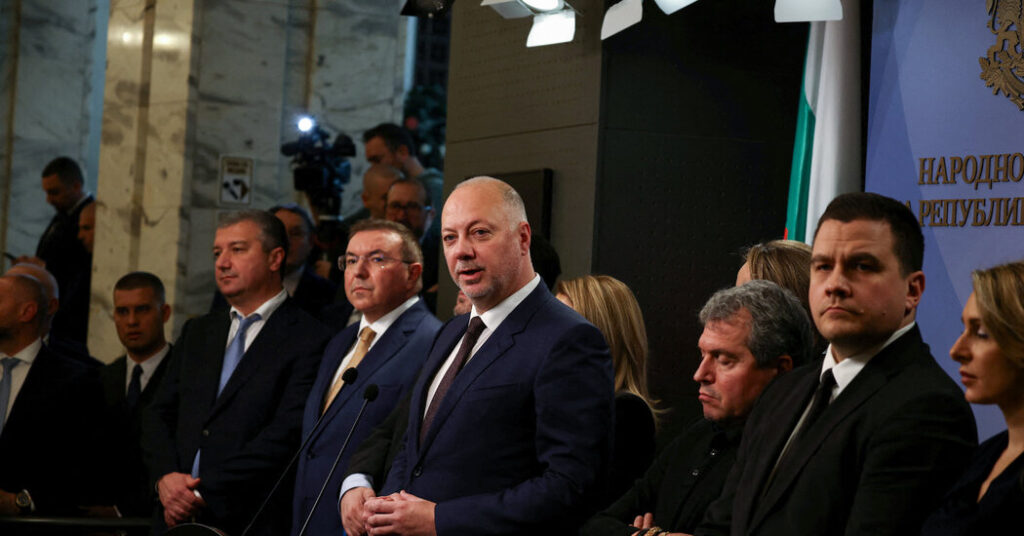
Speaking to reporters in the Parliament in the capital, Sofia, Prime Minister Rosen Zhelyazkov announced he was stepping down, becoming the latest in a revolving door of prime ministers to leave over the past four years.
His departure was fomented by continued economic instability in one of the European Union’s consistently poorest countries. Bulgaria is set to join the eurozone on Jan. 1.
Mr. Zhelyazkov’s announcement came only minutes before lawmakers were scheduled to vote on a no-confidence motion against the government.
“Our desire is to rise to the level of what society expects,” Mr. Zhelyazkov said. “We have heard the voice of the people who have been protesting. We need to meet their demands, and what they are demanding at the moment is the resignation of the government.”
The movement against Mr. Zhelyazkov’s minority-run government has simmered for weeks over a proposed budget for next year that would have increased taxes and social security contributions to finance increased public spending.
It was also to be the country’s first budget counted in euros as Bulgaria formally adopts the currency. Christine Lagarde, the president of the European Central Bank, predicted last month that the move could briefly increase inflation.
The head of Bulgaria’s national bank said the currency shift was still going forward, despite the government upheaval, the state-funded Bulgarian News Agency reported Thursday.
Bulgarians have also been frustrated over endemic government corruption and years of democratic dysfunction.
Lara Jakes, a Times reporter based in Rome, reports on conflict and diplomacy, with a focus on weapons and the wars in Ukraine and the Middle East. She has been a journalist for more than 30 years.
The post Bulgaria’s Prime Minister Resigns in the Face of Mass Protests appeared first on New York Times.