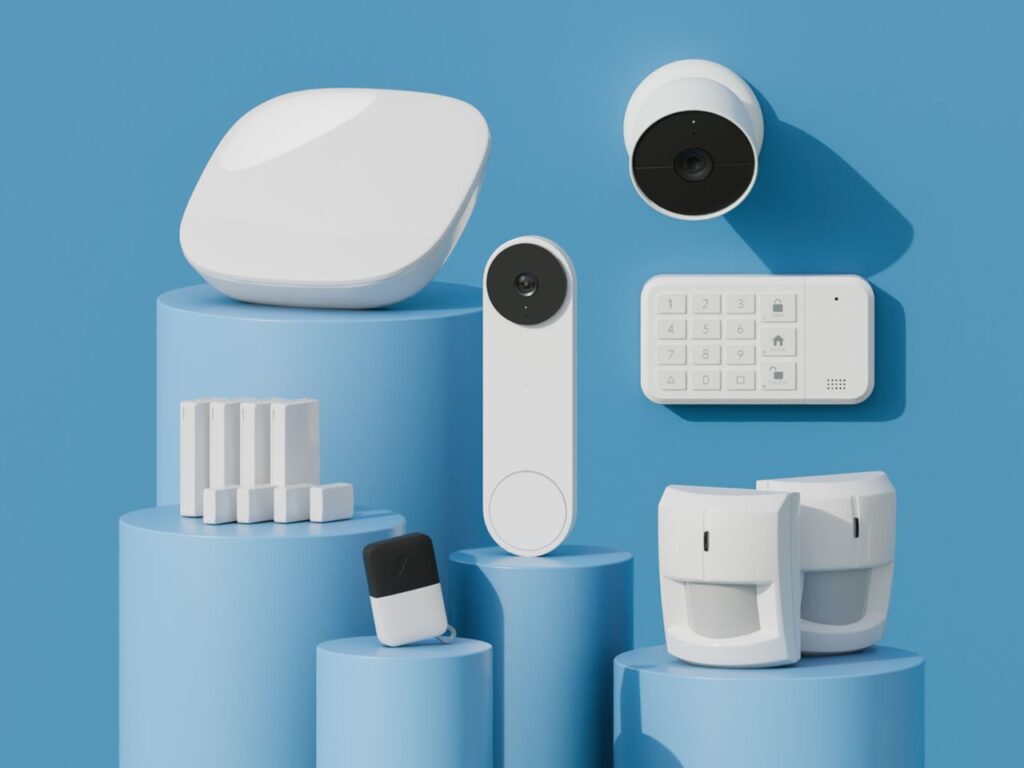
AT&T is taking a second crack at the smart home. After sunsetting its Digital Life service in 2022—powered by the now-defunct 3G network—the company is launching a new smart-home security platform called Connected Life, this time in partnership with smart-home players Google and Abode.
Previously available as a pilot program in select markets, AT&T Connected Life is rolling out nationwide starting today. The vision behind it is to simplify smart-home setup. Instead of buying various smart-home devices and using multiple apps to connect them, you can buy one of two kits directly from AT&T’s Connected Life website—the Starter Kit ($11 per month for 36 months) or the Advanced Kit ($19 per month for 36 months). You can also pay upfront for the kits at $399 and $699, respectively.
Each includes Google Nest smart-home products and security sensors, with the Advanced Kit offering more sensors, a security keypad, and a Nest Cam security camera. (Google confirmed the Nest products on offer are not the latest devices the company launched recently.) You’ll use the Connected Life app and the Google Home app to set everything up, though you can also get help from a technician if you don’t want to DIY.
Google says the platform leverages Google Home’s application programming interface (API) to integrate Google’s smart home devices into the Connected Life app, and after setup, users can solely rely on the Connected Life app to view livestreams and manage devices.
There are two subscription tiers: Essential ($11 per month) or Professional ($22 per month). They offer access to features like 30-day event video history and intelligent alerts, though the Professional plan includes a US-based monitoring service from Abode that can dispatch police and medical services during emergencies. The system is designed so that you can pause professional monitoring when you don’t need it, rather than being locked into a contract.
AT&T is touting the Cellular Backup feature in Connected Life: If your home internet goes offline, this feature will keep your smart-home devices running by routing data through your smartphone (via the hot spot), and there’s a battery backup for the hub in case power goes out. This was a cornerstone feature of AT&T’s old Digital Life service, but cellular backup is now a staple in many smart-home security systems, like those from SimpliSafe or ADT.
You need to be an AT&T customer to use the Connected Life platform, though it doesn’t matter if you have a wireless mobile plan or home internet. This means the potential customer base for these new smart-home services is massive; AT&T has 119 million wireless mobile customers and is the largest provider of fiber home internet in the US, with more than 10 million customers.
What happens when you cancel? You can keep your devices and continue accessing them through the Connected Life app. But you will no longer be able to access subscription-based features like 30-day event history, intelligent alerts, and cellular backup.
What you’re really paying for is the LTE cellular backup feature and the optional professional monitoring service, plus access to more direct customer service through Abode. AT&T’s kits get you a standard suite of hardware that may otherwise have taken more time to research and purchase. There’s also a lower barrier to entry, thanks to the monthly payments rather than the upfront costs of buying all the hardware.
But today, the setup for many of these smart-home devices is already simplified, especially thanks to the Matter standard. Many of the Abode sensors included in AT&T’s kits are compatible with Google Home, for example, so it shouldn’t be difficult to add and manage them from the Google Home app yourself.
T-Mobile and Verizon don’t have all-in-one home security packages; instead, they offer piecemeal products that integrate with their respective services. Still, there’s plenty of competition in the home security space, from aforementioned companies like SimpliSafe and ADT to Vivint.
“Most of our customers don’t even know which devices are Google versus Abode versus AT&T, which is exactly how we want it,” says Brian Brower, vice president of new product innovation at AT&T. “Our value prop at AT&T is to bring these things together and make it seamless to our customers; we don’t necessarily see ourselves as hardware players. Our job is to connect those together and make the experience simple for the user.”
The post AT&T’s Connected Life Platform Is a Second Try in the Smart-Home Space appeared first on Wired.