When dozens of African nations gained their independence in the early 1960s, their diplomats arrived in the United States to present their credentials and assume their posts. But just south of the Mason-Dixon line in northern Maryland, many of them soon met the ugly side of America — they were routinely refused service in hotels and highway diners because of their race. When a journalist asked one proprietor why an African dignitary was treated so poorly, she responded, “He looked like just an ordinary run of the mill n—– to me. I couldn’t tell he was an ambassador.”
For centuries, Black migrants to America quickly learned that they would be treated the same as the Black people already here. Slavery and Jim Crow did not care if your parents were from Jamaica, Nigeria or South Carolina. Six decades after Jim Crow, though, these distinctions are a growing part of a changing country. Today, 1 in 5 Black Americans are immigrants or children of immigrants. Though racism persists, immigration reform and the successes of the civil rights movement diversified Black life in America. And not everyone is happy about it.
Look no further than the White House. Whereas President Donald Trump’s insults toward African Americans frequently demean their intellect and paint them as ungrateful, his rants against Black immigrants are often dehumanizing and fixated on removal. Last week at a Cabinet meeting, he disparaged Somalis in Minnesota, calling them “garbage” and saying, “They contribute nothing. I don’t want them in our country.” When members of Congress presented an immigration deal in 2018, Trump was unhappy with protections for Haitian and African immigrants, infamously asking, “Why are we having all these people from shithole countries come here?”
Though such cruelty suggests that some things never change, the emergence of two Black Americas in recent generations is proof that a lot has. A nativity gap has emerged between those long rooted here and those who’ve immigrated more recently, revealing disparities in income, education, politics and identity. The country has yet to understand these changes and runs the risk of collapsing distinct histories into a singular Black experience, exacerbating rather than reducing racial tensions, and clinging to a caricature of what it means to be Black in America.
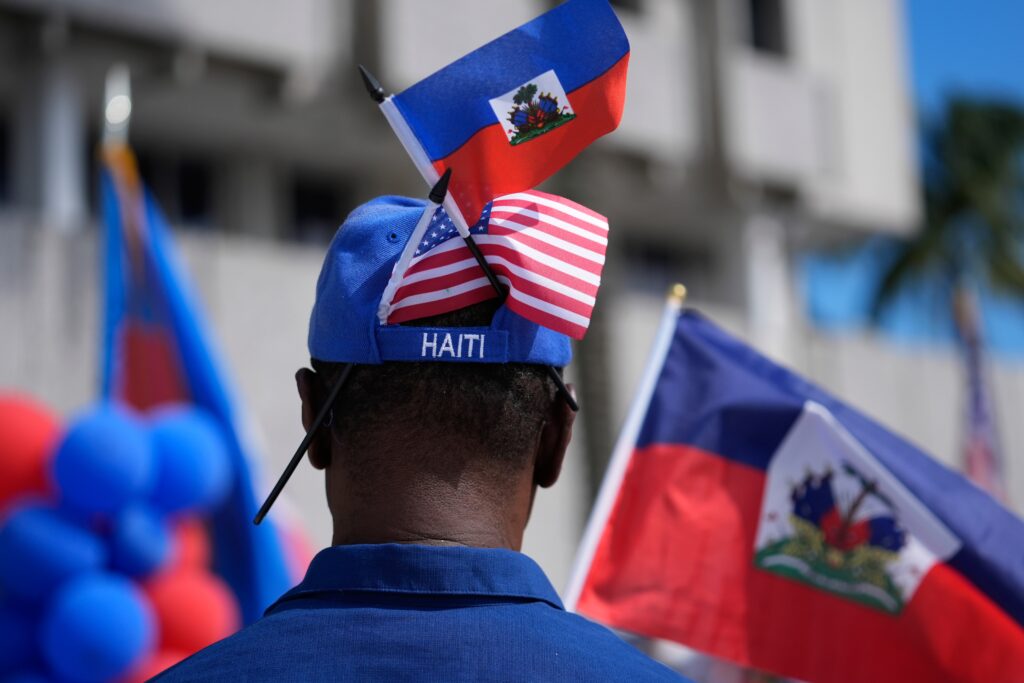
Half of Black immigrants in the U.S. are from the Caribbean. More than half of Black immigrants have arrived since 2000, and those from Africa are the fastest-growing cohort and the primary source of the group’s present population growth. About a third of Black immigrants hold college degrees, matching the percentage of all immigrants. Their household income is 30 percent higher than the native Black population, and they are just as likely to own a home. A recent paper from the National Bureau of Economic Research finds that it’s this group that’s narrowing the earnings gap between White and Black Americans.
Some of this has benefited Trump. Studies show that Black immigrants are typically more conservative, have less connection to political parties and conceive of racial identity differently than native Black Americans. This contributed to Trump’s near-doubling of Black support in the 2024 presidential election. Working-class resentments and labor competition have increased Black support for restrictive immigration policy, a hallmark of Trump’s campaign. And in Minneapolis, he performed better in neighborhoods with large Somali populations in the 2024 election than in 2020. But now, his administration is targeting those same communities, disproportionately deporting Black immigrants.
Misunderstanding the changing face of Black America means that well-laid plans are sure to result in unintended consequences. Politicians devising strategies that rely on a monolithic Black America with uniform policy preferences — such as partisan gerrymandering — may end up in a worse political position. For all the differences in a diversifying Black America, studies also find that the longer Black immigrants are in the U.S., and subjected to racial inequality, the more likely they are to develop solidarity with African Americans. A recent study from the health research nonprofit KFF reveals the prevalence: Black immigrants report experiencing discrimination in housing, at work and during hospital visits — more than Hispanic, Asian and White immigrants.
Back on that rural stretch of Maryland highway in the early 1960s, President John F. Kennedy’s administration appealed to diner owners to serve African ambassadors, who were essential to the country’s Cold War strategy. A few businesses relented — but only to serve the dignitaries, not the local Black population. To show the absurdity of this policy, a trio of Black American journalists from the Afro-American in Baltimore rented a limousine, tailcoats and top hats before arriving at diners pretending to be a delegation from the fake nation of Goban. They were served at some places, and the resulting front-page story proved embarrassing for the proprietors and state leadership. But it was only when civil rights activists threatened to send 1,500 Freedom Riders to protest the Whites-only diners denying the dignitaries that desegregation finally arrived, for Africans and African Americans alike.
And as has been the case since the nation’s beginning, Black migrants for generations and from every corner of the world have come to understand — even if reluctantly — that their lives in America are inextricably linked to the Black people already here.
The post There are two Black Americas appeared first on Washington Post.