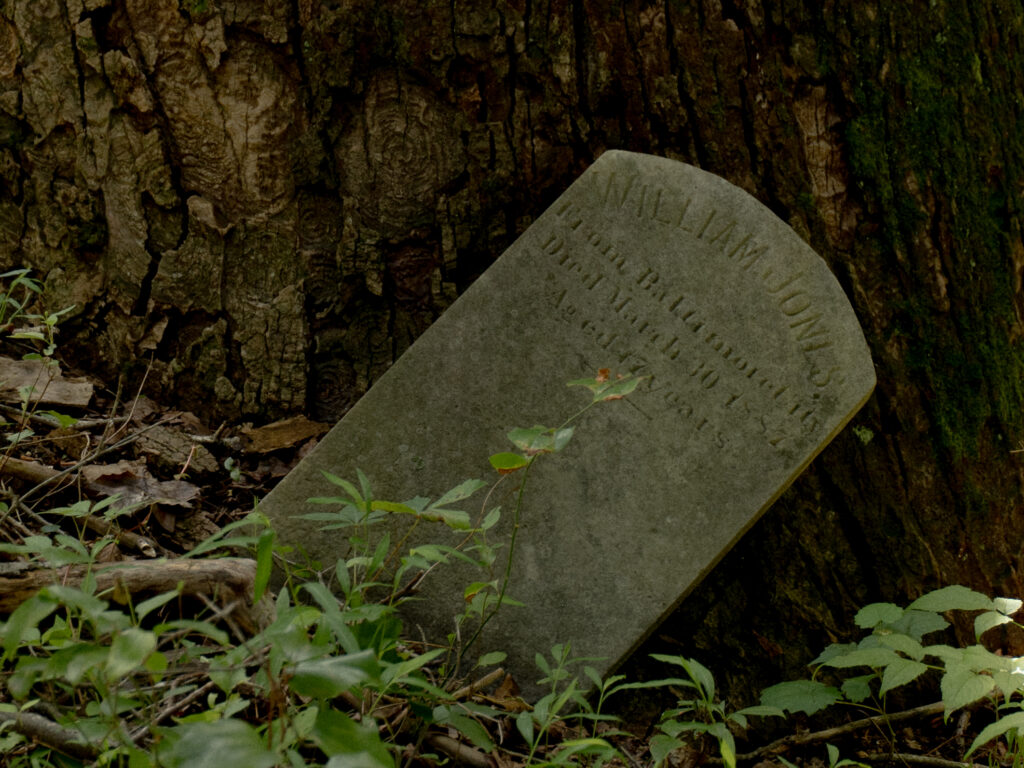
Georgetown University is launching a research hub tasked with investigating the deaths of children and teenagers who perished in juvenile facilities nationwide in the last 150 years, a first-of-its-kind effort that will initially focus on the rediscovered graves of Black boys who died in Maryland state custody.
The Forgotten Children Initiative will be housed in the McCourt School of Public Policy’s Center for Youth Justice and led by Marc Schindler, a career attorney and top policy expert who most recently worked as assistant secretary of Maryland’s Department of Juvenile Services (DJS).
“My hope is that Georgetown will be a resource for states and jurisdictions that have these types of burial sites in their location, and want to learn more and start to do the right thing by way of restoring and memorializing these places,” said Schindler, who has also served as executive director at the Justice Policy Institute.
Schindler and former DJS secretary Vincent Schiraldi oversaw the rediscovery of a long-abandoned and overgrown graveyard on the grounds of the old House of Reformation and Instruction for Colored Children, a segregated state juvenile detention facility that operated in the late 19th and early 20th centuries in Cheltenham, Maryland.
Hidden beneath brush in an overgrown woods on state property, DJS staff found more than 100 graves — many marked only by cinder blocks — for boys who had who died at the school, probably suffering abuse and neglect. More than 100 death certificates for those boys, found through tedious archive work by a hobbyist researcher, revealed some of their names, ages and causes of death.
A subsequent Washington Post investigation, which relied on those death certificates and other state records, found that the death count at the facility between 1870 and 1939 was at least 230 children.
The first task of the Forgotten Children Initiative, which officially launches in January, will be to build upon that existing research to assemble a definitive accounting of those who died and are buried at the House of Reformation site, and conduct extensive genealogical work to find and contact potential living family members.
“The research about who the young people are is a very time-intensive, particular type of research we think Georgetown can be helpful with,” Schindler said. “My hope is that Georgetown will be a resource for states and jurisdictions that have these types of burial sites in their location and want to learn more and start to do the right thing, by way of restoring and memorializing these places.”
After leaving his Maryland agency job this summer, Schindler began informally gathering a small crew of volunteers to work on House of Reformation research, while also broadening the scope of their mandate to include other places around the country where children in state custody died and were buried in institution graveyards. So far, they’ve identified about two-dozen other states.
“Those children have largely been forgotten and abandoned,” Schindler said. “There’s been no attention or effort to really find out who those children were, and make sure they are given the dignity and recognition they didn’t get when they were in the custody of the state.”
His Georgetown appointment formalizes that work. Schindler’s team has been drawing inspiration and expertise from those who conducted a years-long excavation project at the Dozier School for Boys in Florida, where at least 51 children who died in state custody were buried, and the Georgetown Memory Project, an independent research effort that has spent years identifying the 272 people that Georgetown’s Jesuit founders sold in 1838 and their living descendants.
Forensic anthropologist Erin Kimmerle, who led the Dozier project, has been consulting on the House of Reformation project since visiting the Maryland grave site last year. To paint a complete picture on sprawling projects such as this one, she said, it’s most effective to take a multifaceted approach that combines field techniques at the grave site, archival research and genealogical work.
“As with any project with historic cemeteries, there’s more there than what you think. Whatever’s marked or on the surface, or has survived historic records, is a portion of it,” she said. “But there’s always a lot more there. The field work, hopefully, will uncover that.”
Richard J. Cellini, founder of the Memory Project, connected Schindler with that effort’s lead genealogist, Malissa Ruffner, who has been working on identifying potential relatives.
Tyrone Walker, director of reentry services at Georgetown’s Prisons and Justice Initiative, has also consulted on the efforts — leaning on his personal experience as someone who spent time in prison, including in Maryland juvenile facilities, to ensure the outreach to potential relatives is sensitive to how upsetting it might be to learn that a member of their family was lying in an abandoned grave.
“Some will be hearing about it for the first time,” Walker said. “When a person loses a life, and a homicide detective comes to the house, it’s shocking. And now you’re talking about over 100 years later. People are not going to know how to take it.”
The notification plans will probably involve sensitively written letters explaining the initiative and inviting identified relatives to get involved.
Already, the group has identified potential relatives for a handful of the Maryland boys, Schindler said, “but there’s still work to be done.”
“Amid current efforts to erase and ignore African American history, the work to preserve and share the stories of incarcerated children who were buried and forgotten, particularly youth of color, is more urgent than ever,” Georgetown’s Center for Youth Justice said in a statement announcing the new initiative.
The Maryland governor’s office, state juvenile justice leaders and lawmakers have made their own pledges regarding the House of Reformation burial site.
DJS is exploring a potential restoration project and has applied for a $31,000 grant from the African American Heritage Preservation Program, which is administered by the Maryland Historical Trust and Maryland Commission on African American History and Culture.
Grant allocations will probably be announced in early January, and if DJS is a recipient, officials said they will use the money to pay for ground-penetrating radar, a tedious process that uses a machine to survey the land from the surface and detect where remains could be buried. The state would hire contractors to do an archaeological survey, then start the radar work next fall. A full restoration plan will be assembled by August 2027 at the earliest, state officials said.
Gov. Wes Moore (D) has pledged to allocate an additional $250,000 toward those efforts in next year’s budget.
And state lawmakers within Maryland’s Legislative Black Caucus, which visited and prayed over the grave site this fall, have indicated they’ll propose legislation in the 2026 General Assembly session to formalize the state’s efforts in a commission of sorts.
The ultimate hope, all those involved have said, is to invite the broader community — including descendants, historians, community advocates and those who’ve served time in juvenile jails — to determine the most respectful and dignified way to restore the grave site and memorialize the boys buried there.
Kimmerle said she hopes the Maryland initiative will give families connected to the grave site in Cheltenham a sense of closure — and a chance to start grieving properly.
“Even though they may have been grieving in a way, there’s always uncertainty without knowing,” she said. “You have to acknowledge something before you can accept it and move on from it.”
Walker added: “Hopefully the families will want to know more and want to be involved.”
The boys deserve a dignified resting place, he said, where relatives can visit and pay their respects. And, he added, they should get a public apology.
The post Search begins to find families of Black boys buried at abandoned Md. site appeared first on Washington Post.