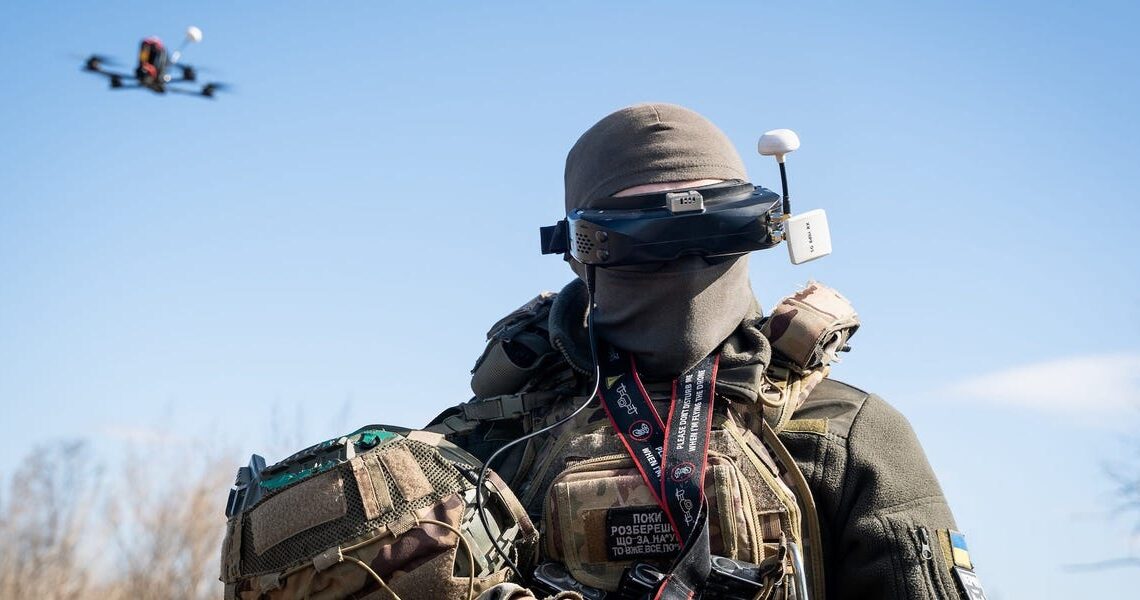
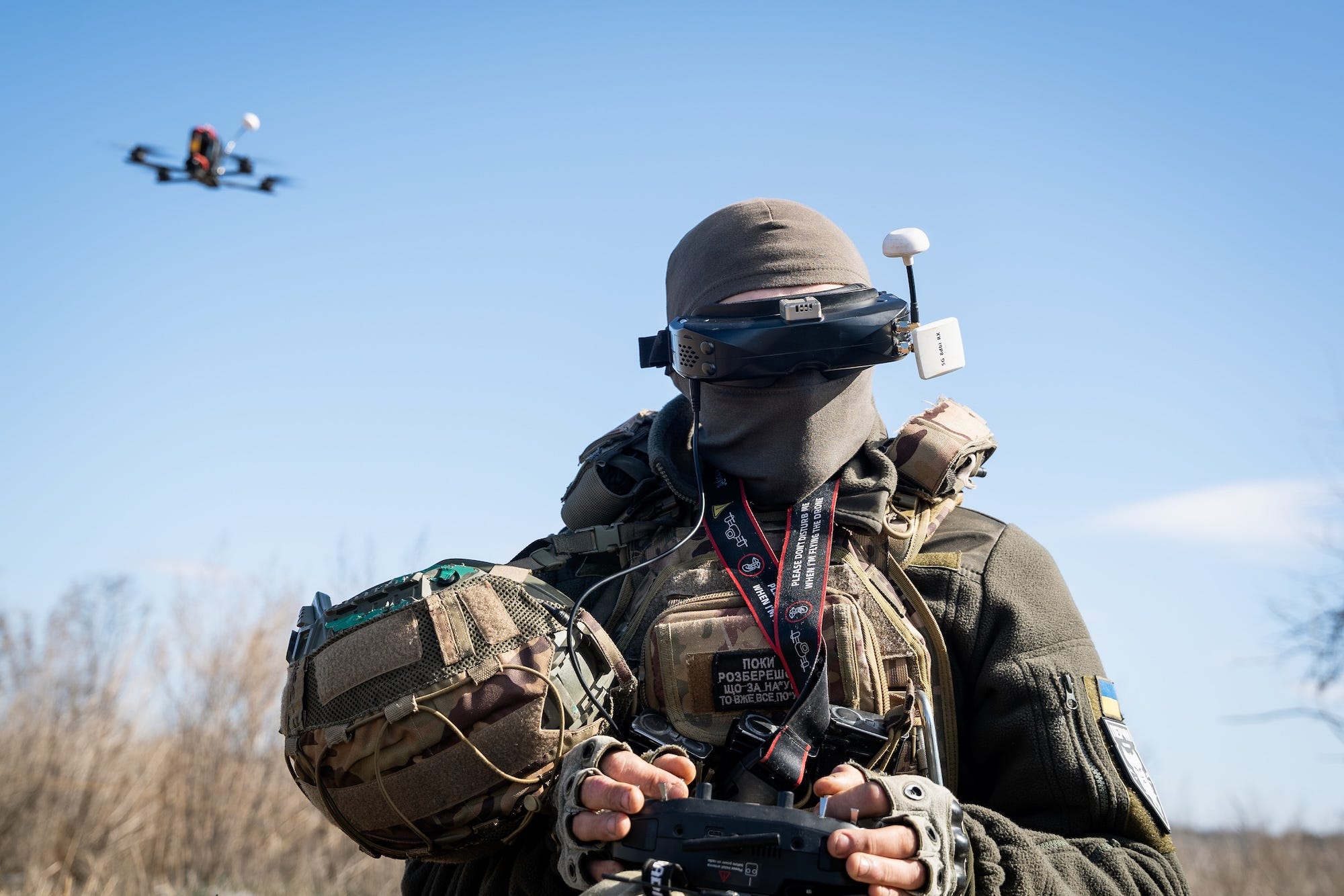
The future of warfare will demand one soldier being able to control huge swarms of drones that can work together autonomously, a Ukrainian arms maker predicted.
Achi, the CEO of Ukrainian defense firm Ark Robotics, told Business Insider the shift from one drone per pilot to one pilot controlling many is “kind of a prerequisite to be successful in the total drone warfare that is coming to all of us.”
With a one-pilot, one-drone system, the only way to scale up drone fleets is by expanding the number of operators.
“This is just not sustainable,” Achi told Business Insider, using a pseudonym as a security precaution. “You can scale drone manufacturing much more than you can pilots,” he added.
Ark Robotics develops autonomous robots used by over 20 Ukrainian brigades and is creating a system that enables thousands of aerial drones and ground robots, including those not manufactured by the company, to collaborate with minimal human intervention. It’s working toward single operator control of many drones.
Countries around the world, from Ukraine to Western allies to rivals like Russia and China, are supercharging combat drone manufacturing. “You can have all these fancy drones,” Achi said, but “what is the use of them if you can’t really deploy them at scale?”
A need for drone mass
Russia’s invasion of Ukraine has involved more drones than any other conflict in history, and innovation in their capabilities has been rapid. The West is paying attention, thinking about what it may need as it worries that Russia could spark a wider conflict with NATO.
Drone technology is critical for Ukraine, vastly outnumbered by Russia’s significantly larger military, as it offers mass. But one drone per operator doesn’t offer anywhere near the advantage that swarming could. And reducing human involvement and embracing autonomy can accelerate combat action. That’s why interest in swarm technology is surging.
There is no confirmed deployment of large, fully autonomous swarms of drones that can act without significant human oversight on the battlefield, but it would be absolutely game-changing.
That kind of capability opens up “a whole world of tactics and strategies that we’ve not even thought of yet,” James Patton Rogers, a drone expert at the Cornell Brooks Tech Policy Institute, previously told Business Insider.
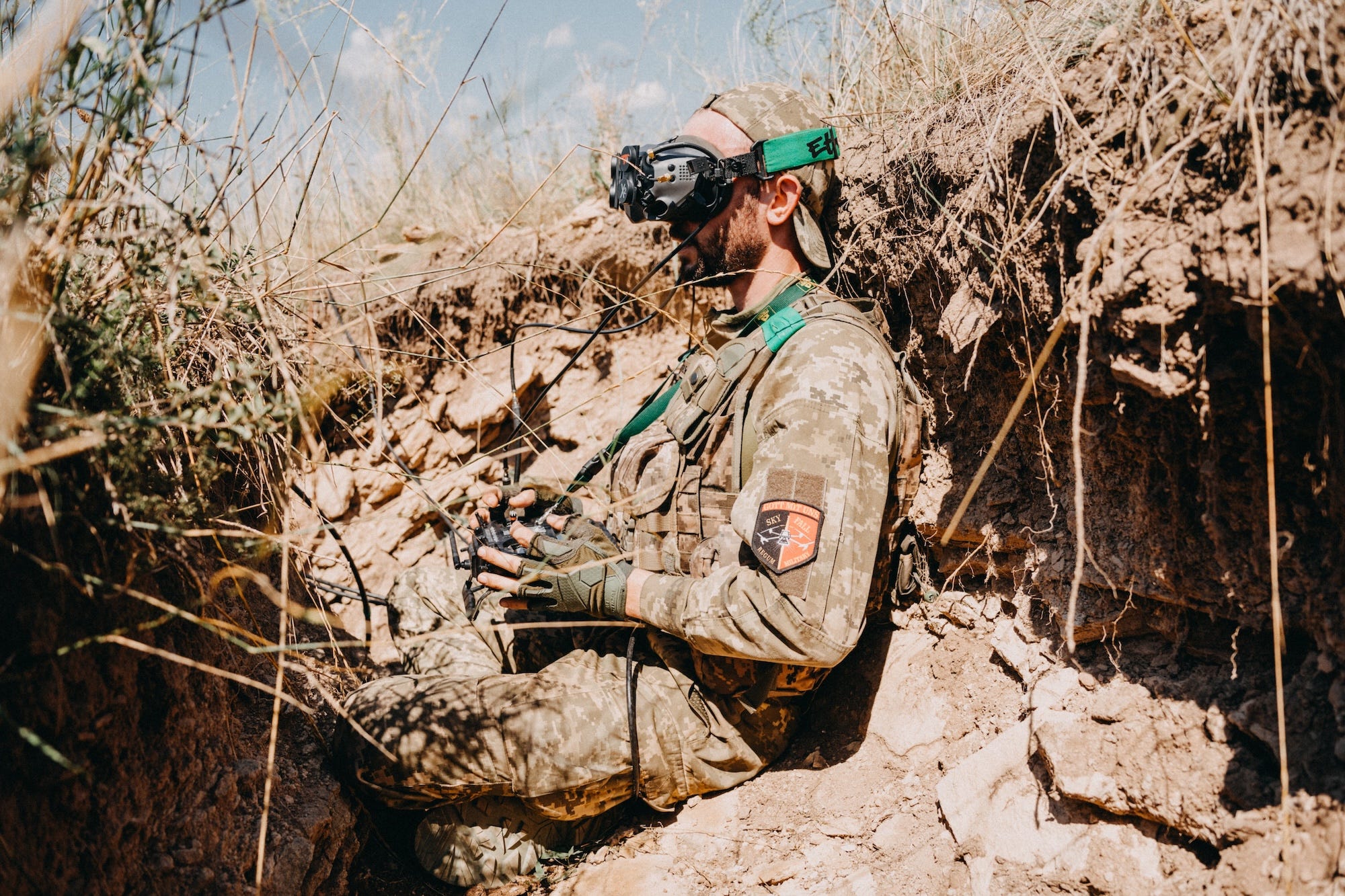
The combat system that Ark is working on, called Frontier, is still in the prototype stage and is just one example of many efforts in Ukraine. The Ukrainian government says the country is pushing for the technology, but “these systems are also just getting started,” Achi said.
Ukraine demonstrates that quantity can become a kind of quality, he said, explaining that “to really get an advantage of that, you need these asymmetrical systems that allow you to work with multiple drones at the same time.”
That’s a lesson for the West as much as it is for Ukraine.
Western officials, defense experts, and industry insiders have cautioned that to meet Russia’s style of warfare — heavily attritional, masses of drones and missiles, and intense artillery barrages — militaries need a greater volume of cheap weapons developed and produced quickly, not a limited stockpile of highly advanced systems developed over decades and produced over years.
Drone swarms are key to that kind of war.
The West is working
There’s no guarantee that drones would play as significant a role in a war involving the West as they have in Ukraine — in part because Ukraine’s reliance on them is tied to shortages of other weaponry and other capability disadvantages.
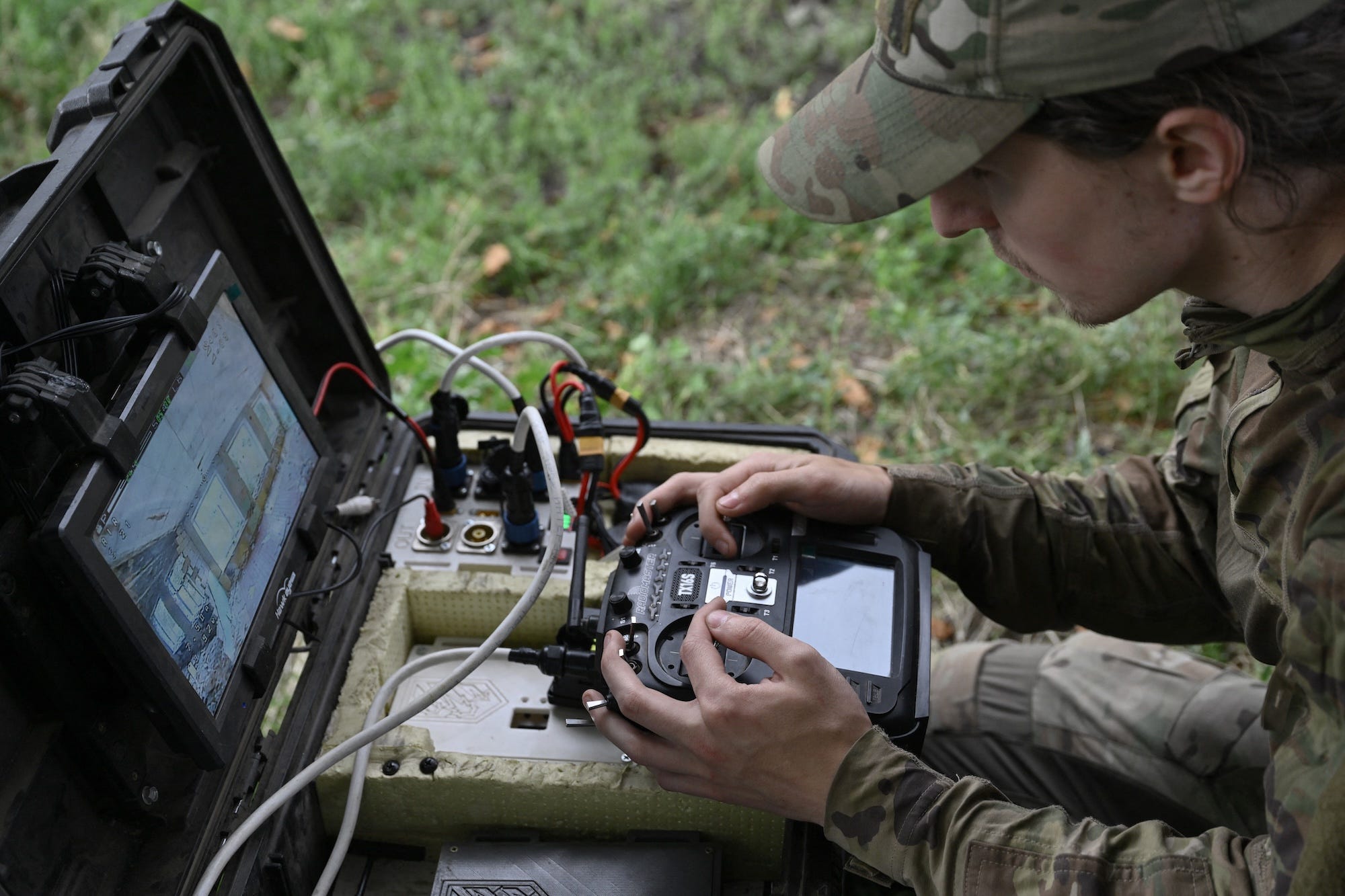
But many officials still warn that the West needs far more drone and counter-drone capabilities. Swarming systems are among them.
Swedish Defense Minister Pål Jonson told Business Insider that his country identified the need for drone swarms from watching this war and that it has rushed to produce technology to allow one soldier to autonomously control up to 100 drones. It’s not clear when that could be operational. Other NATO members are working on this technology, too.
However, there is still no broad NATO-wide investment in these capabilities and no clear sense of when — or whether — they could be fielded. Across the alliance, many officials warn that lessons aren’t being acted on fast enough and that production of weaponry remains too slow. It’s also unclear how autonomous future systems will actually be.
Achi said the current autonomy in defense systems is “greatly overhyped,” but noted that the battlefield shows autonomy is necessary and “past the point of no return.”
There is acknowledgment, from industry and officials, that autonomy is needed to break past manpower limits, increase speed, and keep troops safer.
The CEO of Origin Robotics, a drone maker in NATO member Latvia that supplies Ukraine, previously told Business Insider he sees autonomy as essential to NATO’s defense, especially for the smaller member states bordering Russia.
“For a NATO country, you need a scalable solution,” Agris Kipurs argued. “Autonomy, in our case, is what allows us to scale. We don’t have the numbers in terms of infantry.”
Achi said he wants Europe not only to learn from Ukraine and catch up to its drone leadership, but to think further ahead. He described Europe as “having the time” compared to Ukraine, which is fighting for survival.
If Europe’s increased defense spending “goes to outdated technology or just wrongly copied technology, it doesn’t make any sense to me,” he said. “So I want to see them thinking a few steps ahead and taking lessons from the lessons.”
Read the original article on Business Insider
The post Robotics industry insider says the future is one soldier backed by AI controlling swarms of drones appeared first on Business Insider.