Subscribe here: Apple Podcasts | Spotify | YouTube
On this week’s episode of The David Frum Show, The Atlantic’s David Frum opens with his thoughts on the absurd Peace Prize awarded to Donald Trump by FIFA. David discusses how the invented prize reflects what FIFA understands about our president—that he’s the kind of leader who can be won over with shiny trinkets and fancy ceremonies.
Then, David is joined by Michael Waldman from the Brennan Center for Justice to discuss how the Trump administration might try to undermine or even outright steal the 2026 elections. David and Michael discuss the possible actions Trump could take, along with the systems in place to stop him and what reforms need to happen to the American electoral system. Michael also discusses the Voting Rights Act of 1965 and what Republicans are doing to undermine it.
Finally, David closes the episode with a discussion of an article titled “How Responsibility Shapes Career Success for Leaders,” and what a lesson in management tells us about Defense Secretary Pete Hegseth’s leadership and accountability (or lack thereof) in the controversy over the strikes in Caribbean Sea.
The following is a transcript of the episode:
Frum: Hello and welcome to The David Frum Show. I’m David Frum, a staff writer at The Atlantic. My guest this week will be Michael Waldman, president of the Brennan Center [for Justice] at the New York University School of Law. We’ll be discussing at the end of the show not a book this week, but an article: “How Responsibility Shapes Career Success for Leaders,” published in 2024.
But first, before the discussion and before the article, some thoughts on events of the week. A lot of the things the Trump administration does are just horrifying, terrible, destructive. Some of them are silly and weird, and I wanna talk this week about one of the silly and weird ones. As you may have observed, President [Donald] Trump was just awarded the first-ever Peace Prize by the football association FIFA. Now, those of you who follow sports more closely than I do know that FIFA is not exactly a paragon of moral integrity, so any award from FIFA seems kind of dubious; a peace prize seems even more dubious. But there they were at the Kennedy Center here in Washington, D.C.—or, as President Trump said during one of the ceremonies, the soon-to-be-called Kennedy-Trump Center, because he does have a fantasy of renaming it for himself, but it’s still, for the moment, the Kennedy Center. At the Kennedy Center, there was a big ceremony, and President Trump was awarded this FIFA Peace Prize.
Now, this is a prize that was created in November of this present year, 2025—never been awarded before. Unlike the Nobel [Peace] Prize, it’s a real doorstopper: It’s a giant desktop trophy, and it comes with a disc, a medal, that can be worn around the neck. The actual Nobel Prize comes with a disc too, but it doesn’t have the little attachment that allows you to hang it around your neck like a prizefighter. But as the FIFA president said to President Trump, You can now wear this with you wherever you go, and it will not be surprising if he does. President Trump does dearly, dearly love a prize.
Now, why did FIFA do this? We don’t exactly know, but it is noteworthy that, along the way, President Trump has done many, many things that might be considered a threat to FIFA plans. FIFA awarded the 2026 World Cup to a joint bid from North America: from the United States, Canada, and Mexico. Not to the United States alone, but to the three NAFTA—or as it used to be; today, USMCA—the three trading partners in the USMCA.
And President Trump has been making a lot of noises that he’s getting ready to blow up the USMCA altogether. And even if he doesn’t quite do that, he’s done other things that FIFA might consider threatening. He’s imposed limits on visas from many countries, including many of the countries that are big investors in FIFA in the Middle East. And he was lobbied successfully in June of this year to say, okay, that any visa restrictions will not apply to people [who] are traveling to play in the World Cup or their immediate family or their coaches, so that was good news for FIFA. And he was finally persuaded to make a more than $1 billion commitment of taxpayer funds to support and provide security for the FIFA events in the United States. This announcement was made by the White House coordinator for [the] World Cup, a true merit appointee, son of Rudy Giuliani, Andrew Giuliani, who’s—you didn’t know this, but he is the White House coordinator for the World Cup. But at every step of the way, there have been problems, they’ve been overcome, but FIFA has been worried about them. So what better way of locking in President Trump’s support than to announce that he’s going to be given a prize, a peace prize, both a trophy and an around-the-neck medal?
Now, it might not have occurred to Donald Trump that he even wanted a peace prize if President Obama hadn’t got one first. And that seems to have really stuck with him. And everybody in the world has seen it. President Trump has talked so often about his hunger for a peace prize, and it’s become a talking point, that if you want President Trump’s favor and you’re on television, you have to say he should get a peace prize. Now he’s got one—not the Nobel original but the FIFA, and as I said, bigger, gaudier, and you can wear it around the neck.
It’s absurd, but what it also is a warning of is the president of the United States is someone who is very vulnerable, susceptible to these kinds of childish, imbecile blandishments. And if you know that and I know that and the FIFA people know that, everybody knows it, that you can manipulate the president of the United States with appeals to his vanity and with little geegaws that no republican leader should want—lowercase-r republican.
There have been a series of events that indicate that Donald Trump does not understand the role of president in the way that George Washington and Abraham Lincoln understood it. You drive around downtown Washington, you will see hanging from the Department of Labor, near the Capitol Hill, a giant banner with President Trump’s picture on it. Well, that’s just not done. Presidents, living presidents, are not honored in that kind of way in the United States—or they never have been before. Or the National Park Service just announced that they will no longer have free entry to the parks on Martin Luther King Day and Juneteenth, federal holidays, but they will have free entry on June 14, President Trump’s birthday.
When I first heard this story, that the National Park Service was going to offer free admission on President Trump’s birthday, I thought, I bet this story is being exaggerated, because June 14, President Trump’s birthday, is also Flag Day. So maybe that’s why June 14 is free: It’s because it’s Flag Day, and they’ve replaced Martin Luther King Day with Flag Day. That’s a little culture worry, but it’s not quite monarchical. But when you go to the National Park Service website and see, they actually describe June 14 as “Flag Day/President Trump’s birthday.” That is, the Park Service is itself saying at least 50 percent of the reason you get a free ticket is because it’s President Trump’s birthday. The United States has never before marked in any way the birthday of a living president. And it leaves most of the presidents’ birthdays just gathered together in a single President[s’] Day that started as George Washington and Lincoln’s birthday, and has now been grouped together to be a catchall for everybody, but only the past presidents—those out of office, and ideally, those who are passed away—because democracies, republics, don’t honor living leaders in their lifetime.
But that’s what we’ve done. And that’s what FIFA understands about us, that [we’re] just kind of a joke country with a kind of joke leader, and you can get things out of him by giving him a geegaw. It’s shameful, it’s embarrassing, and it’s not the worst scandal, but maybe it’s part of the series of explanations that helps you to understand why the worst scandals keep happening and why nobody is stopping them.
And now my dialogue with Michael Waldman.
[Music]
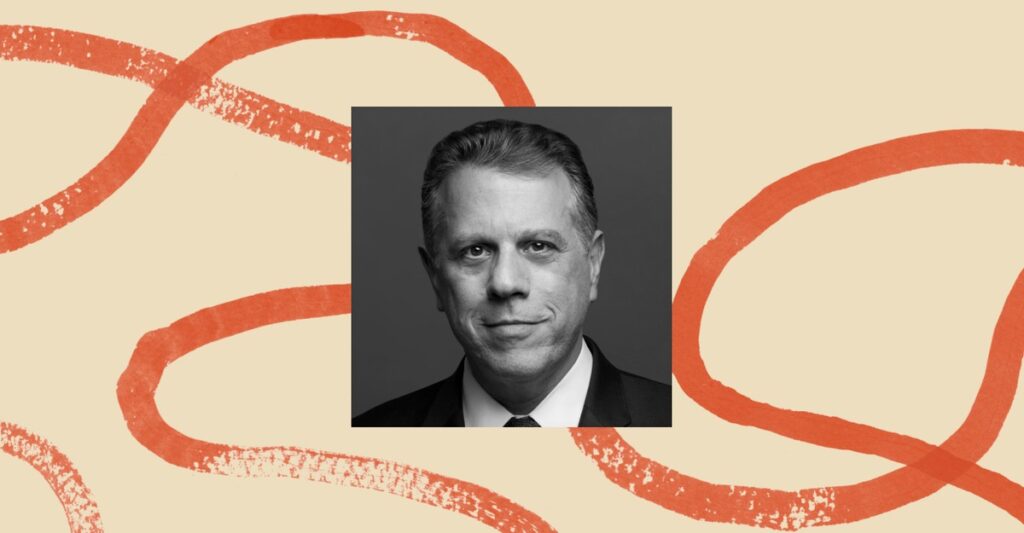
Frum: My guest today is Michael Waldman. Michael Waldman has been president of the Brennan Center [for Justice] at New York University since 2005. The center’s named for the famed liberal Supreme Court Justice William Brennan, and the Brennan Center is an academic institution to study the state of American democracy and the U.S. Constitution while upholding the values of the late justice. Michael is the author of the book The Supermajority: How the Supreme Court Divided America, published in 2023. He previously served as director of presidential speechwriting in the Clinton administration.
I should mention two personal connections to Michael. In the 1990s, our children attended the same preschool. There was an interval of, I think—or I recall—30 minutes between the start time for the slightly older and the slightly younger children, and Michael and I sometimes chatted in those intervals. Without him being indiscreet in any way, I look back on it and realize I owe a lot of my understanding of what happened in the [Bill] Clinton years to those brief conversations in a school play yard. Later, the youngest of my daughters worked for one of her college summers as a paid intern at the Brennan Center.
I asked Michael here today because we record this in the beginning of December of 2025. The political outlook looks pretty bleak for Republicans and for President Trump, but it doesn’t look like they’re willing to accept that political outlook without doing something about it, and that’s a little outside the bounds of normal rules in American politics. So given Michael’s deep expertise in American democracy and American courts, I’ve asked him to talk about how a nefarious actor might try to twist, distort, or even outright steal the 2026 elections.
Michael Waldman, thank you so much for joining me today.
Michael Waldman: It’s great to be with you, David, and we have the secret decoder ring, also, of having been presidential speechwriters to different presidents, and there’s a lot at stake right now in the values of our country and our Constitution that we all care a lot about.
When you think about it, in any democracy, the voters need to have the ultimate say, and the ultimate check on authoritarianism is the voice of the voters, if properly heard. And we had, in recent years in this country, a lot of pressure on the election system: COVID, threats of violence, actual violence, rampant disinformation. But encouragingly, the system hardened itself. Voting-rights groups worked with law enforcement, worked with businesses, and worked with these bipartisan election officials, who are real heroes, and the system held, and the elections were pretty free and fair and ultimately uneventful.
Frum: Which elections are you talking about that were—
Waldman: 2020, 2022, 2024. The difference now, of course, is for the first time, I think, in American history, the federal government and the Trump administration are actively waging an effort to undermine the 2026 elections.
Frum: We did have the unpleasantness of 2021 and the attempt to overturn an election, but the election-casting system was honest and fair in ’20, 2022, and ’24.
Waldman: It was the highest voter turnout, despite the pandemic, in over a century, and it was free and fair.
Frum: So let’s talk about the election ahead. The problem that President Trump has—let’s put ourselves in his shoes for a moment: He’s done a lot of things that are either, if not illegal, certainly likely to expose him to bad publicity and negative implications if they ever come out—the way he’s made apparently $1 billion from the crypto industry just since becoming president, accepting gifts from foreign potentates in violation of the Constitution, the slew of pardons of people who seem to not deserve them and who look like they’ve mounted pressure campaigns and lobbying campaigns in President Trump’s inner circle, the strange mystery around the outreach to Russian businesses by American businesses that is like a side protocol to Trump’s pressure on Ukraine. So there are a lot of things he doesn’t want people to know about, and if he were to lose control of either or both houses of Congress, those things would come to light, and maybe there would be consequences. So now, from his point of view, think about it as he would: What can a president and a party that is still in control of Congress do to bend things their way?
Waldman: Well, there is much they can do to try to undermine the way the system works, but there are limits as well. And I wanna stress that, in each of these areas, there are things that can be attempted, and there are potentially effective pushbacks that can make sure that the election actually does happen as we would hope it happens, where the voters, however they choose, get the last word.
One thing that President Trump has tried to do already is to take personal control of the election system. He issued an executive order in March purporting to do just that. It purported to require that you had to produce a passport, not even a birth certificate but a passport, to register to vote on the federal form, to order states to turn over their sensitive voter data to DOGE because what could go wrong with that, and other things of that nature. But that has been blocked by the courts because the Constitution is quite clear that states run our elections; Congress has an important supervisory role in passing legislation, but the president has no role. And that key fact—the president has no role in so much of this—is really the thing that gives the greatest hope to blocking this kind of activity.
They also tried to pass legislation that embodied a lot of these same ideas; it’s called the SAVE Act. Of course, the appropriate way to do things is to pass legislation. This bill would’ve been, I think, a pretty egregious, restrictive bill in terms of voting in that it would require people to produce a passport or a birth certificate to register to vote, and that’s something we know for sure that at least 21 million Americans don’t have ready access to—and, actually, many more than that when you think of women who’ve changed their names because they got married. That bill passed the House, but it’s actually been blocked and stalled in the Senate. So a lot of those kinds of things, the normal push and pull of politics is having its way.
They’re doing a lot of other things too, and again, there’s a lot of reasons for it, but it’s certainly consistent with an effort to undermine the election and its integrity. They purged, fired, the election-security experts in the federal government, who had done a lot to protect against Russia and Iran and other potentially malevolent actors, and domestic actors as well, and who play a really important role with state and local election officials, who are not necessarily all that technologically sophisticated. They purged those people. What’s happened is a lot of people on the outside, including the Brennan Center, have worked to make sure these folks have somewhere to land so they can actually do a lot of this same expert protection outside the government. It’s not quite as good, but it actually is the kind of thing that can make a difference.
They are threatening to use the tools of law enforcement to scare off people in the election machinery. Think about the infamous phone call in 2021 with [Georgia Secretary of State] Brad Raffensperger, where Trump, at that point, said, We need to find 11,000 votes. Now think of that same call with a far more potent threat of prosecution, of the kind we saw with [former FBI Director] James Comey and with [New York State Attorney General] Letitia James and others. And so the fight to stop the weaponization of the Justice Department is also part of the fight over this.
And then there’s a risk that troops or ICE or other forces like that will go into communities to mess things up around the election, which is also illegal.
Frum: Well, you haven’t mentioned gerrymandering; we’ll get to that. But the troops are something that worries me a lot, especially when you think about this in connection with the permission to briefly detain U.S. citizens. So, supposing the local National Guard commander who’s deployed to the swing district—Charlotte, North Carolina, some place like that—takes it in his mind that maybe there are a bunch of illegal immigrants standing in this voting line, and they turn out to be U.S. citizens. Well, he can’t detain them forever, but he may be able to detain them for a few hours, at least ’til after the polls close. The Supreme Court seems to have green-lit that.
Waldman: Those are known as Kavanaugh stops, which I suspect is not something Justice [Brett] Kavanaugh is proud of having his name attached to it.
Frum: This may be pushing the courts farther than even the courts would go, but if you say, We’re in this one district. We think a lot of these people are illegal immigrants. We need to detain them, check their papers. That obviously takes time. Is that something that you worry about, or is that at the outer rim of probabilities?
Waldman: Well, we worry about it because we’ve seen that kind of misuse of domestic law enforcement before, in recent months. One of the things that startled me the most over the past year was when Governor Gavin Newsom and other Democratic political leaders held a press event to announce the ballot initiative that they were doing on redistricting—the one that eventually passed—somehow, armed and masked immigration agents showed up en masse outside the event, and they said it was a coincidence. But that kind of thing does give worry.
Here’s the bottom line. It didn’t happen, for example, in New Jersey, Virginia, or New York, or California this past election. It’s certainly not a given, and I wanna stress again: It’s illegal. There are numerous laws—federal and state and the Constitution—that say you cannot interfere with an election, including parts of the Voting Rights Act that the Supreme Court has not seen fit to touch. This is the kind of thing where we, at the Brennan Center, and others as well, we have the briefs written up and ready to go; the toner’s in the printer. And this is the kind of the thing that the courts have been strong in stepping up to, but we certainly hope it won’t come to that.
Frum: Now, the courts have given broad permission to gerrymandering, and we have seen some efforts in some states to do that. As you say, that’s something that also may contain some of the seeds of its own undoing, that gerrymandering—and you’ll explain how this works—can actually sometimes rebound on its authors if they’re unlucky or if they’re overconfident. But that’s, I think, part of the story that people are paying a lot of attention to: the Texas gerrymander, an attempted gerrymander in Indiana, other states as well.
Waldman: No question. And as you know, gerrymandering has been with us since the beginning of the country. I always like to point out that, in the very first congressional election, Patrick Henry drew a district to try to keep James Madison from being elected to Congress. That was before they’d invented the word gerrymandering. It’s gotten a lot worse over the years, thanks—among other things—to technology. Both parties do it when they can.
And what has happened is the Supreme Court in 2019 in a case called Rucho [v. Common Cause] said, We will not police partisan gerrymandering. We won’t allow federal courts to even hear those cases. And so Texas, which, like the other states, does its redistricting every 10 years—that’s what the census is actually for; it was a kind of a big innovation to have a census in the Constitution. It was for the drawing of congressional maps, among other things. Texas, in the middle of the decade, was urged by President Trump to do something it was not planning to do, which was a new redistricting, a new gerrymander. It was explicitly to create five seats, they hoped, for the Republicans, done at the expense of communities of color, at the behest of someone who doesn’t live in Texas: President Trump.
What I don’t think they counted on was two things. One is, the Democrats got fired up. And as we know, California, which has a nonpartisan redistricting commission, which had been passed into law by Arnold Schwarzenegger when he was governor, Democrats there went to the voters and said, This is to counter the Texas gerrymander. And they created, they hoped, five new Democratic districts. And you’re starting to see this partisan arms race all over the country.
In partisan terms, it may turn out to be something of a draw. But even beyond that, as you said, the way these gerrymanders work assumes that they can create more narrow districts, but that it will still work out to their benefit—that’s true for any political party. And sometimes, if the voters have a wave election, where people are all rushing to the polls to vote their opposition to the current party in power, it can actually not only not have the desired impact, it can actually create more victories for the other party. That is, in technical terms, called a “dummymander.”
Frum: Yeah.
Waldman: So it could be—
Frum: Let’s go a little slow and explain to people how this works. the analogy I use—maybe you have a better one—it’s like you have a piece of toast, and you’ve got some jelly, but not quite enough for the whole toast. So you put the jelly on the toast, and the jelly’s all heaped up on one piece of the toast. Those are your safe seats. Then you take your knife, and you start spreading the jelly thinner over the toast, and you can sort of reach farther along the piece of toast. But the problem is, little bald spots begin to appear where you had piles of jelly before. And if you’re not careful, pretty soon, the bald spots are bigger than the jelly itself, and it might as well have had no jelly as trying to put the jelly all over the whole piece of toast.
Waldman: I’m getting hungry hearing this, but I think that’s right. And in Texas in particular, for example, what they aimed to do was move some more Democratic voters out of Democratic districts,and, in fact, to try to flip some of the southern Texas districts that have been, to many people’s surprise, moving toward the Republicans even though they’re heavily Hispanic. But that kind of assumed that the voting patterns in that community would stay the same as they were in 2024, when Donald Trump won a very substantial share of the Latino vote all over the country. The ICE raids, the brutality, and all these other things we’ve seen seem to be pushing that community back toward a, in a sense, more traditional partisan landing spot in the Democratic Party.
Frum: And in South Texas, the effect of tariffs—these are low-income districts; the tariffs are designed to land most heavily on them, to transfer the burden of taxation from high-income people to lower-income people by making everyday life more expensive. And people who know exactly what every item in the grocery basket costs today, what it cost six months ago, those people are people who are becoming tariff voters.
Waldman: It’s a very interesting thing to see this issue play out in that people really keep track of what the price of food is, keep track of what the price of gas is in ways that they don’t keep track of many other things, where the dollars and cents are often buried in larger sets of numbers.
Frum: Yeah, I didn’t wanna get too hopeful too early, but there are some signs of hope here, and one of the things you mention is that the Trump administration seems not to understand its own past political successes and the origins of their failures. And one of the things I’m struck by is when you mention, well, they wanna have passports as the only form of ID. So this disadvantages people who don’t travel internationally. This disadvantages, as you say, women who’ve changed their name, who may not have updated their passport. Who does it not disadvantage? People who travel a lot, and women who haven’t changed their name. And historically, the people who travel a lot would be likely to be Republicans because that implies higher levels of income. But in today’s electorate, the people who travel a lot may not be Republicans anymore.
Waldman: It’s true that the diploma divide is something neither party really have wrapped their minds around, and I think probably both of them are somewhat uncomfortable with the implications. About half of all Americans don’t have a passport. How do they summer in France?, you might ask.
Frum: (Laughs.)
Waldman: Well, that’s reality. And more people have a birth certificate, but they don’t actually necessarily know where it is: I think it’s in a shoebox in my mother’s closet. So you’ll hear people talk about “documentary proof of citizenship,” and of course, only eligible citizens should vote. Indeed, only eligible citizens overwhelmingly do vote. But actually demanding this kind of paperwork turns out to be something that a lot of people wouldn’t have, and it’s not the case that it necessarily affects only Democrats or only Republicans.
Frum: The same thing with voter-rolls purges. If you say, We’re gonna make it a little bit difficult for people who don’t own their homes to vote and a little tougher for renters, as opposed to homeowners, and especially long-established homeowners, again, in 2005, it was a good premise that people who had lived in their house for a number of years were probably Republican leaners. I’m not sure that that’s still true in 2025.
Waldman: I don’t think that, in some senses, that the kind of careful parsing of political demographics is what is behind all of this. It’s kind of more of a muscle memory, an emotional impulse that we see playing out, and sometimes, it has actually caused quiet ruptures inside the president’s own coalition.
When his executive order on requiring a passport was blocked, when Congress blocked the SAVE Act, the president put out another post on social media saying, I’m going to do an executive order ending vote-by-mail, and, by the way, the state election officials are merely agents who work for the president, and their job is merely to count the votes as agents for the president. Again, James Madison and the other boys who wrote the Constitution had a different idea. But there never was an executive order, and they backed down very quickly. And I don’t think it’s too much of a leap to surmise that the Republican Party operatives and state chairs, who have said, Look, we finally crawled out of the hole where you told everybody voting by mail and voting early was a terrible, corrupt thing—that’s how Republicans often voted. Before this was politicized, it was the snowbirds in Florida; older voters were more likely to take advantage of these—
Frum: Military voters.
Waldman: Military voters. These are conveniences that aren’t unsafe; they’re actually perfectly secure, and people like them. And so I think there was, from what I understand, pushback within the Republican Party, saying, Don’t do this thing.
Frum: Yeah. And among older voters, it’s not just snowbirders, who are comparatively affluent, who vote by mail; it’s also people who are quite a bit older and who may be more housebound, so people over 80. They may have a lot of reasons why they don’t wanna go mobilize all the paraphernalia they need to be mobile on a particular day chosen by other people if they can do it from their home, and those people may well be Trump voters or Republican voters.
Waldman: One in three voters in this country right now vote other than in person on Election Day, and that’s consumer choice.
Frum: Let me ask you about the most ominous and fraught possibility, which is—this is a precedent that is much cited on the Republican side, and I’ll just jog your memory because I’m sure you know this story better than I do, but in 1984, there was a very contested race in the state of Indiana, came down to a few dozen ballots’ difference between the Republican and the Democrat. American voting institutions, just as we all discovered in the year 2000, are not that accurate. And it became very much a kind of metaphysical question about whether the Republican or the Democrat had really won this race in 1984 in Indiana. And the question was, given that the answer was: In the end you can’t ultimately know down to the single, exact vote what exactly the intention of every last voter was, so if there’s a separation of, I think, a few dozen, who decides?
So the Democrats then had a majority in the House, and they said, You know what? We’re gonna have a committee of two Democrats and one [Republican], and they’re going to examine—if I’m remembering this right. Became a big hullabaloo. And finally, the Democrats just asserted, Look, the Constitution says the House determines its own qualifications. That means, ultimately, the speaker of the House decides who gets seated. The courts have no role. Nobody has any role. The speaker decides. And the Democrats took the seat. And the Republicans all vowed, There will be payback for this someday if we ever get a speakership in a tightly contested race. And that’s, I think, something that a lot of Republicans have in mind or are thinking about in 2026: that, if it really comes down to it, if it’s on a knife edge, that Speaker [Mike] Johnson says, You are seated, and you are not.
Waldman: Well, you’re right that it’s—the counting of the votes and the decisions about who gets seated, it’s sort of like a congressional analog to January 6. And these are some of the kinds of things that happen very rarely that keep election law nerds up at night.
I think there would be a pretty significant difference between one seat decades ago where that might have happened and the idea that, if voters really speak in a loud voice in an election, but then, the party that lost simply says, Well, we’re just not going to count those. We’re just not gonna count those wins. Sorry, Calvin Ball, we won, I think that the response from the public and the courts would be very strong. I think, on that kind of scenario, I don’t think that that would just slip by, and the Democrats and the courts and others would not just sort of say, Well, better luck next time. If the voters have spoken, and for some reason, there was an attempt to squelch what they’d said—
Frum: Well, let me pause you. If the ’26 outcome is that there are millions more ballots cast for Democrats than Republicans across the country and the Democrats pick up 37 seats, this plan won’t work. But if the Republicans can show some strength, if the balance comes down to five or six seats, where the separation is a few hundred or few thousand votes, then this plan does work—or work better.
Waldman: Well, it works if there’s not pushback; it works if the courts don’t step up. And I think the courts have understood more than they had back then the kind of political shenanigans and the political chicanery that can happen with the machinery of elections. It’s the 25th anniversary, coming up, of Bush v. Gore. And to me, the most significant takeaway from that intense recount and then the Supreme Court and other court battles is that both parties came to realize, Hey, the machinery of elections as of 2000 and before, as you were describing, was pretty rickety, and there were a lot of problems. And there actually was a lot of effort to clean up the voter rolls, to make voting more secure, to make the machines better, and a lot of these other things so that, really, we’re in much better shape than we were a quarter century ago, even as both political parties mobilized more around these issues.
So I think that the answer to something like that would be that Democrats, in the chance that that were to occur, that all control would come down to one or two seats, Democrats have considerable power to tie up the Congress; the courts would get involved, I think, in that instance, and voters too. I think the ultimate answer, though, is making sure that people have their ability to vote, that there’s confidence in the system working, that there’s trust in the way votes are cast. That’s why, when you look at all this stuff that President Trump and his administration are doing, it’s always kind of a question of, like, Well, why are they doing this? What are they doing with all this? And the answer to me seems, ultimately, that they are trying to stir doubt and create a cloud of suspicion to make it easier, should there be the opportunity to push election officials and others to cave. And in 2020, it didn’t happen. But I think that they think, if they can cast enough doubt, make enough people think that their voter rolls are clogged with noncitizens or illegal voters or ghosts or whatever, then they can confuse matters enough.
Frum: If you wanna be worried, that’s where the politicization of National Guard becomes such an issue. One of the things that has been, I think, very painful to watch here in Washington, D.C., where I’m talking to you, is the National Guard gets deployed in Washington, D.C., quite often: for presidential inaugurations every four years; there are often various kinds of emergencies where the National Guard comes out. And they come from all over the country, and by and large, in my experience—and, of course, the 9/11 experience—people accept them and are often quite happy to see them. They’ve got a job to do, and Washington is a city that thrives on visitors from across the country, uniformed and not. This time, it’s been different. There’s been no, I think, or very little, hostility to the National Guard, but there’s a lot of quizzical glances, like, Why are you here, and what are you doing? And we don’t like the imputation that President Trump is making that the city can’t govern and police itself in normal times. But if they are out in many places, especially in swing districts, in 2026, that puts the National Guard in a false position, and it changes the way Americans think about needing the face of their Army, when the Army is paid for to defend them.
Waldman: And when you talk to people with experience in the National Guard, they will say, This is not what these folks signed up to do. They signed up to do disaster relief and the other things that we do rely on for the National Guard. I think that what President Trump has done with the use of the troops—the National Guard and, in limited instances, the active-duty military—is he’s done it to show that he can do it. He hasn’t really sent tens of thousands of troops in to occupy Portland or anything else of that nature. (Laughs.) It’s more to make the point that he is using the military, and it’s important to note, as you’ve written and others as well, this is utterly illegitimate, to use the military domestically as a show of intimidation or force or for normal, regular, everyday law-enforcement matters or other things like that.
When you go to a place like Chicago—I was there a few weeks ago talking to people there—they weren’t happy about the National Guard being used in this way. But the National Guard was not there in such large numbers; they were kind of going around taking snapshots of the tall buildings. But what was really dangerous and really disruptive has been ICE and CBP and the way they have swooped into neighborhoods and done the mass deportation with minimal regard for civil liberties and maximum willingness to tear-gas people and all those other things. And again, I think that when you look at ICE and the size that it will expand to under the budget that’s been passed, this massive potential domestic force, I think that’s something, if there is another Democratic president or another Republican president who’s not Donald Trump, they’re really gonna need to grapple with what’s been created and how to bring it in line with the Constitution.
Frum: And ICE does really see itself as answering to the president, not to the government.
Waldman: They’re wearing masks, so we don’t know, but it certainly seems more that way. (Laughs.) And these National Guard are regular folks. They’re coming from their regular lives. They’re normally under the command of the governor of the state. It’s very apolitical. It’s a citizen-service thing. But this is where governors and mayors, especially, have an important role to play. Police, state troopers, and others can protect elections, and it’s an important role for them to play, and this is where it’s really been vital that governors have come to understand their role in this federal system: that they can protect their own people and make sure that they protect voters. And this may be another benefit evoked by [voting by] mail, is that it’s harder to intimidate people with trouble at the polling place.
Frum: Well, let’s talk about governors and mayors and local elections because a lot of the mischief in American elections has occurred at these lower levels. In fact, one of the reasons we have this illusion that there are things called “red states” and “blue states,” or that the country’s neatly divided between red states and blue states, is because the state levels are often so gerrymandered that states that are really quite closely divided, like Texas, look bright, bright red. And that’s a phenomenon of political hijinks at the state and local level, many of which they—
Waldman: And there are a lot of Republicans in Massachusetts. And we have this development of the country into rigid blocks of red states and blue states, and if you’re a Democrat in Texas or a Republican in Massachusetts, under the current system, you get little representation.
Frum: Yeah. And the voting lines can be drawn in ways to intensify that. And this seems to have been a phenomenon post-2000, and it seems to have accelerated—nd maybe it’s better computers that are to blame—but it seems to have accelerated since 2010.
Waldman: Better computers, wimpier Supreme Court justices.
Frum: (Laughs.)
Waldman: They, for a long time, they knew this was a real problem. They said, We are going to issue a standard. They said, We can’t come up with a judicially manageable standard. And in a 2019 case called Rucho v. Common Cause, they said, Actually, it’s too hard. We are just not going to police partisan gerrymandering.
I should mention another topic, which could have an impact on redistricting and much else, is the Voting Rights Act. The Supreme Court seems poised, based on their questioning in a recent argument, to really severely weaken, at the most likely scenario, what is left of the landmark Voting Rights Act of 1965.
Frum: For those who don’t follow it, what was the 1965 Voting Rights Act? What did it do at the beginning, and in what ways has it been pared back since 1965?
Waldman: The Voting Rights Act was one of the most successful laws in American history. It was the product of the civil-rights movement, of John Lewis and others who bravely marched for voting rights at a time in the South when the Jim Crow segregation meant there were very few Black people who were allowed to vote. And what the Voting Rights Act did, above all else, was to say that states that had a history of racial discrimination in voting had to get permission from the Justice Department or the federal courts before they could change their voting practices; this was called preclearance. And it was hugely successful and really transformed the South and the whole country. Really, starting in 1965 was when we really could be said to have had a multiracial democracy in this country.
In 2013, in a case called Shelby County, Chief Justice John Roberts, writing for the majority, gutted Section 5—meant you couldn’t use it anymore—and he basically said, Oh, this kind of racism, that’s a thing of the past. The South has changed; the country’s changed. And Justice Ruth Bader Ginsburg in a dissent said, Well, that’s like standing in a rainstorm, holding an umbrella and not getting wet, and saying, therefore, “Oh, I don’t need an umbrella. I’m not wet.” In other words, that kind of equality in voting flourished because of the protection of the Voting Rights Act.
Well, they eliminated preclearance, but there was a part of the law that was still left called Section 2, which meant you, as a voter, as a civil-rights group, or the Justice Department—people like that—could bring a lawsuit to protect voting rights. Quietly, with much less fanfare, in a case in 2021, the Supreme Court made it much harder to use that for voter-suppression laws, but it still could block racial discrimination in redistricting and to stop what’s called the dilution of the political power of communities of color. This is a case called Callais; they actually asked for a reargument. And they made it pretty clear that, while I don’t think it’s likely they’re going to actually declare the whole Voting Rights Act unconstitutional, they’re going to make its use in protecting voting districts that will elect Black and Latino candidates much, much harder. And some analyses have said, in The New York Times and elsewhere, that this could add to the Republicans 15 seats in the House of Representatives. I’m not sure it’s quite that dramatic, but that would be the consequence of something like this.
Frum: Can’t it also backfire on Republicans? Because one of the effects of the Voting Rights Act was you’d have a state like Mississippi, which is approximately, what, near—not quite but nearly—half Black; I don’t remember off the top of my head how many seats Mississippi would have, but because you had to guarantee the Black voters a certain number of seats, the majority, the racial majority, could cram them all into a finite number of districts and then take the rest of the board for itself. Once the Voting Rights Act is gone, those Black voters don’t disappear, and they haven’t lost their right to vote. They now participate in politics across the whole state in new kinds of ways that could create a kind of dummymander by a different name.
Waldman: There was a period a few decades ago where civil-rights groups and the RNC were both urging the creation of more Black-majority or Black-supermajority districts to make sure, not in partisan terms but in representational terms, that there would be members of Congress and other legislators who really represented those communities. We don’t really know what would happen, and a lot of us are thinking about what would come next. And in partisan terms, you may be right that it’s hard to predict.
I think that there are other kinds of ways to strengthen the law—a lot of these decisions made by the Supreme Court on the Voting Rights Act are not about the Constitution; they’re about the way the statutes are worded. Now, the court seems to find any chance it can to gut this law. But one of the things that can happen and should happen on this and on other voting issues and redistricting issues is: I said the Supreme Court backed away from its responsibility, but to me, there is no substitute for national standards on redistricting that applied and should apply to red states and blue states alike. The Supreme Court wouldn’t do it, but Congress emphatically has the power under the Constitution to set national standards on redistricting. That would affect partisan gerrymandering; it would also help with racial discrimination in gerrymandering too, as well as the Voting Rights Act. And the legislation that came quite close to passing in Congress a few years ago, the Freedom to Vote Act, it was a kind of an omnibus bill on voting and a number of other things. But it had in it a ban on mid-decade redistricting and a ban on partisan gerrymandering everywhere in the country. If it had passed, what’s going on right now on redistricting wouldn’t be legal, wouldn’t be happening. It passed the House. It had a majority in the Senate. This was a bill that Senators [Kyrsten] Sinema and [Joe] Manchin, while supporting the bill, said they wouldn’t change the filibuster rules so it would pass. The Democrats have said that if they get control again, they will find a way to get this passed, even with a majority vote, and that would have a big impact.
Frum: Let’s wrap up with two summary questions. As you look at the year ahead, the political year ahead, what has you most worried about a threat to free and fair elections? And second—you can take a pause after this one—should there be free and fair elections? And, should there be a new kind of post-Trump House of Representatives or even two houses of Congress, w What kind of changes should that Congress be thinking about as a way to make elections free and fair for the future?
Waldman: What has me worried is the reality that we have now a federal government working actively to undermine the integrity of the elections. And what eases that worry is when I see people in communities, people in states and across the country actually getting ready to defend those elections, because Trump has his plan, but I think a lot of the rest of us have our plan and know what to do to protect free and fair elections.
In terms of the future, I think this is a moment where the electorate has made really clear, election after election, that it is deeply unhappy with the institutions and with the way things are going in the country. The thing that is noteworthy to me about the 2024 election is that it was the first time since the 1800s that the incumbent party lost the White House three times in a row—different parties, right: Democrat, Republican, Democrat. That doesn’t happen. That suggests a real deep unhappiness. And Donald Trump, in his way, intuited this and has responded to it; Democrats have consistently missed it, different ways each time.
But it’s pretty clear there’s a hunger for real change, and I don’t think it’s a question of left or right; I think it’s the kind of thing, as has happened at other periods, such as a century ago, where reform-minded people of all political factions and in both parties can really try to make changes. So I would encourage everything from national standards to stop partisan gerrymandering, national standards to make sure that there is not racial discrimination or vote suppression. I think that dealing with the role of the Supreme Court is pretty important—as I think you know, I strongly feel that an 18-year term limit for Supreme Court justices would be a good accountability measure. It’s a really worthwhile thing to note that it reflects kind of a core American value that nobody should be having that much power for too long. And the most recent Fox News poll showed 79 percent of the public supporting term limits. I think that after scandal is when you get reform—not always, but that’s when it happens—and if we do it right, we can make this a season of renewal, even though things occasionally look dark on any given day.
Frum: Michael Waldman, thank you so much for talking to me today.
Waldman: Thank you, David.
Frum: Bye-bye.
[Music]
Frum: Thanks so much to Michael Waldman for joining me today on The David Frum Show.
As I mentioned at the top of the show, my book of this week is not a book at all; it’s an article, and an article from an area of literature I don’t read that much in: the literature of management studies. But the goings-on at the Pete Hegseth Pentagon—the Department of Defense, as it’s legally called; the Department of War, as it now styles itself—forced my attention to this question of management.
Now, one of the things that you have probably noticed is that the Department of Defense, the Department of War, has given many different explanations for how and why it came to be that a boat that was allegedly smuggling drugs was struck not once by the United States armed forces, but a second time—after it had been disabled, after it had been capsized—killing all survivors aboard.
There have been many stories. But all the stories have one theme, which is that the secretary in charge—the secretary of defense; the secretary of war, as he styles himself—repeatedly disclaims personal responsibility. If you like the operation, well, you can credit him, but if you don’t like the operation, or if any blame attaches to it, or if any legal liability attaches to it, that was somebody else’s decision. He wants credit for anything that went well, but he wants to avoid any blame or liability for anything that went wrong. And as I said, this sent me to the area of management studies and to an article called “How Responsibility Shapes Career Success in Leaders.”
Now, [Jack] Zenger was a professor at the Stanford business school, and he was the founder of an important management consulting firm, Zenger Folkman. But he wrote this in 2024: “More than 40 years ago, a colleague of mine, Dale Miller, conducted a study that compared two groups of executives. One group was identified by their colleagues as highly effective and ready for promotion, while the second group was initially considered ready; but upon further reflection [management] was deemed unready or unsuited for that role.”
Now, here comes the important part: “Each group received a deck of 62 statements describing management behavior. Each was asked to sort the deck in a forced choice, bell-shaped curve—going from the most effective to the least effective behavior. The highly effective group’s top choice was the statement ‘Accepts full responsibility for the performance of the work unit.’ This item was chosen far more frequently than statements about delegation, planning, staffing, time-management or technical skills. This choice also illustrated the sharpest distinction between the two groups. The managers who had been passed over for promotion attached far less importance to responsible behavior.”
Now, Pete Hegseth has not been passed over for promotion; he has been promoted and overpromoted—from Sunday-morning-talk-show host to secretary of defense, with the new title that he’s awarded himself of secretary of war. But you can see that the behavior that Zenger describes of not wanting responsibility for the performance of the work unit, that describes him perfectly.
I think there’s a clue there, as with the silly prizes Trump wants for himself, the refusal of the most important attribute of leadership—not a silly prize, but actual responsibility—that defines what is going wrong with so much of the United States government and that just defines so much of what is going wrong with the United States military today.
Thanks so much for joining me this week. I wanna add two personal notes before I sign off. One, you may have noticed this week and last a slightly different look for The David Frum Show. We have a new camera and a new set. I hope both meet with your approval. I also wanna mention, as regular viewers, readers, listeners will know, my wife and I are big dog people. This past weekend, we lost a dog who was very close to us, meant more than any just one animal could mean, and that is the dog that belonged to my late daughter, Miranda; the dog’s name was Ringo. I wrote a piece about Ringo for The Atlantic last year called “Miranda’s Last Gift,” and with Ringo very much in my thoughts, if you would like to read the piece, and if you’ve met with any kind of difficulty at The Atlantic paywall, just send me a note at [email protected], and I’ll make sure you get a gift link to the article.
And with The Atlantic in mind, I hope you will consider subscribing to The Atlantic. That’s the best way to support the work of The David Frum Show and of all my colleagues at The Atlantic. I hope you’ll consider also following me on social media: @davidfrum on X, or Twitter; @davidfrum on Instagram. There’s a Facebook page as well.
Thanks for listening. Thanks for watching. See you next week on The David Frum Show.
[Music]
Frum: This episode of The David Frum Show was produced by Nathaniel Frum and edited by Andrea Valdez. It was engineered by Dave Grein. Our theme is by Andrew M. Edwards. Claudine Ebeid is the executive producer of Atlantic audio, and Andrea Valdez is our managing editor.
I’m David Frum. Thank you for listening.
The post How to Stop Trump’s Plan to Steal the 2026 Elections appeared first on The Atlantic.