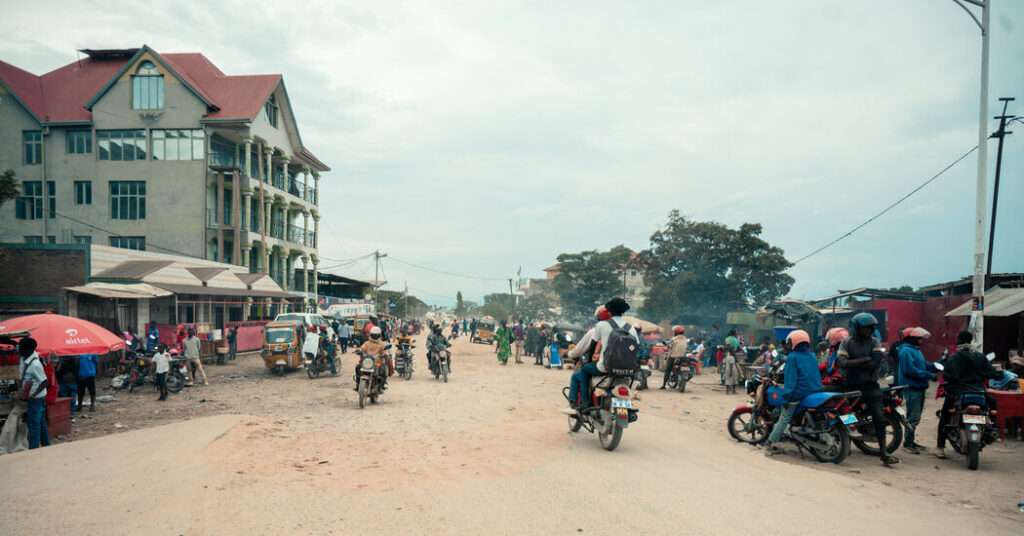
A rebel militia backed by Rwanda announced on Wednesday that it had seized the city of Uvira in the Democratic Republic of Congo, just days after President Trump hosted the leaders of both countries to sign a peace deal.
By capturing Uvira, the militia, M23, now controls both the North and South Kivu regions in eastern Congo. Uvira was the last city under government control in South Kivu. The rebel group occupied Goma, the capital of North Kivu, in January.
“We confirm that the city of Uvira is now liberated,” the rebel group announced on social media.
Thousands of people had fled to Uvira in recent days amid intense fighting between Congolese security forces and M23. Now, thousands more are escaping the city and crossing the border into neighboring Burundi.
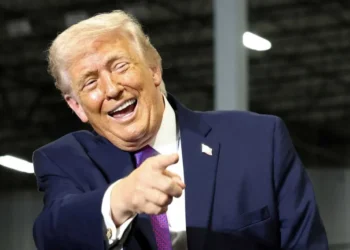
Mr. Trump last week declared that he had ended the decades-old conflict between Congo and Rwanda when he gathered several African leaders for the signing of the Washington Accord, a peace and economic deal that includes millions in U.S. investments.
“We’re succeeding where so many others have failed and this has become the eighth war that we’ve ended in less than one year,” Mr. Trump said at the ceremony.
But fighting has continued across eastern Congo, and M23 was not part of the deal’s negotiations in Washington, which included President Felix Tshisekedi of Congo and Paul Kagame, the president of Rwanda.
Qatar is leading separate talks between Congo and M23, but there has been little consensus on key issues, such as the return of Congolese territory seized by the militia. (The U.N. has said M23 is funded and directed by Rwanda, an accusation that Mr. Kagame has denied.)
Analysts say ending the conflict will be far more difficult than Mr. Trump suggested. The Washington Accord is a major piece of the puzzle, they say, but dismantling various armed groups and returning seized territory will require more work.
“The deal signed in Washington is all carrot and no stick,” said Mvemba Phezo Dizolele, a security and foreign policy analyst. “The reality is M23 continues to operate like an independent entity that is not concerned by whatever deal is signed in D.C.”
Uvira sits near the border with Burundi, with Tanzania on the opposite side of Lake Tanganyika. Capturing the city represents a major strategic victory for M23, as it gives the group more access to Congo’s abundant minerals, as well as leverage in disputes with Burundi. (Burundi has been fighting alongside Congo in its campaign against the M23 rebels.)
“Of course, the Doha process is much more tedious, much more complex and obviously has been taking longer than we would have wanted it to,” Thérèse Wagner, Congo’s foreign minister, said of the talks in Qatar. “But we remain fully committed, and we want the Doha process to conclude as soon as possible because of the mutually reinforcing nature between the two processes, Washington and Doha.”
Under the Washington deal, Rwanda is required to pull its troops out of Congo. And Congo is required to disarm a rebel group formed by forces accused of participating in the genocide in Rwanda in 1994 before fleeing to Congo.
In a meeting held in September, both countries agreed to complete their tasks by the end of November.
M23 holds large swaths of eastern Congo and has consolidated its power there this year, creating a parallel government that has a broad range of control, including over mineral supply chains and garbage collection.
“They just increased their bargaining power, and won’t relinquish control unless their demands are met, which is granting some form of autonomous status of the areas,” said Rose Mumanya, a Congolese political analyst based in Kenya.
As M23 expands, concerns are growing of widespread human rights abuses. More than 5,000 people have been killed this year in both North and South Kivu, according to the Armed Conflict Location & Event Data project. Human rights groups reported that M23 has carried out summary execution of civilians in areas they occupied.
“I don’t want to call it a sham,” Ms. Mumanya said of the Washington peace deal. “It has the backing of Washington, which is very important. But it has not addressed that elephant in the room, which is the status of M23.”
Justin Makangara contributed reporting from Kinshasa, Congo.
Saikou Jammeh is a reporter and researcher for The Times based in Dakar, Senegal.
The post Days After Trump-Led Peace Talks, New Congolese City Falls to Rebels appeared first on New York Times.