Denmark’s military intelligence service raised concerns for the first time about the United States in its annual threat assessment, saying in a report released Wednesday that shifts in American policy are generating new uncertainties for Denmark’s security.
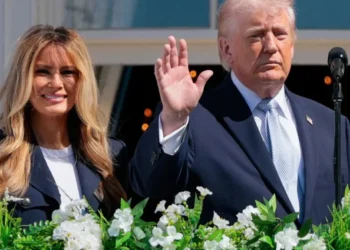
The report points to the United States’ use of tariffs against allies and its intensified activity in the Arctic, and raises many of the same concerns that European leaders have voiced about the direction of President Trump’s America-first foreign policy.
“The United States uses economic power, including threats of high tariffs, to enforce its will, and no longer rules out the use of military force, even against allies,” the report said.
Washington’s growing focus on competition with China, the report added, “creates uncertainty about its role as the primary guarantor of security in Europe.”
The report lands at a time of heightened tension between the United States and Europe. Just last week, the Trump Administration released a national security strategy paper of its own that called on European nations to take “primary responsibility” for their own defense and warned that Europe was facing the “stark prospect of civilizational erasure.”
It said the United States should be “cultivating resistance” across Europe by supporting political parties that fight against migration and promote nationalism. Many of those political forces are on the extreme right and have been considered a threat to European democracies.
That American shift has created a “dilemma” for Europe, said Thomas Ahrenkiel, the head of the Danish Defense Intelligence Service, the agency that wrote the 64-page document. In public remarks accompanying the report, he emphasized that the United States remains Denmark’s “closest partner and ally,” despite the increasingly hostile tone from the Trump administration.
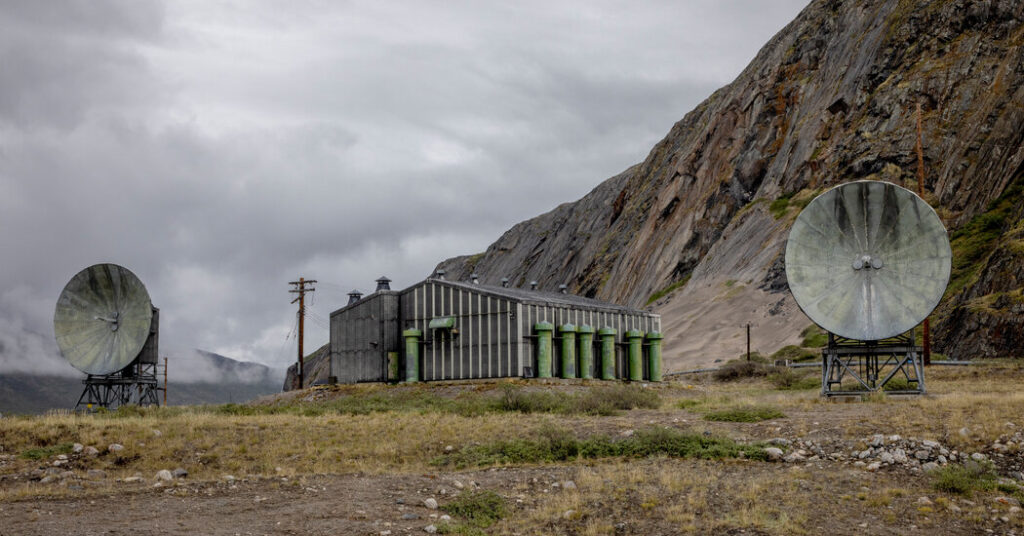
But the changing orientation of the United States has left Denmark in an especially awkward position. President Trump has vowed that “one way or the other” he will “get” Greenland, a huge, strategically important island that is a territory of Denmark but lies just off the coast of Canada. The Danish government has rebuffed Mr. Trump at every turn.
A few months ago, the Danish government summoned the head of the U.S. Embassy in Copenhagen after allegations emerged that three Americans with ties to President Trump were running “covert influence operations” in Greenland. The Danes have not said who these people are or what exactly they were suspected of doing. But those allegations followed reports in May that American intelligence agencies had been instructed to step up intelligence-gathering in Greenland.
Analysts say that Denmark is in a tight spot and so it’s not surprising for its intelligence community to now express some of these concerns.
“If you’ve been following what has happened over the past few months, you can see why the Danes feel they have to recognize that something is changing,” said Elisabeth Braw, a senior fellow at the Atlantic Council, a foreign policy research organization in Washington.
“Denmark is in a unique position,” she said. “Because of Greenland, the United States engages with Denmark in a way it doesn’t with most European countries.”
She added, “If the United States is acting in ways that create uncertainty for Denmark — whether through economic pressure, shifting global priorities or behavior in the Arctic — then Denmark cannot simply ignore it.”
Jeffrey Gettleman is an international correspondent based in London covering global events. He has worked for The Times for more than 20 years.
The post Danish Intelligence Report Raises Concerns About U.S. appeared first on New York Times.