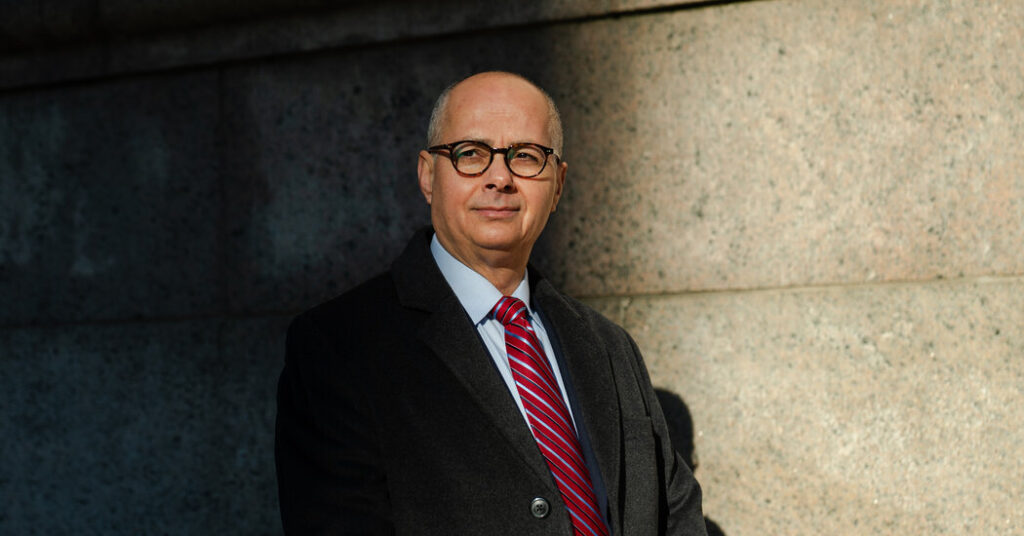
He grew up in a family of Palestinian refugees in Jordan. His one-room home, filled with eight siblings, their parents and cows, lacked electricity and running water. Early on, a schoolbook’s depiction of atomic building blocks caught his eye. When he was 15, his father, a butcher, sent him to study in the United States.
Now a professor at the University of California, Berkeley, Omar Yaghi, 60, is being honored on Wednesday at a ceremony in Stockholm with a Nobel Prize in Chemistry.
Dr. Yaghi’s story is not unusual. Of the six American winners of science Nobels this year, three were born outside the United States. In this century, the émigré fraction of U.S. Nobels in physics, chemistry and medicine now stands at 40 percent.
The nation’s long history of scientific feats, exemplified by Nobels, helped build a number of trillion-dollar companies in Silicon Valley as well as the world’s most dynamic economy and its wealth of social benefits, economists say.
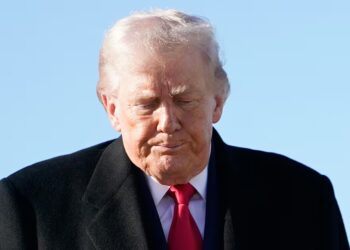
Some experts warn that the policies of the Trump administration have put that bounty in jeopardy. By putting “America First,” they say, an era of U.S. prosperity could come to an end as the pipeline for legal immigrants, foreign students and visiting researchers dries up.
Dr. Yaghi voiced that concern, too, before flying to Stockholm. Mr. Trump’s policies, he said in an interview, endanger the U.S. ecosystem of scientific excellence.
“I think it’s regrettable,” he said. “We’ve learned over and over in human civilization that scholars can move across borders. This is how knowledge spread and how vast regions of the world lifted themselves out of poverty.”
Mr. Trump’s policies need to be seen “in that context,” Dr. Yaghi added. “We have to know that people coming from different backgrounds improve the level for everybody involved. That’s an amazing story. Great thinkers can improve not only the U.S. but the world.”
In a statement, Abigail Jackson, a White House spokeswoman, said the administration would “continue to unapologetically advocate for American workers over foreign workers.”
“American hands and minds built our great country and made America into the dominant superpower it is today,” Ms. Jackson added. “The American people are capable of anything they put their minds to, and the Trump Administration is committed to relentlessly creating opportunity for Americans to thrive.”
In contrast, Lisa Gilman, director of George Mason University’s Institute for Immigration Research, described the “America First” approach as a path to national decline. “These policies are literally blocking the talent pipeline,” she said. “If this continues, we’re going to lose our standing as the world leader in science and innovation.”
One Trump policy, meant to spur the hiring of domestic workers, has placed a steep new fee on visas used to bring in foreign researchers. Another policy has intensified the vetting of foreign students, creating a maze of new obstacles. The most sweeping move is the administration’s general crackdown on immigration, including bars to green cards and citizenship. The overall result is a deep chill, perhaps felt most strongly by those with skills they can take elsewhere.
For the better part of a century, the nation’s traditional vigor and openness made it a magnet for immigrants who at some point in their careers — often decades after their arrival — won Nobels.
Katalin Kariko, born in Hungary in 1955, grew up in a small home that had no running water, no refrigerator and no television set. Curious about science, she studied hard and moved to the United States in her 20s. For decades, she never found a permanent job in academia but instead worked on its fringes.
In 2005, Dr. Kariko and Dr. Drew Weissman made a discovery that, while long overlooked, turned out to be a potent counterpunch to deadly viruses. Their finding led to one of the most effective Covid-19 vaccines, which saved millions of lives. In 2023, they won a Nobel Prize in Physiology or Medicine.
The magnetic pull of the United States has attracted not just individuals but groups of researchers who repeatedly helped speed the pace of scientific discovery in emerging fields, and subsequently won Nobel Prizes.
Immigrants advanced the semiconductor age, fueling the explosive growth of new industries and producing the dazzling array of gadgets that now define the tech world.
Four immigrants stand out: Leo Esaki was a 1973 laureate from Japan; Ivar Giaever, a 1973 laureate from Norway; Herbert Kroemer, a 2000 laureate from Germany; and Willard S. Boyle, a 2009 laureate from Canada. All worked in the United States at the time they were awarded Nobel Prizes.
These thinkers cast light on quantum mechanics — the laws that rule the subatomic realm. They found that tiny particles known as electrons could jump from one material to another, that layers of dissimilar materials could improve the targeting of such jumps and that semiconductors could detect particles of light. This final stride led not only to digital cameras for consumers but to supersensitive detectors for spy satellites and space telescopes.
As basic ingredients in modern life, the chips enriched not only Silicon Valley but distant industries: The tiny circuits went into cars, jets, cellphones, toys, TV sets, video games, medical devices and a surprising range of other products. Globally, experts estimate the gains at trillions of dollars and millions of jobs.
Dr. Yaghi’s bright idea was more abstract in nature but, like those of his fellow laureates, conjured visions among scientists and corporations of commercial spinoffs.
His feat was learning how to assemble molecular building blocks into structures whose mazes of internal surfaces cover vast areas — the largest of any known substance. His porous structures act like sponges that readily absorb, store and release gases and vapors.
Dr. Yaghi and his team created metal-organic frameworks, or MOFs. Made of metal atoms, these can hold organic molecules associated with life.
His structures can, for instance, harvest water from desert air. In 2018, Dr. Yaghi’s students tested a version of a water harvester that used a MOF in California’s Mojave Desert, producing nearly three cups of pure, drinkable water each day. The device is now nearing commercialization.
In an interview, Dr. Yaghi said the invention was inspired by his boyhood scrambles in Amman, Jordan, to secure water for his family. The municipal pipes filled with water for a few hours every week or two. His discovery, he added, shows more generally how life experiences drawn from diverse and adverse environments can fuel science breakthroughs.
“That discovery would not have happened if I didn’t have that background,” Dr. Yaghi said. “Mixing talent helps us solve big problems.”
Sharing in the Nobel Prize in Physics this year were John M. Martinis and two U.S. immigrants: Michel H. Devoret, from France, and John Clarke, from England. Their experiments 40 years ago are seen as advancing the emerging fields of quantum cryptography, quantum computers and quantum sensors.
Officials in Mr. Trump’s administration argue that science in the United States can excel without immigrants. In an interview in May on Newsmax, a right-wing cable channel, Vice President JD Vance rejected the need to “import a foreign class of servants and professors.” And he called the administration’s crackdowns on foreign student visas “an opportunity for American citizens to really flourish.”
Two days later, Stephen Miller, architect of the Trump administration’s immigration policy, argued in a social media post that a time of low U.S. immigration in the middle of the 20th century coincided with “unquestioned global scientific dominance.”
In a June interview, he elaborated on his claim, describing the feat as rooted in “our own genius.” Mr. Miller then softened his stance by adding that, “of course,” the nation had to open its arms to people with “specialized knowledge.”
Historians disagree with his characterization of “our own genius.” They note, for instance, that a wave of immigrants helped the nuclear age zoom ahead. At least five won Nobel Prizes while working at American institutions.
Felix Bloch was a 1952 laureate from Switzerland; Emilio Segrè, a 1959 laureate from Italy; Maria Goeppert Mayer, a 1963 laureate from Germany; Eugene Wigner, a 1963 laureate from Hungary; and Hans Bethe, a 1967 laureate from Germany.
The immigrants cast light on the inner structure of the nucleus, its forces, its reactivities and new ways to harness its colossal energies.
“This kind of thing is a gift and not something we should take for granted,” said Doug Rand, an official in the Obama and Biden administrations who now runs a philanthropic fund that helps immigrants find jobs. “We should make things easier, not harder.”
Dr. Yaghi called the Trump administration’s bid to close the talent pipeline “very unfortunate,” saying it could hurt the nation’s attractiveness in a world of emerging rivals like China, with its superheated tech sector.
“Scientists should be an investment in a country’s future,” he said. “If we slip, there’ll be others that will pass us.”
William J. Broad has reported on science at The Times since 1983. He is based in New York.
The post A Scientific Pipeline to the Nobel Prize Fueled by Immigrants appeared first on New York Times.