A group of Democratic lawmakers said in a report released on Wednesday that the Pentagon had diverted at least $2 billion from its core missions this year to support the Trump administration’s immigration crackdown.
The report found that shifting the funds had led to the pausing or canceling of programs, including the building of a pilot training facility, the repairing of schools for children of service members and the refurbishment of military barracks, something Defense Secretary Pete Hegseth has called a priority.
The report says that military readiness “will suffer as a direct result of diverting” Pentagon resources for immigration missions that are “not consistent” with the military’s mission and that troops “have neither signed up nor been trained for.”
Senator Elizabeth Warren, Democrat of Massachusetts, said the administration was “using the defense budget as a slush fund for political stunts.”
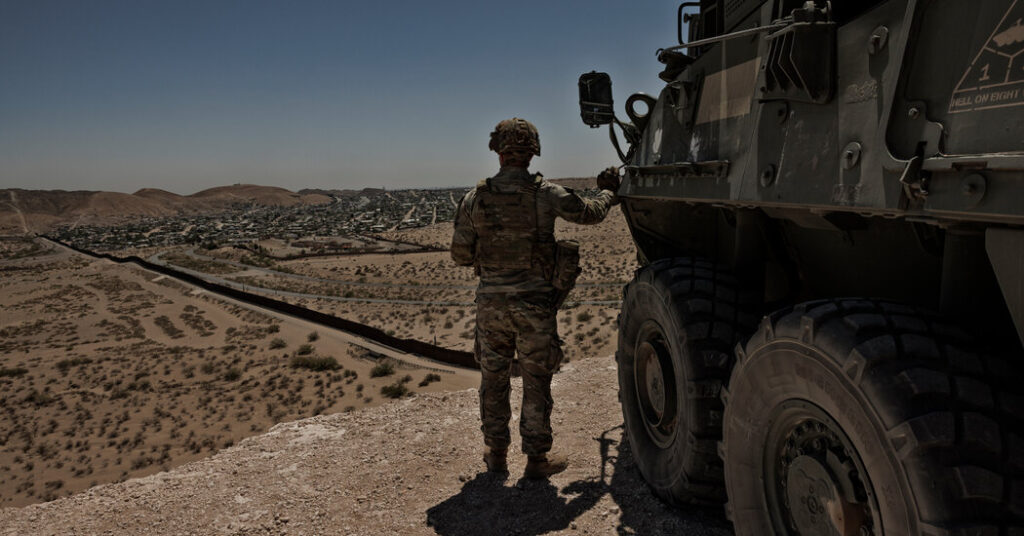
The report cited as an example funds that had been allocated for building a jet-aircraft training facility in Mississippi and barracks for troops on overseas bases. The money was “reprogrammed” to build just 20 miles of President Trump’s wall along the southern border, lawmakers said.
The Defense Department defended its use of resources to back Mr. Trump’s immigration agenda, saying in a statement that it could do so without undercutting other priorities. The military budget is nearly $900 billion a year.
“The Pentagon is able to execute on many missions at the same time,” said Kingsley Wilson, a Pentagon spokeswoman.
She added: “Spending allocated money on one mission does not mean other missions become depleted.”
It is unclear, the report says, whether the Department of Homeland Security has reimbursed the Defense Department for any of the military’s spending on immigration operations.
Earlier this year, Congress provided Mr. Trump with $170 billion over four years, mostly for the Department of Homeland Security, to back his immigration policies. In the process, the annual budget of Immigrations and Customs Enforcement, or ICE, jumped from $8 billion to approximately $28 billion, making it the highest-funded law enforcement agency in the federal government.
Using military assets for immigration missions, including housing migrants in detention and using Air Force cargo aircraft for deportation flights, has proved more costly than when the same functions are performed by civil authorities, the report said.
The report, citing a deportation flight from El Paso, Texas, to Guatemala shortly after Mr. Trump took office in January, found that the use of military aircraft costs taxpayers approximately three times more than flights made by civilian aircraft chartered by ICE.
In February, the administration began using the naval base at Guantánamo Bay, Cuba, to house migrants designated for deportation from the United States — but only intermittently.
The effects of federalizing National Guard soldiers and airmen and sending them on missions directed by the White House has had a negative effect on the ability of state governors to perform emergency services closer to home, the report said.
Lawmakers noted that in June, the California National Guard’s firefighting unit only had half of its assigned soldiers ahead of peak wildfire season, after the president sent many of its members to Los Angeles to assist ICE.
According to the report, the Pentagon expects to account for border operations in its next budget, instead of taking funds from other projects authorized by Congress. The Defense Department’s spending on immigration operations is set to more than double next year, to $5 billion.
The exact number of American troops deployed to the southern border is unclear, but is likely at least 8,500. U.S. Northern Command, which oversees that mission, has said that active-duty forces will remain at the border “until complete operational control of the southern border is achieved.”
Zach Montague and Carol Rosenberg contributed reporting.
John Ismay is a reporter covering the Pentagon for The Times. He served as an explosive ordnance disposal officer in the U.S. Navy.
The post $2 Billion in Pentagon Funds Said to Go to Anti-Immigrant Operations appeared first on New York Times.