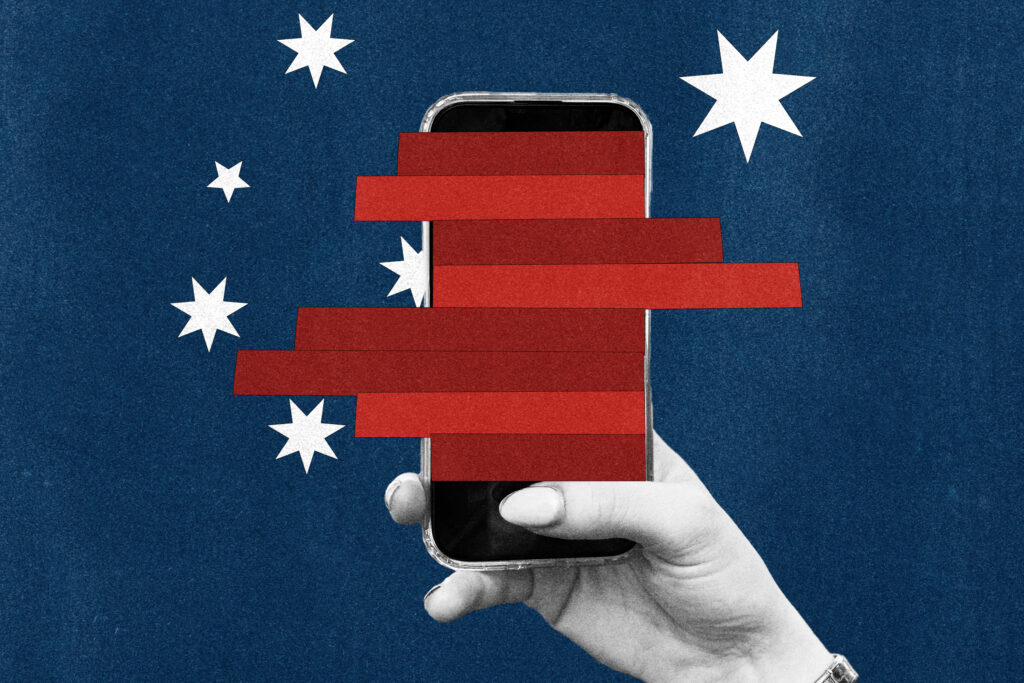
Kids, parents and teachers in Australia are waking up to a new world after a government ban on social media for people younger than 16 went into effect overnight.
But like many others, 16-year-old Mariska Adams and her friends, many of whom are still 15 and fall under the ban, are pushing back against what they see as a fundamental shift in their way of life. They’ve been brainstorming ways to get around the ban: New apps, new log-in methods, even logging in with their parents’ accounts.
“Teens aren’t trying to rebel for no reason. We just want to stay in contact with our friends and exist in the world the way every generation before us did,” said Adams, who lives in Brisbane. “A ban won’t fix the issues they think it will.”
Australia last year became the first nation to pass a law blocking young people from using the largest social apps including YouTube, Twitch, TikTok and Instagram. Prime Minister Anthony Albanese’s center-left government proposed the legislation in November 2024 after what it said was “extensive consultation with young people, parents and carers.” It passed the same month with support from the conservative opposition party, with some independent lawmakers and the left-wing Australian Greens voting against it.
Supporters have praised the ban as a win for children and families and a model for other nations as concerns over social media’s effects on children and teens mount. Critics see the law as government overreach and a breach of parental rights and data privacy. Now parents and teens are set to find out in real time what a social media ban looks like in practice and what effect it will have on Australia’s youths.
Numerous recent polls indicate that a solid majority of Australians support the ban, but that young respondents largely don’t plan to comply. In recent Reddit threads, suggestions for how to circumvent the ban and pass age verification checks have included everything from buying adult-looking mesh face masks on Temu to recruiting random adults to help. Multiple teens told The Washington Post they’re starting new accounts with false ages or passing around adult IDs in case the apps demand proof of age.
The legislation itself left many questions unanswered. How precisely will social media companies confirm that users are at least 16? Will simple work-arounds like VPN connections that mask a user’s location be enough to evade whatever measures the companies take? What prevents children from just migrating to the many social apps allowed under the ban, such as Roblox and Discord, both of which have had problems with bullying and adult predators? (Neither company responded to requests for comment.)
Major tech companies including Meta, TikTok and Snap have said they disagree with the ban but will comply with the mandate to take “reasonable steps” to verify users’ ages. Meta, which owns Instagram and Facebook, began alerting users under 16 before the ban went into effect that their accounts will soon be deleted.
The companies have said they will use the registered ages of accounts as well as the kind of activity the accounts engage in to judge users’ ages. The law doesn’t lay out explicit benchmarks companies must meet. Australian authorities can add additional social media apps to the ban as time goes on.
Despite the uncertainties, some parents were already celebrating as the clock ticked down the final week before the ban.
“We do strongly see this as a first shot across the bow toward social media companies,” said Dany Elachi, a father of five in Sydney and co-founder of Heads Up Alliance, a grassroots network of parents trying to delay their children’s use of smartphones and social media.
Elachi’s children already don’t use social media, so the ban could broaden their social circles as more of their peers go offline, he said. Without scrolling and video-watching, kids have more opportunities for “genuine,” real-world interactions, he said.
Other parents felt happy about the ban but wary about the transition: Less social media means a wealth of new free time to kill.
Amanda Oliver, a mom of five in Queensland, said it’s been “bloody hard” to get her 11-year-old, Emma, off the apps, as the tween expertly navigates around any limits her parents put in place. Oliver said she’s thrilled the ban is hitting before her daughter becomes a teen — but that still leaves five long years ahead.
“We have got ahead of the curveball by buying her a new bike, a heap of crafting items and suggesting we learn to cook together,” Oliver said. “As a tired parent, I don’t want to do any of that to be honest. But as a parent, that’s my job, isn’t it? So I will lovingly entertain her for the next five years, as difficult as that might be.”
Meanwhile, parents who opposed the ban grudgingly prepared for an unprecedented level of government involvement in their children’s relationship with technology. Some plan to help their kids skirt the rules.
“Bottom line is that the government needs to mind their business,” Melissa Di Vita, a mom in Queensland, said. “I can parent my kids just fine without their interference.”
Di Vita said she plans to let her 12-year-old son keep watching YouTube by using an adult account. She and other parents worry that trying to keep kids off their favorite apps will just lead to sneakier behavior, with kids less likely to ask a parent for help if something bad happens online.
Evelyn, a 14-year-old in New South Wales who spoke on the condition of using only her first name to protect her privacy, plans to continue using Snapchat and Instagram by using her mother’s face ID when logging in — a plan mom, Catherine, said she fully supports.
“I’m not really fussed about it, and I don’t really think anyone is, because, from what I’m picking up, it’s not going to be that hard to get around,” Evelyn said of the ban. Her friends plan to use their parents’ and older siblings’ faces to pass age verification measures, she said.
Richard Stokes, chief executive of the Australian Boarding Schools Association, said he supports the ban but wishes it hadn’t kicked off at the beginning of the country’s summer vacation. In Australia’s large and sparsely populated outback, many children go to boarding school because there’s no local school, and holidays can be isolating. Those kids use social media to maintain friendships, Stokes said, and they don’t have much practice with other types of messaging apps.
Studies have shown that rural teens, LGBTQ teens, teens with disabilities and other groups can benefit from the social connection social media offers. Stokes said he’s confident kids will find new avenues to build relationships — but it’ll take some adjustment.
The ban’s call for social media companies to verify ages won’t just affect young people. Australian adults this week took to online forums to discuss ways to guard their privacy if apps start asking for legal IDs. Some worried this extra data collection could open the door to government surveillance and limitations on speech.
Multiple digital privacy, free speech and human rights organizations have criticized Australia’s ban for these reasons. Australian Human Rights Commission last year voiced “serious reservations” and encouraged legislators to consider “less restrictive” means of keeping kids safe online without limiting their rights to education, expression, privacy and leisure.
Either way, Adams and her friends don’t plan to go quietly. When one app asked them to submit a selfie for an age verification system, they used a photo of a golden retriever they found on Google.
It worked, she said.
The post This country banned social media for young teens. Here’s how they’re defying it. appeared first on Washington Post.