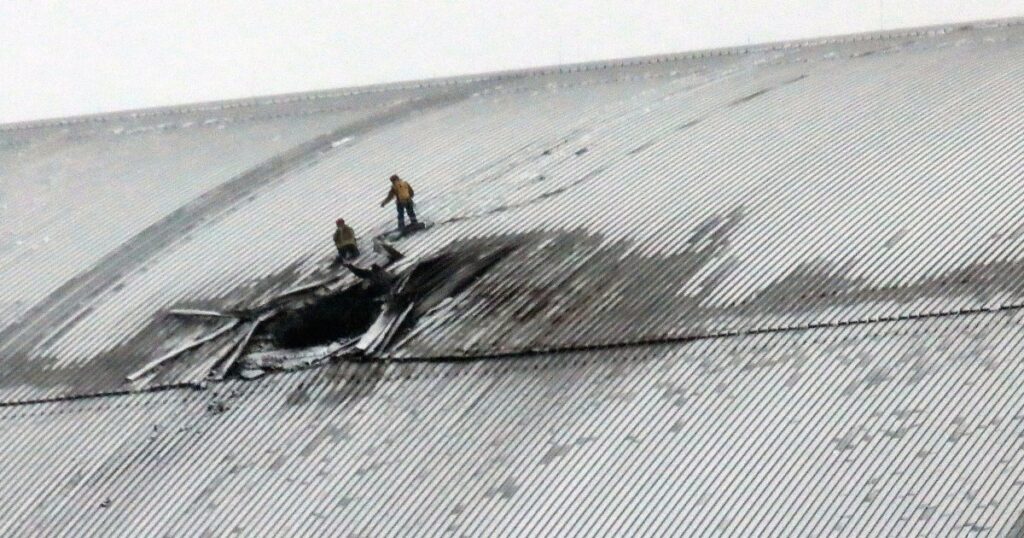
A multibillion-dollar dome built around the site of the 1986 Chernobyl nuclear meltdown was badly damaged last year after a Russian drone strike blew a hole in it, sparking a fire and plenty of alarm.
Fortunately, officials arrived at the scene within minutes to put out the flames. But it was only the latest in a string of incidents plaguing the site as Russia’s invasion of Ukraine drags on, from Russian soldiers inhaling radioactive dust after entering a nearby forbidden zone to major blackouts forcing workers to switch to backup diesel generators at the disaster site.
While officials have yet to observe any rise in radiation levels in the surrounding areas since the February bombing, an inspection by the International Atomic Energy Agency last week has shown that the dome “had lost its primary safety functions, including the confinement capability,” according to an agency update.
Fortunately, the IAEA’s mission also found no signs of permanent damage to its “load-bearing structures or monitoring systems.”
Yet substantial amounts of highly radioactive material originating from the 1986 disaster are still buried beneath the damaged dome, making it a precarious and potentially dangerous situation.
“Limited temporary repairs have been carried out on the roof, but timely and comprehensive restoration remains essential to prevent further degradation and ensure long-term nuclear safety,” said IAEA director General Grossi in a statement.
“The IAEA — which has a team permanently at the site — will continue to do everything it can to support efforts to fully restore nuclear safety and security at the Chornobyl site,” he added.
However, experts continue to warn of the dangers, including radioactive dust leaking out.
“If there was to be some event inside the shelter that would release radioactive materials into the space inside the New Safe Confinement, because this facility is no longer sealed to the outside environment, there’s the potential for radiation to come out,” Greenpeace senior nuclear specialist Shaun Burnie told the New York Times.
But it’s not all doom and gloom, especially considering the Soviet Era emergency confinement dome, which was hastily constructed immediately following the disaster, remains in place.
“I have to say I don’t think that’s a particularly serious issue at the moment, because they’re not actively decommissioning the actual sarcophagus,” he added.
More on the dome: Terrifying Video Shows Site of Chernobyl Meltdown on Fire After Drone Strike
The post Russia Damaged Protective Dome Around Chernobyl, Can No Longer Contain Radiation appeared first on Futurism.